The Heart Chakra: What is it & Why is it Important?
Love, compassion, and the bridge between your grounded self and your spiritual self.
The heart chakra is responsible for how you give and receive love — for yourself, the people closest to you, and the world around you. It governs compassion, empathy, forgiveness, and the emotional balance that holds your relationships together.
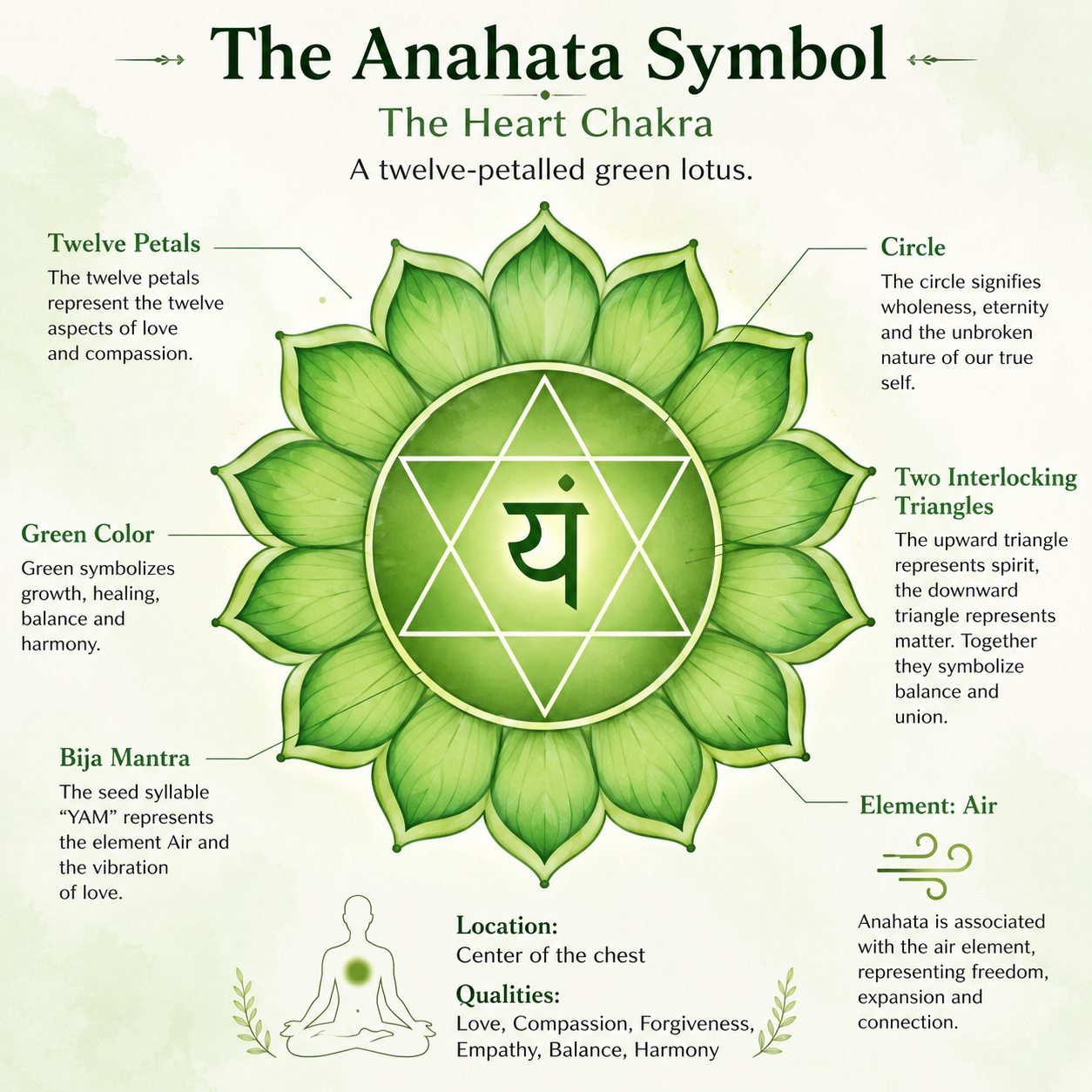
Known in Sanskrit as Anahata, this is the fourth of the seven main chakras and the one that sits at the very center of the system. Below it are the three “earthly” centers tied to survival, creativity, and willpower. Above it are the three “higher” centers tied to expression, intuition, and spirit. Anahata is the bridge between them. When it’s open, you feel connected without losing yourself. When it closes, the walls go up — toward others and, more often than people realize, toward yourself.
People come to the heart chakra not because they want to feel more spiritual, but because something hurts — a breakup, grief that won’t lift, a growing numbness where warmth used to be. Anahata responds to gentle, consistent attention. Below is what it actually does, how to read its signals, and the practices that help it open again.
Tools That Make Heart Chakra Work Easier
You don’t need props — breath and attention are free. But the right tool turns “I should practice” into “I want to.” Links go to Amazon and earn this site a small commission at no extra cost to you.
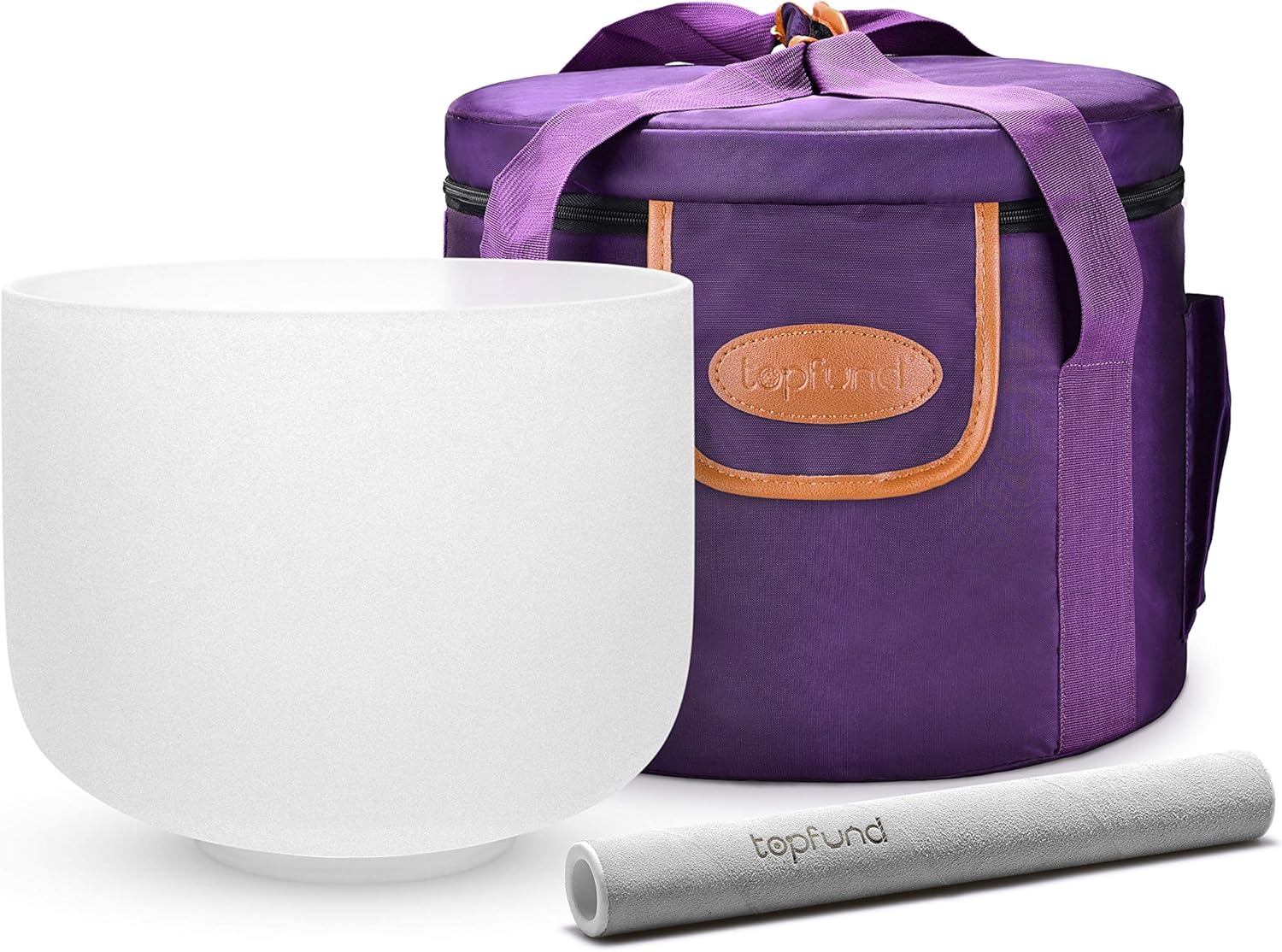
F-Note Crystal Singing Bowl (Heart Chakra)
When your mind won’t stop racing, a single tone in the heart’s note cuts through where willpower can’t. One strike, and the chatter softens.

Heart Chakra Crystal Set (Rose & Jasper)
Pink and green stones you can hold during a hard moment — a small, physical reminder to choose love over the wall you keep rebuilding.

7-Chakra Essential Oil Set + Anahata Mist
The heart’s element is air. Rose, jasmine, and bergamot on the breath shift your mood faster than expected — before you’ve even sat down to meditate.
What the Heart Chakra Is Actually Responsible For
Strip away the mysticism and Anahata governs one thing: connection. Every job it holds is a different face of that.
Love and compassion, in every direction
This isn’t only romantic love. Anahata covers the love you feel for friends, family, strangers, animals, and — the one most people skip — yourself. A healthy heart center lets affection move both ways: you can offer kindness without keeping score, and receive it without flinching or deflecting.
The bridge between body and spirit
Sitting in the middle of the seven, the heart chakra integrates the grounded energy of the lower centers with the expansive energy of the upper ones. Open the heart and the practical, physical parts of life stop fighting the reflective, spiritual parts — they start to cooperate.
Emotional regulation
Anahata is where you process grief, resentment, and fear without being run by them. A balanced heart doesn’t mean you never feel anger — it means anger moves through instead of hardening into a grudge. When blocked, old hurts get stored rather than released, and quietly shape how you treat everyone who comes after.
The element of air and the sense of touch
The heart chakra’s element is air, which is why breath is the most direct route to it — light, free, moving in every direction, exactly how love behaves when nothing obstructs it. Anahata is also tied to the sense of touch, the most intimate way we connect physically. Anahata means “unstruck” or “unhurt” — a reminder that underneath every wound, the heart’s capacity to love stays whole.
Each part encodes a piece of what the chakra does: the twelve petals represent twelve qualities of an open heart, the two interlocking triangles (Shatkona) balance spirit and matter, and YAM is the seed sound that activates the center when chanted.
Balanced vs. Blocked: How to Read Your Heart Chakra
You don’t need special training to sense the state of your heart center. The signs show up in how you relate to people and how your chest physically feels.
| Area | Open and Balanced | Blocked or Imbalanced |
|---|---|---|
| Self-relationship | Self-acceptance, healthy self-love | Self-criticism, feeling unworthy of love |
| With others | Easy empathy, secure connection | Fear of intimacy, jealousy, isolation |
| Forgiveness | Lets go of old hurts | Holds grudges and resentment |
| Emotional tone | Calm, compassionate, content | Bitter, defensive, or numb |
| Body signals | Open chest, easy breathing | Chest tightness, shallow breath, slumped posture |
| Balance point | Gives and receives equally | Over-gives and burns out, or shuts down entirely |
One nuance worth naming: a heart chakra can be overactive as well as closed. If you lose yourself in relationships, smother people with care, or have no boundaries, that’s also an imbalance — love flowing out faster than it comes back in. Balance is the goal, not maximum output.
The science angle
Modern research echoes this old map. The heart and brain are in constant two-way conversation, and states like compassion and gratitude measurably steady the heart’s rhythm. Slow breathing and gentle backbends — classic heart-opening practices — activate the parasympathetic “rest and connect” response. The vocabulary differs, but the wisdom lines up. None of this means chakras are physical structures science has identified — it means the practices used to work on them have independently measurable effects.
Physical and Emotional Symptoms of a Blocked Heart Chakra
The heart chakra is associated with the heart, lungs, chest, upper back, and the thymus gland — a small organ behind the breastbone that helps train the immune system. People working through a closed Anahata often report tightness or pressure in the chest, shallow or held breathing, tension across the upper back and shoulders, and a tendency toward colds when stress runs high. None of this replaces medical care — chest pain always deserves a doctor — but the chest is genuinely where many people hold emotional strain. On the emotional side: difficulty trusting, a quickness to take offense, loneliness even in company, and the heavy sadness of unprocessed grief.
How to Open and Heal the Heart Chakra
Breathe into the chest
Inhale slowly for a count of four, letting the breath expand the front and back of your chest, then exhale for six. On each inhale, imagine drawing in warmth; on each exhale, release a little of whatever you’re holding. Five minutes is enough to feel the difference.
Heart-opening yoga poses
Backbends physically open the chest and counter the protective hunch the body falls into under stress: Camel Pose is a deep backbend that stretches the whole front of the chest, Bridge Pose lifts the chest gently as a kinder entry point, Cobra Pose opens the heart while strengthening the upper back, and Extended Triangle creates openness through the side body.
Heart-focused meditation
Sit with a straight spine, place both hands over the center of your chest, and bring attention to the warmth under your palms. Picture a soft green light there, growing brighter with each breath and radiating outward.
Chant YAM and use 639 Hz sound
The seed mantra is YAM. Chanting it, even quietly, creates a subtle vibration in the chest that helps loosen emotional tightness. Many pair this with the 639 Hz frequency, traditionally linked to harmony and repair in relationships. A singing bowl tuned to the note F gives you that resonance live, far more immersive than a recording.
Work with crystals
Rose quartz is the classic “stone of unconditional love” and a gentle choice for self-compassion work. Green aventurine soothes friction in relationships, while malachite and amazonite are favored for deeper emotional release. Hold one during meditation or place one over the chest while you rest.
Practice forgiveness and self-love
This is the heavy lifting, and the most transformative. Forgiveness doesn’t mean approving of what happened — it means releasing the charge so you stop carrying it. Try repeating “I am worthy of love,” “Love flows freely through my heart,” or “I forgive myself and others,” and let the words settle in the chest rather than the head.
Spend time in nature and with good people
Green spaces resonate with the heart chakra for a reason. A walk among trees or time by water lowers the guard the heart puts up in busy environments — so does company that feels safe, the people you can exhale around.
Commonly Claimed vs. Actually True
| Commonly Claimed | Actually |
|---|---|
| The heart chakra only has one color, green | Most traditions actually name two: green for the outer, physical-heart layer, and pink for the deeper, unconditional-love layer. They’re treated as complementary, not competing. |
| A blocked heart chakra means something is medically wrong with your heart | They’re unrelated frameworks. Chest tightness during emotional stress is common and usually harmless, but any real chest pain, pressure, or breathing difficulty needs a doctor first — not more meditation. |
| There’s an “opposite” chakra to the heart | The system doesn’t define direct opposites. The closest framing is that the heart bridges the three lower and three upper chakras — it doesn’t oppose any single one of them. |
| Chakras form at a fixed, universally agreed age in childhood | Some frameworks tie each chakra to a developmental stage, but the specific ages vary significantly by source and aren’t standardized or scientifically established — treat any specific number with skepticism. |
| Paid heart-chakra activation sessions are necessary for it to open | The core practices — breath, meditation, journaling, forgiveness work — are free and self-led. A practitioner can help with a genuinely stuck block, but it isn’t a requirement to start. |
Frequently Asked Questions
Related Reading
- The benefits of an open heart chakra — symptoms and signs to look for as it opens.
- Crystals for heart chakra energy — a deeper dive into stone selection and use.
- How to clear all 7 chakras — for working the heart alongside the rest of the system.
- The throat chakra — the center just above the heart, and often where its emotions get voiced or swallowed.
Sources
- Anahata (Heart Chakra) — Wikipedia; traditional Sanskrit etymology and symbol description.
- Yoga Journal — “Intro to the Heart Chakra.”
- Research on heart-brain interaction and heart rate variability during compassion and gratitude states.