Best Chakra Balancing And Healing Music: An Evidence-Based Guide

Clear, evidence-based guide on chakra music and its practical use for energy alignment
Chakra balancing and healing music uses specific sounds and frequencies to support alignment of the body’s energy centres. Though rooted in modern practice rather than ancient texts, it can aid relaxation and focus during chakra work. This guide explains how to select appropriate music and use it effectively.
People seek chakra balancing music to improve wellbeing, reduce stress, and support meditation. However, many find the available advice vague or contradictory about how music affects chakras and which sounds truly help.
Claims about chakra music often mix tradition with modern invention. The classical chakra system does not specify musical notes or colours as fixed attributes; much of what is popular today comes from 20th-century sources and New Age thought.
This guide clarifies documented history, separates fact from belief, and offers practical, research-informed advice on using music to balance chakras effectively, without overstating results.
Recommended Reading on Chakra Energy Alignment
A comprehensive guide to deepen your understanding of chakra balance through sound and elements. Links go to Amazon and earn this site a small commission at no extra cost to you.
Chakra Petal Healing
This Majosta book is suited to readers who want a broader framework than frequency playlists, because its listing combines chakra alignment with five-element balance. It works best as background reading alongside a short listening practice.
Skip it if: Skip it if you only need a simple music track or a brief meditation instruction.
Best Chakra Balancing And Healing Music Explained
Chakra balancing music is contemporary sound selected to support meditation, attention and relaxation within a chakra practice. It may influence your breathing, mood and sense of focus through ordinary responses to rhythm, melody and volume, but no scientific evidence shows that it repairs chakras or cures a medical or psychological condition.
In modern Western chakra theory, practitioners picture seven centres along the body’s central axis, from Muladhara (the root chakra) to Sahasrara (the crown chakra). Music is used as an attention cue: a steady rhythm can settle breathing, a sustained tone can give the mind one object, and a familiar melody can alter your emotional state. Those effects may make a practice feel more settled. They do not demonstrate a measurable chakra mechanism.
The seven chakras commonly shown in modern Western practice, from Muladhara at the base to Sahasrara at the crown
The familiar seven-centre, rainbow-coloured chart is a modern Western arrangement. Classical Sanskrit sources describe different chakra numbers and attributes, and they do not prescribe a fixed playlist, musical scale or frequency for each centre. The seven-chakra system became especially influential in the modern West through Sir John Woodroffe’s 1919 book The Serpent Power. In tantric models, chakras are visualised as wheels or circles; cakra means “wheel” in Sanskrit.
Where Solfeggio Fits
Solfeggio frequencies are used in present-day New Age and chakra music, not documented as ancient chakra prescriptions. A popular chart pairs 396 Hz with the root chakra and assigns higher frequencies to the centres above it. These pairings are modern belief, and the claimed chakra-specific effects have not been established by scientific evidence.
Common choices include single-frequency tracks, singing bowls, drone-based pieces, mantras, binaural-beat recordings, nature sounds and instrumental music. A track can suit chakra meditation because it is slow, sparse and easy to follow, even when its advertised frequency has no special physiological action. Choose sound you can listen to without strain; a monotonous solfeggio tone is distracting for some people.
Healing music works mainly through attention, rhythm, expectation and relaxation, while chakra-specific effects belong to modern practice rather than documented Sanskrit teaching. Use chakra music as a meditation aid, not as a treatment.
How To Choose Music For Each Chakra
To balance each chakra, choose music that matches the state you want to encourage: a slower, lower and simpler track for agitation, or a brighter, more rhythmic track for dullness. No chakra can be healed by music in the medical sense; chakra healing is a spiritual practice, and music may support wellbeing without treating disease. For a broader routine, use this step-by-step guide to balancing all seven chakras.
The list below follows a popular modern chart. Its solfeggio frequencies and note names are contemporary associations, not instructions from the Vedas or from classical chakra texts. The note pairing uses the common C-to-B sequence, so different recordings may label the same chakra differently.
- Muladhara, root: 396 Hz and C. Choose a slow drum, cello, low drone or grounded ambient track. For an underactive feeling, use a clear pulse that encourages alertness; for an overactive feeling, reduce the beat and choose long, quiet tones.
- Svadhisthana, sacral: 417 Hz and D. Water sounds, hand percussion, warm strings and gently swaying rhythms suit creative or emotional work. Avoid a fast, crowded arrangement if the music makes restlessness worse.
- Manipura, solar plexus: 528 Hz and E. A steady frame drum, bright piano, brass kept at moderate volume or a confident instrumental rhythm can support focus. If the area feels overactive in your personal practice, choose softer dynamics and fewer repeated beats.
- Anahata, heart: 639 Hz and F. Select open strings, light choir, harp or spacious acoustic music. A restrained melody works better than sentimental lyrics when emotion is already high.
- Vishuddha, throat: 741 Hz and G. Chanting, a clean vocal line, flute or a simple sustained tone can keep attention near the throat. Leave enough silence to notice your breath rather than filling every moment.
- Ajna, third eye: 852 Hz and A. Use a quiet drone, soft bells or minimal electronic ambient music. Avoid sudden changes if concentration is the aim.
- Sahasrara, crown: 963 Hz and B. Sparse silence, high overtones, gentle choral sound or very light ambient music can suit contemplation. Silence is a valid choice when tones pull attention outward.
Practitioners often describe an overactive chakra as too much drive, emotional intensity or mental activity, and an underactive chakra as dullness, withdrawal or difficulty engaging. These are interpretive labels within the subtle-body model, not medical diagnoses. Use the contrast to adjust tempo, density and volume rather than trying to force a sensation.
Keep The Sound Manageable
A loud, piercing or relentlessly repetitive track can produce tension, headache or poorer concentration. Start below speaking volume, stop if you feel uncomfortable, and do not use music to push through distress. A qualified health professional is the right person to consult about persistent physical or psychological symptoms.
Scientific Evidence On Chakra Music And Sound Healing
Chakra balancing and activation brainwave entrainment are often presented as if a track can tune a specific chakra. That claim has not been demonstrated. Research on music and relaxation does show that familiar, preferred music can influence perceived stress, attention and physiological arousal, but these findings concern the nervous system rather than a measurable chakra.
The effects of breathwork on chakra balancing are also indirect. Slow, steady breathing can lengthen the exhalation, settle attention and change how alert or relaxed a person feels. There is no direct evidence that breathwork moves an invisible substance through the chakras or proves that one centre has become balanced.
Can music really balance chakras? There is no scientific evidence that music heals or balances chakras as distinct bodily structures. Chakra healing remains a spiritual and contemplative practice. A track may help someone sit still, regulate breathing or focus on a chosen image, which can make the practice feel useful without confirming a chakra-specific mechanism.
What Brainwave Entrainment Can And Cannot Show
Brainwave entrainment describes the idea that a repeated beat or pulsing tone may encourage brain activity to follow its rhythm. Binaural beats use slightly different tones in each ear to create a perceived beat; isochronic tones use regularly spaced pulses. Research findings are mixed, and any effect is usually discussed in terms of attention, relaxation or sleep rather than chakra activation.
Solfeggio frequencies, such as the popular 396 Hz pairing for the root chakra, belong to contemporary New Age practice. Classical Sanskrit chakra texts do not document a fixed solfeggio scale for healing. A low drone, singing bowl or repeated syllable can still provide an audible anchor for meditation, but its benefit depends on the listener, setting and response to the sound.
Use the evidence carefully
Choose chakra music as a meditation aid, not as a medical treatment. Stop or change the track if a pulse, high volume or prolonged tone causes headache, agitation or discomfort.
Practical Instructions For Chakra Music Sessions
To use chakra balancing music, treat the track as a structure for attention. To clear and balance chakras, or to balance all the chakras consciously at the same time, move through the body with steady breathing rather than trying to force a sensation.
- Choose one clear intentionSelect one chakra or the whole body. Use a simple track whose volume and pace feel steady.
- Set up the spaceSit with your knees lower than your hips. Put the device on do-not-disturb and keep the volume below conversation level.
- Settle the breathListen quietly for one minute, then breathe in gently and let the exhalation run slightly longer.
- Move through the centresFor a full session, place attention at the root, sacral, solar plexus, heart, throat, third eye and crown in order.
- Add a visual imagePicture one colour or a small point of light at the chosen area. Treat it as a focus tool, not proof that a chakra has changed.
- Keep the practice shortBegin with five minutes. Build towards 10 or 15 minutes when attention remains settled, preferably at the same time each day.
- Close without rushingTurn the music down, notice your feet and hands, and take three ordinary breaths before standing.
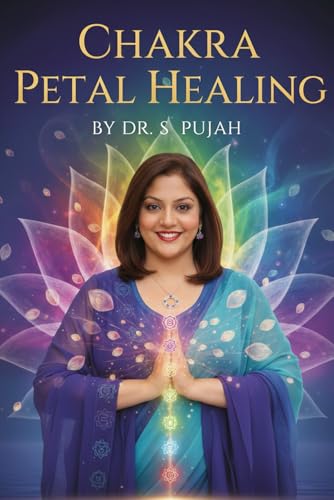
Product 1 can sit beside the session because its guide covers energy alignment and five-element balance, giving readers a written framework while the music supplies the timing.
See it on Amazon →For breathwork, keep the pattern comfortable and unforced. A full-body session can use one slow pass from root to crown, then one pass back down; a single-chakra session can stay with the area for several minutes. Do not hold the breath or make it rapid to create a stronger effect.
Avoid overload
Louder sound, several tracks at once and long sessions do not produce better chakra work. Skip lyrics if they pull attention away, change a monotonous solfeggio track if it irritates you, and stop if you feel dizzy, distressed or physically uncomfortable.
Historical And Traditional Context Of Chakra Sound Practices
Chakra beliefs are most closely associated with Hindu and Buddhist tantric traditions, rather than with one universal religious rule. In Sanskrit texts, a chakra is described as a wheel or circle within a subtle-body model. These texts do not all describe the same system: they vary in the number of chakras, their locations and their attributes.
Documented history
Sir John Woodroffe’s 1919 book The Serpent Power describes the seven-chakra system that shaped much modern Western discussion. The familiar seven centres arranged from the base of the body to the crown should therefore not be presented as the single system found throughout ancient Indian literature.
Historical texts prescribing music for chakras are difficult to find because classical chakra sources do not provide the modern style of playlist or fixed frequency chart. They do discuss mantra, including repeated sacred syllables and, in some later diagrams, seed syllables linked with particular centres. Chanting has a traditional place in Indian religious practice; a recording labelled 396 Hz or 528 Hz belongs to a much newer sound-healing format.
Where the modern chart came from
The rainbow colours, gemstones, psychological traits and exact musical frequencies commonly assigned to the seven chakras are features of modern Western chakra theory. New Age writers and teachers brought these elements together into a practical system that is easy to visualise and sell, but they are not fixed attributes documented across classical Sanskrit sources.
That distinction helps explain why reviews of chakra music can disagree about notes, instruments and frequencies. A contemporary practitioner may use a drone, singing bowl or solfeggio track as a focus for meditation, while a traditional mantra practice centres on pronunciation, repetition and the meaning of the syllable. Both can be described accurately, but they belong to different historical settings.
Common Mistakes And Misconceptions About Chakra Balancing Music
Music is not a treatment
Can music really balance chakras? It may support relaxation, attention or a personal meditation ritual, but there is no scientific evidence that chakra music cures a physical or psychological condition. Use medical care for symptoms that need assessment.
The first mistake is treating seven chakras and rainbow colours as universal facts. Classical sources describe different numbers and qualities, while the familiar seven-colour chart is a modern Western model. Solfeggio frequencies have the same problem: contemporary chakra music may pair 396 Hz with the root chakra, but these frequencies are not ancient sounds prescribed for chakra healing.
Reviews of chakra-alignment music often reward a track for sounding spacious or relaxing. That is useful information, but it does not prove that the recording affects a particular chakra. A track can also become counterproductive if its high tone, heavy bass or repeated pulse makes you tense, distracted or unable to sleep.
Choose comfort over intensity
Stop or change the track if you notice ear fatigue, agitation, dizziness, headache or rising anxiety. Lower the volume, shorten the session or use silence. Do not force a sound because a label claims that a stronger vibration works better.
Personal preference is part of the method. A gentle drone may help one listener focus, while another responds better to a quiet chant or ordinary instrumental music. Choose a sound you can tolerate for the full session, then judge it by your breathing and attention rather than by its chakra label.
Common Claims vs Documented Facts About Chakra Music
| Commonly claimed | Actually |
|---|---|
| Every chakra system has seven wheels with fixed rainbow colours. | Classical sources describe different numbers and attributes. The seven-chakra rainbow chart developed in modern Western practice. |
| Solfeggio frequencies are ancient sounds prescribed for chakra healing. | Solfeggio pairings are a modern New Age practice. They are not documented as chakra prescriptions in classical texts. |
| 396 Hz is the natural frequency of the root chakra. | The 396 Hz and root-chakra pairing is a popular belief, not a measured property of Muladhara, the root chakra. |
| Music can cure illness by repairing chakras. | There is no scientific evidence that chakra music cures medical or psychological conditions. People may use it to support relaxation or meditation. |
| An overactive chakra must transfer its energy to the chakra above. | This is a contemporary teaching model, not a documented medical or universal rule. Treat overactive and underactive labels as personal interpretations. |
Frequently Asked Questions
Related Reading
- a broader healing music guide — Covers sound therapy choices and chakra listening practices.
- free chakra music resources — Finds no-cost tracks for meditation and focused listening.
- five crystals for chakra balancing — Compares less familiar stones used in modern chakra practice.
- five stones for chakra work — Looks at additional stones and their contemporary uses.
Sources
- Music For The 7 Chakras: Guide to Chakra Healing with Sound • Nomads With A Purpose — Contemporary Solfeggio pairings, chakra music uses and overactive-chakra claims.
- Chakra – Wikipedia — Chakra terminology, varied classical systems, Woodroffe’s 1919 account and modern Western additions.

This page covers music as a meditation aid, not a treatment; consult a qualified professional about health symptoms. As an Amazon Associate, Chakra Serenity earns from qualifying purchases. Prices and availability change, so check the listing before you buy.