Is Chakra Balancing the Same As Reiki? A Clear Comparison
Clear explanation of their differences and when to use each
Chakra balancing and Reiki are not the same. Chakra balancing targets the seven main energy centres of the body, while Reiki channels universal life energy through the practitioner’s hands. Both aim to enhance well-being but use different approaches and tools.
People often ask whether chakra balancing and Reiki are the same because both involve concepts of “energy healing.” This question frequently leads to incomplete or inaccurate explanations online.
Chakra balancing is often described with colourful charts and crystals, while Reiki is presented as a hands-on healing method. Their origins, methods, and goals partly overlap but are distinct.
This article clarifies what each practice entails, how they differ, and how to practise or combine them safely and effectively.
Essential Oil for Root Chakra Balance
Supports grounding during chakra balancing and Reiki sessions Links go to Amazon and earn this site a small commission at no extra cost to you.
The Goddess of Flame Grounding Roll-On Oil
This roll-on oil blends earthy essential oils to help anchor energy and calm the mind, ideal before meditation or Reiki sessions.
Skip it if: Skip it if you prefer unscented or topical products without essential oils.
Is Chakra Balancing the Same As Reiki
Chakra balancing and Reiki are distinct practices. Chakra balancing focuses on clearing and aligning the body’s seven main energy centres, while Reiki channels universal life energy through a practitioner’s hands to promote healing.
Chakra balancing originates in Indian spiritual traditions and is rooted in the chakra system described in ancient texts such as the Upanishads. Reiki was developed in early 20th-century Japan by Mikao Usui as a method of hands-on healing.
Chakra balancing typically involves meditation, visualisation, crystals, breathwork, and sometimes sound. It targets specific chakras to restore flow and harmony. Reiki relies on a practitioner transmitting energy through gentle touch or hand positions to the recipient’s body, aiming to support the body’s natural healing processes.
| Aspect | Chakra Balancing | Reiki |
|---|---|---|
| Origin | Ancient Indian spiritual traditions | Developed in Japan, early 1900s |
| Focus | Balancing seven energy centres (chakras) | Channeling universal life force energy |
| Techniques | Meditation, crystals, breath, sound | Hands-on or hands-off energy transmission |
| Training | Varies widely; often self-study or workshops | Structured levels with attunements by Reiki masters |
| Benefits | Enhances emotional and spiritual clarity, energy flow | Promotes relaxation, stress relief, physical and emotional healing |
Comparing Chakra Balancing and Reiki
How to Balance Chakras: Practical Techniques
Balancing chakras involves practical exercises that clear blockages and restore energy flow through the seven main centres. Start with meditation and visualisation. Sit comfortably with your knees lower than your hips, using a firm cushion if needed. Close your eyes and breathe steadily. Visualise each chakra as a spinning wheel of its traditional colour, beginning at the root and moving upwards. Imagine each wheel clearing and brightening.
- Meditation and VisualisationFocus on each chakra’s location and colour. Breathe deeply, feeling energy moving freely.
- Using Crystals and SoundPlace crystals associated with each chakra on the body or nearby. Use singing bowls or tuning forks tuned to chakra frequencies to enhance balance.
- Breathwork PracticesPractice slow, deep abdominal breathing. Count inhalations and exhalations to maintain rhythm, helping to calm and centre.
- Essential Oils for Chakra BalanceApply oils like lavender or sandalwood to pulse points or diffuse them to support relaxation and focus.

The Goddess of Flame Grounding Roll-On Oil supports root chakra balance and calms the mind, perfect before meditation or energy work.
See it on Amazon →Avoid Common Mistakes
Do not rush through chakras or try to balance all at once in one short session. Over-focusing on one chakra can cause imbalance. Avoid expecting immediate results; chakra work takes consistent practice.
Combine these techniques regularly to maintain chakra clarity. You can practise chakra balancing exercises at home, alone or with Reiki, but keep your sessions calm and intentional. For detailed practical guidance, see 7 Simple Steps To Balance Your Chakras.
How Reiki Works: The Practitioner’s Method
Reiki channels universal life energy through the practitioner’s hands to support healing and balance. During a session, the practitioner places hands lightly on or just above specific body areas, often following traditional hand positions aligned to the chakras. The energy flow is said to activate the recipient’s natural healing processes.
- Hand Positions and Energy FlowCommon positions include the head, heart, abdomen and limbs, held for several minutes each.
- Levels of Reiki TrainingTraining progresses through levels: from basic hands-on techniques to advanced teaching and distant healing methods.
- Distance ReikiPractitioners can send Reiki energy remotely, without physical contact, using focused intention.
Clarifying Reiki and Chakra Balance
Reiki balances chakras indirectly by harmonising overall energy. It does not manipulate chakras individually like dedicated chakra balancing methods.
Sessions typically last 30 to 60 minutes, aiming to relax the recipient and support emotional and physical well-being. Reiki’s effects vary by individual and cannot be guaranteed. For those seeking chakra-specific work, combining Reiki with chakra balancing exercises is common practice. For more on Reiki’s chakra connections, see Reiki Chakras: The 7 Energy Centres for Healing & Balance.
The Seven Chakras: Locations, Colours and Themes
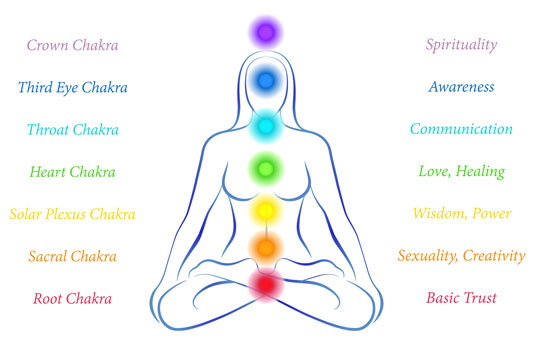
The chakra system consists of seven main centres along the spine, each linked to specific locations, colours and themes. These chakras influence physical, emotional and mental well-being.
| Chakra | Location | Traditional Colour | Modern Colour | Themes and Emotional Qualities |
|---|---|---|---|---|
| Muladhara (Root) | Base of the spine | Red | #B5473A | Survival, grounding, security |
| Svadhisthana (Sacral) | Lower abdomen | Orange | #D2762F | Creativity, pleasure, emotions |
| Manipura (Solar Plexus) | Upper abdomen | Yellow | #C9A227 | Personal power, confidence, will |
| Anahata (Heart) | Centre of chest | Green | #4B8B5C | Love, compassion, connection |
| Vishuddha (Throat) | Throat | Blue | #3B7EA1 | Communication, truth, expression |
| Ajna (Third Eye) | Between eyebrows | Indigo | #43408A | Intuition, insight, imagination |
| Sahasrara (Crown) | Top of head | Violet or white | #7A5AA6 | Spirituality, consciousness, unity |
Seven chakras from root to crown with their traditional and modern colour associations and themes.
Seven chakras from root to crown with their Sanskrit names
Balancing a specific chakra requires attention to its location and qualities. For example, to balance the solar plexus chakra, focus on exercises that build confidence and personal power. For the third eye chakra, practices that enhance intuition and mental clarity help. The heart chakra responds to activities fostering love and compassion.
Diet plans for chakra balance often include foods matching the chakra colours, such as yellow foods for the solar plexus, to support physical and emotional health. Colour use in homes or clothing also reflects chakra balancing principles; wearing or surrounding yourself with a chakra’s colour may reinforce its energy in daily life.
Unique Effects of Breathwork and Sound on Chakra Balance
Breathwork and sound have distinct effects on chakra balancing by influencing the body’s subtle systems. Breath regulates oxygen flow and nervous system activity, which can clear blockages and support the chakras’ function.
Brainwave entrainment uses specific sound frequencies to synchronise brainwaves, potentially aiding chakra balancing. Music tuned to conventional chakra frequencies (such as 396 Hz for the root chakra or 852 Hz for the third eye) is popular in modern practice. These sounds encourage relaxation and focus, which may enhance meditation and chakra work.
- Alternate Nostril BreathingSit comfortably, close the right nostril with your thumb, inhale deeply through the left. Close the left nostril with your ring finger, exhale through the right. Repeat for several cycles to balance energy flow.
- Ujjayi BreathConstrict the throat slightly to create a soft oceanic sound while breathing in and out through the nose. This breath stimulates the throat chakra and calms the mind.
Frequency Use
Specific frequencies like 432 Hz and 528 Hz are commonly used in chakra music, but their effects vary individually and lack scientific confirmation. Use them to support focus, not as cures.
Modern Western practices embrace these breath and sound techniques but do not claim them as replacements for traditional chakra methods. Instead, they serve as complementary tools to deepen awareness and aid in clearing subtle blockages.
Combining Chakra Balancing and Reiki Safely
You can combine chakra balancing and Reiki in a home practice to enhance relaxation and focus. Start with a chakra balancing exercise to bring awareness to each energy centre, then follow with a Reiki session for gentle energy flow through the hands. This sequence helps prepare the body and mind for receiving Reiki.
- Prepare your spaceChoose a quiet, comfortable area free from distractions.
- Balance your chakrasUse meditation or breathwork to focus sequentially on each of the seven chakras.
- Perform ReikiPlace your hands lightly on or near the body, moving slowly through chakra locations.
- Close the sessionFinish with deep breathing and grounding to stabilise your state.
Practitioner Qualifications
Reiki should be practised by someone trained and attuned to ensure safe and effective energy transmission. Self-practice requires learning proper hand positions and symbols from a qualified teacher.
Many people wonder if YouTube Reiki sessions can balance chakras effectively. While guided sessions may promote relaxation and awareness, they lack the personalised energy connection and attunements that a trained Reiki practitioner provides. Use these videos as support but not as a substitute for training or in-person sessions.
Avoid Common Misconceptions
Neither chakra balancing nor Reiki is a medical treatment. Both practices aim to support a sense of well-being but do not replace professional medical or psychological care. Claims that chakra colours or crystals alone can balance chakras come from modern practices without historical documentation.
Combining these methods can enhance meditation and energy work by deepening focus on the subtle body. Chakra balancing brings conscious attention to blockages, while Reiki can gently clear and harmonise energy flow. Together, they offer complementary approaches to relaxation, mental clarity and emotional balance.
If you want to learn more about integrating these practices, see How to Do Chakra Balancing With Reiki: A Complete Guide for detailed instructions and safety tips.
Common Claims About Chakra Balancing and Reiki Compared to Facts
| Commonly claimed | Actually |
|---|---|
| Chakra balancing and Reiki are identical energy healing methods | They are separate practices; chakra balancing focuses on clearing the seven main chakras, while Reiki channels universal life energy through the practitioner’s hands. |
| Reiki requires physical touch to be effective | Reiki can be performed with light touch or no touch at all, as it is based on channeling energy rather than manipulation of the body. |
| Essential oils cure chakra blockages | Essential oils are used in modern chakra balancing for their scent and calming effects but have no proven ability to unblock chakras; their use is part of contemporary practice, not classical teaching. |
| Anyone can practise Reiki or chakra balancing without training | Reiki generally requires formal training and attunement from a qualified practitioner, while chakra balancing techniques vary widely and some can be self-taught with guidance. |
| Chakra colours and their associations are ancient and fixed | The widely known seven-chakra rainbow colour scheme is a modern Western development; classical Indian texts describe chakras differently. |
Frequently Asked Questions

As an Amazon Associate, Chakra Serenity earns from qualifying purchases. Prices and availability change, so check the listing before you buy.