Best Book on Chakras: Top Picks for Healing and Spiritual Growth
Clear guidance on chakra history, practice, and selecting the right book for your needs
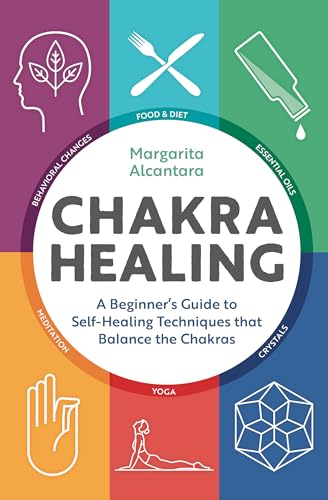
The best book on chakras depends on your goals: for beginners, Margarita Alcantara’s Chakra Healing offers accessible self-healing techniques; for in-depth study, Anodea Judith’s Wheels of Life blends traditional and modern insights. This guide explains key choices and the limits of chakra claims.
Many books claim to teach chakra healing, but their approaches vary widely. Readers often struggle to find clear, trustworthy guidance on chakra origins, practices, and outcomes.
Much popular chakra literature mixes traditional Indian concepts with modern Western psychology, creating confusion about what chakras really are and how to work with them.
This article separates documented history from modern invention, reviews scientific evidence, and helps you choose a chakra book suited to your personal goals.
Practical Chakra Journal for Beginners
An activity book and journal to practise chakra awareness daily Links go to Amazon and earn this site a small commission at no extra cost to you.
Knock Knock Chakras Activity Book & Journal
This journal combines fun activities with daily prompts to build chakra awareness and grounding skills, ideal for those new to chakra practice.
Skip it if: Skip it if you want a purely theoretical or advanced text without interactive elements.
Best Book on Chakras: Historical Origin and Evolution
Chakras appear in ancient Indian spiritual traditions, notably the Upanishads and Tantric texts, though their descriptions vary. The original classical sources include early Sanskrit scriptures where chakras are subtle centres of consciousness rather than fixed anatomical points.
Early mentions of chakras occur in the Upanishads, composed around 600–300 BCE, which refer to energy centres without a fixed number or detailed features. Later Tantric scriptures, from roughly the 7th century CE onwards, elaborate on these centres with varying counts and functions, sometimes describing five, six, or more chakras.
The seven-chakra model commonly seen today is a modern standardisation developed in the 19th and 20th centuries. It blends classical ideas with new interpretations, assigning specific locations, colours, and attributes to each chakra from Muladhara (root) to Sahasrara (crown). This system is not uniformly recognised across historical sources.
Historically, chakras were understood as subtle energy or psychological centres within the body’s spiritual anatomy. Over time, their meaning expanded in some traditions to symbolise layered aspects of human consciousness and spiritual growth, rather than solely energy nodes.
Traditional chakra systems differ in number and emphasis. For example, some texts focus on four or five key chakras, while others describe complex networks of hundreds of minor chakras. This variation reflects evolving spiritual practices and regional teachings within Indian philosophy.
This evolution from subtle energy centres to symbols with psychological and spiritual layers shapes how chakras are studied and practised today, distinguishing classical views from modern adaptations.
The seven main chakras as traditionally described, from Muladhara (root) to Sahasrara (crown).
Differences Between Traditional and Modern Chakra Systems
Traditional chakras are subtle energy points in Indian philosophy, not physical anatomy. They represent centres of consciousness and spiritual function rather than tangible organs or measurable physical energy.
Classical Indian texts describe chakras as part of the subtle body, accessed through meditation and spiritual discipline. They do not identify chakras with specific physical energy or anatomy, nor do classical Ayurveda texts mention chakras in their anatomical descriptions.
Modern Western chakra systems often combine these traditional concepts with psychology, colour therapy, crystals, and sound healing. This approach uses chakras as tools for emotional and spiritual self-help rather than strictly spiritual anatomy.
For example, many contemporary books assign rainbow colours to chakras, link specific crystals to each centre, and use sound frequencies or affirmations to balance them. These elements are modern innovations, popular since the 20th century, and not part of classical Indian teachings.
The modern use of chakras emphasises personal growth and wellbeing rather than exclusively spiritual enlightenment. This reflects Western interests in psychology and holistic health, adapting chakra ideas for accessible self-help techniques.
Understanding these differences helps readers choose books that match their goals: whether studying traditional spiritual anatomy or exploring chakras for emotional and psychological balance.
For deeper study of traditional chakras, look for texts grounded in Sanskrit sources. For practical self-healing, contemporary books with clear instructions on meditation, crystals, and sound offer accessible guidance.
Readers can explore these approaches further in What Are Chakras? The Complete Guide to Energy Centers.
Scientific Evidence and Limits of Chakra Healing
There is no scientific evidence confirming chakras as anatomical or measurable energy centres in the human body. The traditional chakra system describes subtle centres of consciousness rather than physical structures that can be detected or measured by scientific instruments.
Research on meditation and breathwork practices linked to chakra healing shows benefits such as reduced stress and improved emotional regulation. These effects arise from mindfulness and controlled breathing, not from manipulating chakra energies. Scientific studies support meditation’s positive impact on mental health, but they do not validate chakra-specific mechanisms.
Crystals and sound frequencies are commonly used in chakra healing to support relaxation and focus during meditation. Despite their popularity, there is no scientific validation that crystals or sound frequencies can cure or treat health conditions by influencing chakras. Their effects are largely subjective and may be explained by placebo or general therapeutic settings.
Anyone experiencing medical or psychological issues should consult qualified health professionals. Chakra healing can complement but should not replace evidence-based medical treatment or therapy. Books that discuss chakra healing often emphasise this boundary, advising readers to seek professional care where appropriate.
How to Select a Chakra Book Based on Your Personal Goals
Choose a chakra book based on your experience level and what you want to achieve. Beginners benefit from books with clear language and simple explanations. These often include practical exercises for self-healing and chakra clearing.
Intermediate readers might look for books that blend spiritual growth with psychological insight. Such books explore chakra symbolism, emotional patterns, and how chakras relate to personal development.
Advanced readers often seek comprehensive studies combining historical texts with modern interpretations. These books provide detailed analysis of chakra origins, classical sources, and varied traditions.
If your goal is practical learning, select books that feature exercises, meditations, or journalling prompts. Avoid books heavy on mystical claims or unverified healing promises, which can confuse and disappoint readers looking for clear guidance.

This journal offers engaging prompts and activities to explore chakra awareness, ideal for readers who want hands-on chakra practice.
See it on Amazon →Check the author’s background and sources. Credible books reference classical texts or acknowledged traditions rather than rely solely on personal experience or modern inventions. Clear explanations help you distinguish traditional chakra teachings from contemporary adaptations.
Clarification Between Chakra as Symbol and Chakra in Popular Culture
In spiritual traditions, chakras are symbolic energy centres representing aspects of physical and spiritual life. They serve as metaphors for emotional and psychological states, not physical organs or literal energy points. The concept comes from Indian philosophy, where chakras symbolise layers of consciousness and spiritual growth.
Popular culture often adopts chakras as dramatic symbols. Anime like Naruto depict chakra as a visible force used in combat, which differs from traditional teachings. New Age practices sometimes exaggerate chakra activation as a mystical possession or supernatural power. These portrayals mix fiction with spiritual ideas for entertainment or personal meaning.
Traditional texts do not support the idea of chakras causing possession or uncontrolled spiritual phenomena. Instead, chakras relate metaphorically to states of openness, balance, or blockage in emotional and spiritual health. For example, the crown chakra (Sahasrara) symbolises connection to higher awareness, but activation is a gradual inner process, not an instant event.
Common misunderstandings include expecting immediate visible effects from chakra work or confusing emotional shifts with spiritual possession. The spiritual meaning of opening chakras involves increased self-awareness and emotional release rather than external control or magic.
Spiritual witches and modern practitioners may use chakra concepts symbolically in rituals and healing, focusing on intention and personal insight. This use is valid within their practice but differs from classical Indian philosophy. Recognising these differences helps avoid conflating symbolic or fictional chakras with historical teachings or medical claims.
Practical Exercises for Chakra Balancing and Their Effects
Common chakra exercises include meditation, breathwork, visualisation, and yoga postures. Meditation often involves focusing attention on each chakra area, imagining light or colour to encourage relaxation and mental clarity. Breathwork supports calm and focus by regulating the nervous system.
Visualisation techniques invite practitioners to picture chakras glowing or spinning. Yoga postures target physical areas associated with chakras, such as hip-opening poses for the sacral chakra or heart-opening backbends for the heart chakra. These exercises enhance body awareness and emotional openness.
Affirmations and sound therapy complement these practices. Affirmations are positive statements spoken or thought to encourage mental shifts related to specific chakras. Sound therapy uses tones or chanting to create a calming environment, supporting emotional balance.
These exercises promote wellbeing by reducing stress, improving concentration, and increasing emotional awareness. They do not guarantee chakra cleansing or healing in a literal sense. The benefits arise from focused mental and physical practice rather than manipulation of measurable energy centres.
- Set a Comfortable SeatSit with your knees lower than your hips; use a firm cushion to support your posture.
- Focus on One Chakra at a TimeVisualise the chakra’s location and colour; notice sensations without judgement.
- Use Breath to Deepen AwarenessInhale calmly through the nose, exhale slowly; match breath rhythm to visualisation.
- Incorporate Affirmations or SoundsRepeat a positive phrase or chant a mantra; listen to gentle tones if preferred.
- End with GroundingVisualise energy settling into your body; open eyes gently and stretch if needed.
Knock Knock Chakras Activity Book & Journal offers guided prompts and activities to explore and note your chakra experiences, ideal for establishing a daily practice.
See it on Amazon →Common Claims vs Reality About Chakras
| Commonly claimed | Actually |
|---|---|
| Chakras are scientifically proven energy centres affecting health | There is no scientific evidence confirming chakras as anatomical or measurable energy centres; this claim comes from modern popular belief rather than documented research. |
| The seven-chakra rainbow system is an ancient, classical Indian teaching | The familiar seven-chakra chart and its associated colours are modern Western creations; classical Indian texts describe differing numbers and do not specify these colours. |
| Crystals and sound frequencies can cure or treat health conditions via chakras | Crystals and sound are used in chakra practices today but lack scientific validation as cures or treatments; their use is based on modern complementary approaches. |
| Chakra healing techniques can replace medical treatment for physical or psychological conditions | Chakra practices are complementary and reported to support wellbeing but cannot replace qualified medical or psychological care. |
| All seven chakras are equally recognised in traditional texts | Traditional sources vary widely, with some mentioning fewer or more chakras; the standard seven-chakra model is a modern synthesis. |
Frequently Asked Questions
Related Reading
- How to Heal Your Chakras — Simple chakra healing guide
- What Is Chakra Healing? — Basics of chakra healing explained
- Root Chakra Healing and Balance — Focus on root chakra healing
- Chakra Healing Movements — Effective techniques for balancing chakras
Sources
- Best Books About Chakras and Healing (13 books) — Popular beginner and advanced chakra books
- 9 Best Chakra Books to Unlock Your Inner Energy in 2027 – Spirituality Read — Differences in traditional and modern chakra systems
- 10 Best Chakra Books to Understand, Heal, and Balance Your Chakras – Fitsri Yoga | Yoga Alliance Certified Online Yoga School — Practical chakra healing methods and book recommendations
- 9 Inspirational Books on Chakra Vibrations and Healing — Modern chakra healing practices and claims

The article covers chakra concepts, history, modern uses, and book choices; it does not address medical advice beyond recommending professional care when appropriate. As an Amazon Associate, Chakra Serenity earns from qualifying purchases. Prices and availability change, so check the listing before you buy.