Best Chakra Singing Bowls for Sound Healing and Meditation
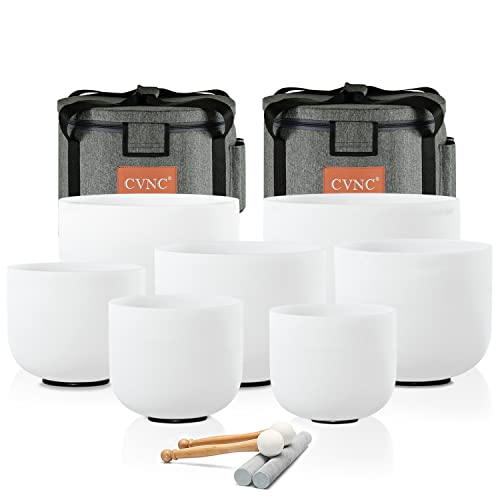
Reviews and buying advice to find the right bowl for your spiritual practice
Chakra singing bowls designed for sound healing and meditation are available in quartz crystal and metal, tuned to specific frequencies or chakra notes. The best sets cover all seven chakras or focus on one, offering clear, resonant tones that support meditation and chakra balancing.
People seek chakra singing bowls to enhance meditation and sound healing with focused tones. Buyers often struggle to find bowls that are authentic, well-tuned, and suitable for their level of practice.
Many popular options mix commercial claims with unclear tuning or fragile materials, causing confusion about which singing bowls truly aid chakra work.
This guide clarifies types, features, and practical use, helping you choose a singing bowl that suits your sound healing or meditation needs without guesswork.
Recommended Chakra Singing Bowls
Quality bowls that support sound healing and chakra meditation Links go to Amazon and earn this site a small commission at no extra cost to you.
Premium Tibetan Singing Bowl Set – Handmade in Nepal
This handmade set includes a bowl, cushion and mallet, making it ready for meditation and sound healing. Its moderate size suits new practitioners seeking quality and ease of use.
Skip it if: Skip it if you want a full seven-chakra set or quartz crystal bowls instead.
Best Chakra Singing Bowls for Sound Healing and Meditation
The best chakra singing bowls for sound healing and meditation come in two main types: quartz crystal bowls and traditional Tibetan bronze bowls. Quartz crystal bowls produce clear, pure tones tuned precisely to chakra frequencies, while Tibetan bowls offer a warmer, complex sound with subtle overtones.
Advantages of Quartz Crystal Bowls
- Rich, layered sound with harmonic complexity
- Durable and long-lasting with traditional craftsmanship
- Each bowl has unique tonal character from hand hammering
Advantages of Tibetan Bronze Bowls
- Tone can vary between bowls, making tuning less exact
- Heavier and less portable
- May require more skill to produce clear notes
Key features to consider include tuning frequency, size, weight and fragility. Most chakra singing bowls are tuned to notes associated with the seven main chakras, such as C for the root chakra and B for the crown chakra. Quartz bowls often specify tuning to exact frequencies like 432 Hz or 528 Hz, linked by some practitioners to healing qualities. Bronze bowls rely on the artisan’s skill and traditional pitch standards.
Size affects the bowl’s tone and portability. Smaller bowls produce higher pitches and are easier to handle during meditation, while larger bowls give deeper, longer-lasting sounds. Weight influences how comfortable the bowl is to hold or strike. Fragility varies: crystal bowls require careful handling, while bronze bowls withstand impact better but can dent.
A top choice for beginners and experienced meditators is the Premium Tibetan Singing Bowl Set by Himalayan Bazaar. Handmade in Nepal, it includes a 4-inch bronze bowl, a leather-covered mallet and a silk cushion. Its clear, resonant tone supports mindfulness and chakra meditation without overwhelming complexity.
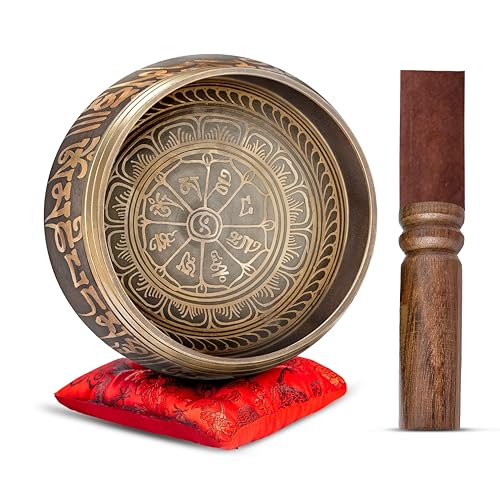
This set is perfect for those starting with chakra sound bowls or wanting a durable bronze option with authentic craftsmanship.
See it on Amazon →This bowl’s tuning corresponds well with common chakra notes, enabling focused sound meditation. The handmade quality ensures a unique sound each time, encouraging attentive listening. Its moderate size balances resonance with ease of use, making it suitable for guided meditation or personal practice.
Quartz crystal bowls often come in full chakra sets covering all seven chakras, each tuned precisely to a chakra frequency. These sets facilitate systematic chakra meditation by matching sound to energy centres. Bronze bowls may also be sold individually or as sets, though exact tuning can vary more.
Choosing between quartz and bronze depends on your meditation style, preference for sound character, and practical needs like portability or durability. Both types support chakra meditation effectively when selected for quality tuning and craftsmanship.
For further details on traditional Tibetan bowls and their use in chakra healing, see Tibetan Singing Bowl Meditation for Chakra Healing. To explore chakra sound meditation techniques expanding beyond bowls, visit Chakra Sound Meditation: Harmonize Your Energy Centers.
How to Choose the Right Chakra Singing Bowl
Choosing a chakra singing bowl depends on your meditation style, experience and budget. Decide first whether you want a full set covering all seven chakras or a single bowl tuned to one chakra. Full sets provide a complete sound range but cost more and require storage space. Single bowls suit focused practice or beginners testing their preference.
Material affects tone and handling. Quartz crystal bowls produce clear, pure sounds and a bright look. Metal bowls, often bronze, offer warmer, earthy tones with subtle overtones. Crystal bowls are fragile and heavier; metal ones are more durable and portable.
Size and portability matter if you travel or have limited space. Larger bowls produce deeper notes but are less convenient to carry. Smaller bowls fit in a bag but sound higher pitched and shorter-lived.
Price generally reflects craftsmanship and sound quality. Handmade metal bowls tuned by experienced artisans command higher prices. Mass-produced crystal bowls vary widely; some are precise, many less so. Choose what fits your budget without sacrificing clear, sustained tones.
Avoid unclear tuning
Some sellers label bowls as chakra bowls without matching the correct notes or frequencies. Check if the product specifies tuning or chakra note names.
- Define your focusChoose a full set if you want to explore all chakras or single bowls for targeted work.
- Select materialPick quartz crystal for clarity and visual appeal, metal for warmth and resilience.
- Consider sizeBalance sound depth with portability needs.
- Check tuning detailsVerify the bowl matches chakra notes or frequencies.
- Match budgetPrioritise clear tone and durability over price alone.
Using Chakra Singing Bowls in Meditation and Sound Healing
Place singing bowls near the body areas corresponding to the chakras you want to work on. For example, position a bowl tuned to the heart chakra near the chest. This proximity helps the sound resonate with that chakra.
Basic techniques include striking the bowl gently with a padded mallet to produce a clear tone, or rubbing the mallet around the rim to create a sustained, vibrating sound. Avoid striking too hard, which can produce a harsh noise.
Sequence your use of bowls to follow the chakra order from root to crown or vice versa. Spend about one to two minutes with each bowl, allowing the sound to fade naturally before moving on. This timing supports focused attention and energetic flow.
Notice the sound qualities and bodily sensations as the bowls play. The vibrations may feel subtle or strong depending on bowl size and material. Awareness helps deepen the meditation.
Combine bowl sounds with breath control or visualisation. For example, inhale deeply as a bowl rings, then exhale imagining the chakra clearing or energising. This integration enhances the meditative effect.
- Position bowlPlace the bowl near the chakra you intend to focus on.
- Produce toneStrike or rim the bowl gently to start the sound.
- Follow sequenceMove through chakras in order, timing each sound.
- Observe sensationsNotice vibrations in body and mind.
- Add breath or visualisationSynchronise breath or mental imagery with sound.
Mindful sound observation
Sound from singing bowls can reveal subtle energetic shifts. Paying close attention helps you learn which tones resonate best with your practice.
Common Challenges with Chakra Singing Bowls and How to Avoid Them
Using chakra singing bowls can sometimes cause discomfort such as headaches during meditation. This often occurs when the sound is too loud or harsh, overwhelming the senses rather than calming them. To prevent this, start with lower volume and gradually increase as your tolerance grows.
Fragility
Quartz crystal bowls are delicate and can crack or chip if dropped or struck too hard. Handle with care and store them on soft surfaces when not in use.
Many beginners struggle to produce a clear tone from singing bowls. This frustration usually results from incorrect striking or rubbing technique. Use a mallet suitable for the bowl size and material, and practise a smooth, consistent motion rather than forceful hits. A felt-covered mallet often helps produce a warmer sound.
Some users expect immediate chakra clearing or healing effects from singing bowls. The bowls support meditation but do not guarantee specific outcomes. Manage expectations by focusing on the sound as a meditation aid, not a cure. If you experience persistent discomfort or seek to address serious blockages, consult a qualified meditation teacher or health professional.
Regarding the question of whether to balance chakras before or after meditation, many teachers suggest sound healing complements meditation rather than replaces it. Use singing bowls either to prepare for meditation by calming the mind or afterwards to deepen relaxation and integration.
When to Seek Help
If chakra meditation causes headaches or emotional distress repeatedly, stop and seek guidance. Professional advice can identify whether the practice or the equipment suits your needs.
The Role of Tuning Frequencies in Chakra Singing Bowls
Tuning frequencies such as 432 Hz and 440 Hz refer to the pitch standard used to tune musical instruments. Historically, 440 Hz became the international standard in the 20th century. Some practitioners prefer 432 Hz, believing it is more harmonious with natural vibrations and beneficial for meditation.
Frequency Standards
The ISO standard for musical pitch sets the A4 note at 440 Hz since 1955. Earlier periods used varied tuning, with no universal standard.
Beliefs around 432 Hz suggest it produces a softer, more relaxing sound that aligns with the frequencies of nature. In contrast, 440 Hz tuning is sometimes described as brighter or sharper. These perceptions influence preferences but have no scientific proof of superior therapeutic effect.
In chakra singing bowls, tuning corresponds to notes associated with each chakra, following a scale that links root to crown chakras with specific pitches. This is a modern convention, not documented in classical Sanskrit texts. The popular seven-chakra sound system is a contemporary framework rather than an ancient standard.
Scientific evidence on chakra sound meditation is limited. Studies on sound frequency effects generally focus on relaxation or brainwave entrainment, not on chakra-specific outcomes. User reports vary widely and depend on individual response to sound and meditation practice.
Modern chakra singing bowls may be tuned to either 432 Hz or 440 Hz or other frequencies. Choice depends on personal preference and the desired sound character. Neither frequency guarantees healing; they serve as tools to support meditation and focus.
Comparison of Quartz Crystal and Tibetan Singing Bowls for Chakra Work
Quartz crystal and Tibetan singing bowls differ significantly in sound, appearance, durability and cultural background, influencing their use in chakra sound meditation.
Quartz crystal bowls produce a clear, pure tone with a sustained resonance. Their sound is often described as bright and penetrating, which some find helpful for focusing on specific chakras during meditation. Tibetan metal bowls, made traditionally from an alloy of seven metals, emit a warmer, more complex tone with rich harmonics. This makes them popular for broader chakra healing sessions.
Visually, crystal bowls are translucent and smooth, offering a modern aesthetic. Their tactile feel is cool and glass-like. Metal bowls show hammered patterns and vary in colour from bronze to dark brown, reflecting handcraft traditions. This texture can enhance the physical connection during sound healing.
Crystal bowls require careful handling as they are brittle and prone to chipping or cracking if dropped. Metal bowls are more robust and resist damage from regular use. They need occasional polishing to prevent tarnish but generally require less delicate care.
Tibetan singing bowls originate from Himalayan regions and have long associations with Buddhist ritual and tantric practice. Their authenticity is supported by documented historical use in meditation and healing. Quartz crystal bowls are a modern development, emerging in the late 20th century, and do not have the same cultural provenance but are widely accepted in contemporary sound therapy.
For beginners, metal bowls often offer a forgiving, tactile introduction to chakra sound meditation. Their sustained, complex tones help mask slight errors in playing technique. Advanced practitioners may prefer quartz crystal bowls for their precision and clarity, which suit focused chakra tuning and professional sound healing.
Quartz Crystal Singing Bowls Suit
- Clear, pure tone for focused chakra work
- Modern, attractive appearance
- Useful in clinical or therapeutic settings where sound precision matters
Less Suited to
- Fragile and requires careful handling
- No traditional cultural context
- Less forgiving for beginners
Tibetan Metal Singing Bowls Suit
- Rich, complex sound with natural harmonics
- Durable and tactile craftsmanship
- Authentic link to Himalayan meditation practices
- Better for beginners learning chakra sound meditation
Less Suited to
- Sound can be less precise for exact chakra frequency tuning
- Requires some maintenance to prevent tarnish
- Heavier and less portable
How Singing Bowls Complement Chakra Meditation Techniques
Singing bowls enhance chakra meditation by integrating sound with breath, visualisation and guided practice. Their vibrations help focus attention and deepen the meditative state.
In breathwork, timing the bowl’s tone with inhalation or exhalation anchors awareness. The rising sound can match a slow inhale, while the fading tone aligns with an extended exhale, encouraging a calm, steady rhythm.
During guided visualisations, specific chakra tones direct focus to energy centres. Playing the bowl tuned to a chakra while imagining its colour or symbol strengthens concentration and sensory connection.
Kundalini practices often involve awakening energy at the base chakra and moving it upwards. Singing bowls marking each chakra’s note can signal transitions, supporting the practitioner’s internal journey and subtle energy shifts.
Singing bowls also assist chakra clearing and balancing by producing sounds that some report as clearing blockages or harmonising the centres. While these effects are subjective, the bowls provide a structured auditory framework for intentional meditation.
Group meditations benefit from singing bowls by synchronising participant focus and creating a shared sonic environment. Solo meditators gain from the bowls’ feedback on their practice, using sound cues to maintain presence.
- Synchronise Breath and SoundPlay the bowl’s tone to follow inhalation and exhalation patterns for steady focus.
- Use Chakra-Specific TonesMatch bowl notes to chakras during guided visualisation to enhance sensory engagement.
- Mark Kundalini TransitionsSound each chakra’s bowl as energy rises during kundalini meditation.
- Support Clearing and BalancingUse sustained tones to assist intentional clearing or harmonising of chakras.
- Adapt for Group or Solo PracticeLeverage the bowls’ sound to unite group focus or guide solo sessions.
The seven main chakras and their traditional Sanskrit names, relevant to chakra singing bowl tuning
Common Claims About Chakra Singing Bowls Compared to What Is Documented
| Commonly claimed | Actually |
|---|---|
| All chakra singing bowls are tuned to ancient chakra frequencies | The association of specific frequencies with chakras is a modern practice; classical texts do not specify such tuning. |
| Quartz crystal bowls have always been used in traditional Indian chakra healing | Quartz crystal bowls are a recent Western innovation, not part of classical Indian chakra practices. |
| Using singing bowls can cure physical or psychological illnesses | There is no scientific evidence that singing bowls cure illnesses; they support relaxation and meditation only. |
| The seven-chakra colour scheme is traditional and tied to specific bowl colours | The rainbow colour scheme is a modern Western development, not found in classical chakra texts. |
| Tibetan singing bowls originate from India’s chakra system | Tibetan singing bowls come from Himalayan traditions distinct from classical Indian chakra teachings. |
Frequently Asked Questions

As an Amazon Associate, Chakra Serenity earns from qualifying purchases. Prices and availability change, so check the listing before you buy.