Do Lotus Petals and Chakras Vary? The Complete Guide
Explains the petal differences and their spiritual significance
Lotus petal counts differ by chakra, typically ranging from 4 to over 1,000 petals. These counts reflect each chakra’s symbolic meaning and energetic complexity in Hindu and Buddhist traditions.
Lotus petal numbers vary widely across chakra symbols. The reasons include differences in tradition, interpretation and the purposes of the symbols. This explains why sources often disagree.
Chakras are commonly shown as lotuses with petals, but the exact number depends on the tradition and the chakra in question. This number is not random; it holds symbolic significance tied to energy channels, psychological qualities, and cosmic principles.
This guide clarifies how lotus petal counts vary in established chakra systems, what each count means, and how these symbols support meditation and healing practices.
Further Reading on Chakra Petals
Deepen your understanding of chakra energy and petal symbolism Links go to Amazon and earn this site a small commission at no extra cost to you.
Chakra Petal Healing: A Complete Guide
This book covers detailed chakra petal symbolism and energy alignment practices, ideal for beginners and experienced practitioners.
Skip it if: Skip it if you prefer concise summaries rather than in-depth study.
How Many Lotus Petals Are in Each Chakra and Why They Vary
The seven main chakras each have a traditional lotus flower representation with a specific number of petals. These counts symbolise the chakra’s energetic qualities and the number of subtle energy channels, called nadis, connected to it. The usual numbers are: 4 petals for the root chakra (Muladhara), 6 for the sacral (Svadhisthana), 10 for the solar plexus (Manipura), 12 for the heart (Anahata), 16 for the throat (Vishuddha), 2 for the third eye (Ajna), and 1,000 or more for the crown (Sahasrara).
Each petal number aligns with the chakra’s role and complexity. For instance, the heart chakra’s 12 petals represent the 12 primary nadis meeting there, reflecting its function as an emotional and energetic centre. The two petals of the third eye chakra symbolise the dual aspects of intuition and insight.
Petal counts vary between spiritual systems because classical texts and traditions differ in their chakra models. Some mention additional chakras or alternative petal numbers. While the exact counts are not uniform, they consistently indicate the chakra’s depth and psychological attributes.
- Root chakra (Muladhara): 4 petals, representing stability and grounding
- Sacral chakra (Svadhisthana): 6 petals, linked to creativity and emotion
- Solar plexus chakra (Manipura): 10 petals, associated with willpower and transformation
- Heart chakra (Anahata): 12 petals, denoting love and balance
- Throat chakra (Vishuddha): 16 petals, relating to communication and truth
- Third eye chakra (Ajna): 2 petals, symbolising intuition and insight
- Crown chakra (Sahasrara): 1,000 petals or more, expressing spiritual connection and enlightenment
The seven chakras with their traditional lotus petal counts and Sanskrit names.
Petal Counts and Nadis
The number of lotus petals traditionally corresponds to the number of subtle energy channels (nadis) associated with each chakra.
Symbolism of Lotus Petals in Chakra Tradition
The lotus flower symbolises purity and spiritual unfolding in Indian traditions. Its emergence from muddy waters to bloom unsullied mirrors the soul’s journey through ignorance to enlightenment. Each lotus petal on a chakra symbol represents a facet of this awakening and the qualities cultivated at that energy centre.
Petal counts connect to psychological and cosmic cycles. For example, the six petals of the sacral chakra correspond to six negative qualities to overcome, while the 16 petals of the throat chakra align with the sixteen vowels in Sanskrit, linking sound and communication. These counts encode spiritual teachings about human nature and the universe.
Physiologically, lotus petals correspond to nerve bundles or sensory centres connected to the chakras. The heart chakra’s 12 petals can be seen as symbolic of twelve significant nerve clusters around the heart region. The third eye chakra’s two petals represent duality and the union of left and right brain functions.
Ajna Chakra Petals
The two petals of the Ajna chakra signify the meeting of dual energies: Ida and Pingala nadis, representing the integration of intellect and intuition.
Detailed Petal Counts and Meanings for Each Chakra
Each of the seven main chakras is traditionally symbolised by a lotus flower with a specific number of petals. These counts reflect particular qualities and functions attributed to each chakra in Hindu and Buddhist systems.
The root chakra (Muladhara) has 4 petals. These represent stability, security, and the four cardinal directions, emphasising this chakra’s role in grounding the body to the earth.
The sacral chakra (Svadhishthana) shows 6 petals. These petals symbolise emotional fluidity and desire. The number six also aligns with the six tastes in Ayurveda, linking this chakra to pleasure and bodily fluids.
The solar plexus chakra (Manipura) is depicted with 10 petals. These correspond to the ten vital organs and the ten pranas (life energies), highlighting this chakra’s focus on digestion, energy transformation, and personal power.
The heart chakra (Anahata) traditionally has 12 petals. These petals represent twelve qualities such as love, compassion, and peace. Modern interpretations sometimes show 24 petals to signify expanded consciousness (5D levels), but this is a contemporary innovation; classical texts consistently describe twelve petals.
Heart Chakra Petal Count
The 24-petal heart chakra is a modern addition not found in classical sources. The historically documented lotus has 12 petals.
The throat chakra (Vishuddha) features 16 petals. These correspond to the sixteen Sanskrit vowels, tying the chakra to sound, speech, and purification.
The third eye chakra (Ajna) uniquely has 2 petals. These represent the ida and pingala energy channels that converge here, symbolising the balance between intuition and intellect, as well as the brain’s two hemispheres.
Meaning of Two Petals
Though simple in appearance, the two petals of the Ajna chakra convey complex dualities essential to mental balance.
The crown chakra (Sahasrara) is shown with over 1,000 petals, often precisely 1,000. This large number symbolises infinite consciousness and spiritual enlightenment, radiating outward to represent boundless awareness.
This precise chakra-by-chakra petal count illustrates that lotus petals are not arbitrary decoration. Each number expresses the chakra’s unique psychological, physiological and spiritual significance.
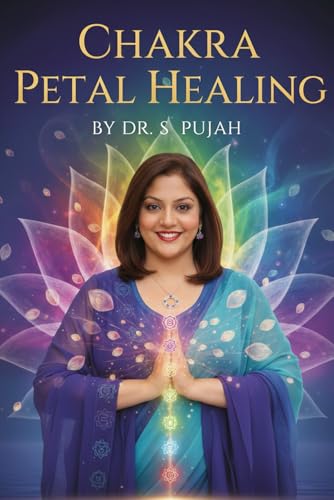
This guidebook clarifies how lotus petal numbers correspond to chakra qualities and supports practical energy alignment.
See it on Amazon →Historical Variations in Chakra Petal Counts and Systems
Chakra systems and their lotus petal counts vary across traditions and historical periods. Early Buddhist texts describe fewer chakras, often focusing on four or five centres, each with fewer petals than later systems.
Classical Hindu systems, such as those found in tantric texts, generally present seven chakras with petal counts ranging from 4 to over 1,000. These counts carry rich symbolic significance, linking to mantras, energy channels and psychological states.
Modern Western and New Age interpretations often expand or alter petal counts and chakra numbers. These variations include adding chakras outside the classical seven or assigning new meanings to petal numbers, influenced by contemporary spiritual practices and psychological models.
| Tradition | Number of Chakras | Petal Counts | Notes |
|---|---|---|---|
| Early Buddhist | 4-5 | Fewer petals per chakra | Focus on energy centres relevant to meditation and liberation |
| Classical Hindu | 7 | 4 to 1,000+ | Petal counts linked to mantras and energy channels |
| Modern Western/New Age | 7+ | Varies widely | Incorporates psychological and metaphysical concepts beyond classical texts |
Comparison of chakra systems and lotus petal counts across traditions
Differences arise because each tradition emphasises different spiritual goals and physiological understandings. Early systems prioritise meditation experience and liberation, classical Hindu texts integrate subtle physiology and mantra symbolism, while modern interpretations adapt to new spiritual frameworks.
Understanding these variations helps clarify why lotus flower chakras differ in petal counts and why no single depiction can claim exclusivity.
Explore more about chakras and their symbols in What Are Chakras? The Complete Guide and The Hidden Meaning Behind Chakra Petal Counts: A Fact-Checked Guide.
How Lotus Petal Counts Influence Chakra Meditation and Healing Practices
The heart chakra traditionally shows 12 lotus petals, reflecting its role in balancing complex emotional and relational energies. Knowing the petal count of each chakra guides meditation by focusing attention on the qualities symbolised by those petals. For example, focusing on the 12 petals of the heart chakra invites contemplation on love, compassion, and emotional openness.
Meditators use visualisation techniques that incorporate the lotus petals’ number and colour. Counting petals during meditation helps maintain focus and deepen the experience. Each petal corresponds to a subtle quality or energy channel (nadī) that practitioners aim to activate or balance. This detailed focus supports a structured approach to chakra work rather than a vague or general meditation.
The complexity of lotus petals also informs healing practices. Chakras with more petals represent more intricate networks of energy channels and psychological attributes. For instance, the throat chakra’s 16 petals indicate the complexity of communication and self-expression. Healers may use this understanding to tailor their approach, addressing specific petals as symbolic points for clearing blockages or enhancing flow.
Crystals are often selected to correspond to the chakra and its petal symbolism. For the heart chakra’s 12 petals, crystals like rose quartz and green aventurine resonate well, supporting emotional healing and love. Using crystals with colours matching the chakra’s traditional hues enhances the symbolic connection during meditation and healing.
- Identify the chakra’s lotus petal countKnow how many petals each chakra has to focus your meditation and healing intent precisely.
- Visualise the lotus petalsImagine the exact number of petals opening and radiating light in the chakra’s colour.
- Use crystals linked to the petal symbolismHold or place crystals that correspond with the chakra’s energy and petal number to support the practice.
- Notice sensations linked to each petalAttend to subtle feelings or shifts as you focus on each petal during meditation or healing.
This guide offers structured instructions for integrating lotus petal counts into meditation and healing, making it easier to apply precise focus and crystal use.
See it on Amazon →Common Claims vs Actual Facts About Chakra Petal Counts
| Commonly claimed | Actually |
|---|---|
| Each chakra always has exactly seven petals. | The number of lotus petals varies widely by chakra, with traditional systems assigning different counts such as four, six, twelve, or over a thousand petals. This variation reflects symbolic meanings, not a fixed number. |
| All chakra systems agree on the number of petals per chakra. | Chakra petal counts differ between Hindu tantric texts, Buddhist depictions and modern Western charts. No single system is universally accepted, explaining the variations found. |
| The crown chakra has exactly 1,000 petals in ancient texts. | The crown chakra is often shown with ‘thousand petals’ symbolically; some sources specify 1,000 but others use the term more figuratively to indicate vastness or infinite consciousness. |
| The two-petal lotus in the third eye chakra represents physical eyes. | The two petals symbolise duality such as ida and pingala nadis (energy channels), not literal eyes. This reflects energetic balance rather than anatomy. |
| Lotus petals in chakra symbols correspond directly to physical body parts. | Lotus petals are symbolic and relate to qualities like consciousness or energy flow, rather than specific physical anatomy. Their counts are metaphorical, not anatomical maps. |
Frequently Asked Questions

As an Amazon Associate, Chakra Serenity earns from qualifying purchases. Prices and availability change, so check the listing before you buy.