Chakra Alignment With Colors: A Complete Guide
Accurate origins and practical colour methods for chakra balance
Chakra alignment with colours involves associating each of the seven main chakras with a specific colour and using visualisation, meditation, and colour therapy to balance and support these energy centres. These colours mostly originate from a modern Western synthesis rather than classical Indian texts.
People seek chakra colour alignment to improve physical, emotional and mental wellbeing. Many find the usual chakra colour chart online but lack clarity on its origins and how to use colours effectively.
Common answers mix ancient chakra concepts with modern colour psychology without distinguishing historical facts from recent inventions. This causes confusion about whether colours have fixed meanings or how to apply them.
This guide clarifies the historical background, explains each chakra’s colour and symbol accurately, explores scientific perspectives on colour effects, and offers practical colour-based alignment methods you can use daily.
Recommended Reading for Chakra Balance
Explore detailed chakra healing and colour alignment methods Links go to Amazon and earn this site a small commission at no extra cost to you.
Chakra Petal Healing: A Complete Guide
This book offers step-by-step methods for aligning chakras using colours and five-element balance suited for beginners and experienced practitioners.
Skip it if: Skip if you prefer brief introductions or solely practical exercises without theory.
Chakras With Their Representative Colours Explained
The seven main chakras each correspond to a specific colour used today in meditation, visualisation, and colour therapy. These are Muladhara (root), Svadhisthana (sacral), Manipura (solar plexus), Anahata (heart), Vishuddha (throat), Ajna (third eye), and Sahasrara (crown). Ancient Sanskrit texts name some colours, such as red for Muladhara and violet for Sahasrara, but do not list the full rainbow spectrum now common in modern practice.
Seven main chakras with Sanskrit names and positions
Each chakra is depicted as a lotus flower with a fixed number of petals: Muladhara has 4, Svadhisthana 6, Manipura 10, Anahata 12, Vishuddha 16, Ajna 2, and Sahasrara 1000. These symbols appear in classical texts alongside bija mantras and elemental links but do not specify colour shades.
| Chakra | Sanskrit Name | Colour | Petal Count | Location | Gland Association |
|---|---|---|---|---|---|
| Root | Muladhara | #B5473A (Red) | 4 | Base of spine | Adrenal glands |
| Sacral | Svadhisthana | #D2762F (Orange) | 6 | Lower abdomen | Gonads |
| Solar Plexus | Manipura | #C9A227 (Yellow) | 10 | Upper abdomen | Pancreas |
| Heart | Anahata | #4B8B5C (Green) | 12 | Centre of chest | Thymus |
| Throat | Vishuddha | #3B7EA1 (Blue) | 16 | Throat | Thyroid |
| Third Eye | Ajna | #43408A (Indigo) | 2 | Forehead between eyes | Pituitary |
| Crown | Sahasrara | #7A5AA6 (Violet) | 1000 | Top of head | Pineal gland |
Seven main chakras with their common modern colours, petal counts, locations, and gland associations
The root chakra’s red and crown chakra’s violet are the few classical colour attributions. The intermediate colours—orange, yellow, green, blue, indigo—come from a modern Western system linking chakras to the rainbow and colour psychology. These associations assist meditation and colour therapy but do not appear in early Indian scriptures.
Origins and Development of Chakra Colour Associations
The earliest references to chakras appear in the Vedas from roughly 1500 to 500 BCE, but these texts do not describe chakra colours. The chakras were conceptualised as energy centres or wheels without fixed colour attributes.
The seven-chakra system was codified in the 16th-century Sanskrit text Sat-Cakra-Nirupana by Purnananda Swami. This text provides detailed descriptions of each chakra’s lotus symbol, petal count, bija mantra, and elemental association but does not specify the rainbow colour scheme known today.
Historical fact
The Sat-Cakra-Nirupana is the earliest known text to codify the seven chakra system with detailed symbolism but no standardised colours.
The familiar rainbow colour chart linking chakras with red, orange, yellow, green, blue, indigo, and violet emerged in the 20th century, developed by Western teachers and authors. This chart combined traditional Indian chakra concepts with Western colour psychology and the visible light spectrum.
Psychological meanings assigned to each colour and connections to vibrational frequencies are modern interpretations without basis in classical Sanskrit texts. These ideas support contemporary chakra realignment practices but are not historical facts.
Common misconception
Chakra colours and their psychological meanings have not remained unchanged since ancient India. Most colour associations are modern inventions developed in the West.
Documented source
The Flag Code of India recognises the Ashoka Chakra’s 24 spokes but does not connect chakra colours to this symbol or its history.
These historical developments explain why chakra colours vary across traditions and why popular chakra colour charts differ. Modern chakra realignment uses colours as visual and psychological tools rather than fixed ancient attributes.
Understanding this history helps clarify that colour alignment practices are contemporary methods to support meditation and wellbeing, built on a blend of classical symbolism and modern interpretation.
For practical guidance on chakra colours and their uses, see our detailed Chakra Colour Reader.
How Colours Affect Chakra Alignment: Scientific and Practical Perspectives
Colour influences the nervous system and mood by stimulating the visual pathways in the brain. Light of different wavelengths activates distinct neural responses, which can affect alertness, relaxation, or emotional state.
There is no scientific evidence that colours directly alter chakra energy or the body’s subtle energy centres. The chakra colour associations come mainly from modern practices rather than classical Indian texts or physiological studies.
Visualising chakra colours during meditation helps focus attention and can promote psychological balance. Colour visualisation acts as a mental anchor, improving concentration and creating calming or energising effects depending on the chosen colour.
Crystals are commonly used alongside chakra colour work. Their support comes from their physical presence and the intention placed on them by the practitioner. Scientific proof is lacking for any measurable energetic effect crystals have on chakras or the body.
Common Misconception
Chakra colour therapy does not imply that colour frequencies physically alter chakras. The concept of vibrational frequencies for colours is a modern interpretation without classical textual support.
Safe ways to use colour include wearing clothes or jewellery in chakra colours, visualising those colours during meditation, and using coloured light therapy under professional guidance. These methods affect mood and mental state through established visual and psychological pathways.
Colour breathing is a practical technique. It involves imagining inhaling a specific chakra colour and exhaling dullness or tension. This method combines breath awareness with colour visualisation to support relaxation and focus.
Chromotherapy, or colour therapy, uses coloured light to influence wellbeing. While popular in alternative medicine, its effects on chakras remain unproven scientifically but can be a supportive element of chakra alignment when combined with meditation.
- Colour VisualisationFocus on the specific colour associated with each chakra during meditation to aid concentration.
- Colour BreathingInhale the chakra colour, imagining it filling the body; exhale tension or dullness.
- Wearing ColoursChoose clothing or accessories in chakra colours to subtly influence mood and remind of alignment goals.
- Using CrystalsPlace corresponding crystals on chakra points as a physical focus and intention aid.
Step-by-Step Guide to Chakra Alignment Using Colours
- Set Up a Comfortable SeatSit so your knees are lower than your hips, using a firm cushion like a zafu or folded blanket to support your posture.
- Focus on Each Chakra in TurnStarting at the root (Muladhara), visualise its position at the base of the spine and clearly picture its associated colour (deep red). Move upward, pausing on each chakra with its colour: orange (Sacral), yellow (Solar Plexus), green (Heart), blue (Throat), indigo (Third Eye), and violet (Crown). Hold each colour steady for several breaths.
- Breathe Colour Into the ChakraInhale deeply, imagining the chakra’s colour flowing into the body at that point. Exhale slowly, releasing tension or dullness. Repeat five breaths for each chakra before moving on.
- Apply Colour Therapy if DesiredYou may place crystals matching a chakra’s colour on its body location or use coloured light or fabrics to reinforce focus and intention during the practice.
- Extend Colour Awareness Beyond MeditationWear clothing or keep objects in your chakra colours nearby to subtly maintain alignment focus throughout your day.
- Practice This Routine ConsistentlyPerform this sequence daily or at least several times a week to support steady chakra balance and colour awareness.
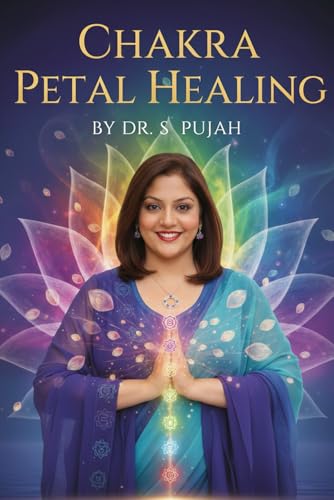
This guide offers detailed instructions for colour breathing and chakra visualisation, ideal for beginners and experienced practitioners alike.
See it on Amazon →Chakra Symbols and Their Relation to Colour and Meaning
Each chakra symbol features a lotus flower with a fixed number of petals. These petals represent specific qualities or aspects of that chakra’s nature. For example, the root chakra (Muladhara) has four petals, symbolising foundational energies, while the crown chakra (Sahasrara) is shown with a thousand petals, indicating expansive consciousness.
Alongside the lotus, chakra symbols include bija mantras—seed sounds that relate to the chakra’s vibrational essence—and elemental icons that connect the chakra to natural forces. The root chakra is linked to earth, the sacral to water, and so forth. These components combine to express the chakra’s function and qualities symbolically.
Modern chakra charts often colour the lotus petals with the chakra’s associated hue. This practice is a contemporary addition that helps visualisation and identification but is not found in classical Indian texts. The colours, while visually helpful, carry layered meanings related to the chakra’s energy and psychological attributes.
- Each lotus petal count is fixed and meaningful to the chakra’s traits
- Bija mantras are Sanskrit seed sounds used in meditation to activate chakras
- Elemental icons link chakras to earth, water, fire, air, ether, light, or thought
- Colours fill lotus petals in modern charts for clearer visual association
- Petal symbolism deepens understanding of the chakra’s energies and challenges
Understanding these symbols adds depth to meditation and colour work. When you visualise a chakra’s colour, recognising the associated lotus petals, mantra, and element enriches the practice. It connects the abstract colour to a broader symbolic system that grounded the chakra tradition historically, even as modern colour assignments evolved.
Using Chakra Colours in Daily Life Beyond Meditation
Wearing clothes in chakra colours is a straightforward way to support your current focus. For instance, red clothing can foster feelings of security linked to the root chakra, while blue supports clear communication related to the throat chakra. Choose colours that align with the chakra qualities you want to cultivate.
Incorporate chakra colours into your environment through lighting, accessories, or home decor. Coloured lights or cushions can subtly influence mood and focus. For grounding, red or earthy tones in your seating area can help you feel more centred during work or reflection.
- Dress in chakra colours that suit your current emotional or mental focus
- Use coloured lights or accessories to create an atmosphere supporting chakra balance
- Decorate with plants or objects in chakra colours to reinforce daily intentions
- Eat fruits and vegetables matching chakra colours, such as orange carrots for sacral or green spinach for heart
- Use water bottles or glasses tinted with chakra colours to subtly enhance hydration routines
Colour and Security
Sitting on a surface in the root chakra’s red or earthy tone can enhance your sense of security. This practical choice aligns your physical environment with the chakra’s grounding function.
Visualising chakra colours before sleep can reinforce balance. Take a moment to picture each colour glowing steadily from its chakra location. This practice does not require special equipment and can prepare the mind for rest while consolidating the day’s chakra work.
Common Claims About Chakra Colours Compared to Facts
| Commonly claimed | Actually |
|---|---|
| Chakra colours and their meanings have remained unchanged since ancient India | Colour associations and psychological meanings mostly developed in modern Western practice, not classical texts. |
| Crystals physically alter chakra energy through measurable electromagnetic properties | Crystals support practice by intention and physical anchoring; scientific proof of energy alteration is lacking. |
| Chakra colours correspond exactly to specific light frequencies affecting the body energetically | While colours have frequencies, linking them directly to chakras is a modern interpretation without classical basis. |
| Each chakra has a universally fixed colour across all traditions | Chakra colours can vary by tradition, but the common rainbow scheme is a modern Western synthesis. |
| Visualising chakra colours alone can cure emotional or physical ailments | Colour visualisation may aid relaxation and mood but does not medically treat conditions; professional care is needed. |
Frequently Asked Questions
Related Reading
- Find your chakra colours by birthdate — Discover personalised chakra colours based on birth dates
- Unveiling the Vibrant Tapestry of Chakra Colours — Explore the history and meanings of chakra colours
- Essential Oils for Chakra Alignment: A Complete Guide — Learn how oils complement chakra colour work
- Seasonal Chakra Alignment: Balance Your Energy with Nature — Connect chakra colours with seasonal cycles
Sources
- Chakra System Complete Guide: Colors, Locations & Healing — Seven chakras, colours, symbols, and historical context
- Chakra Colors & Crystals: The Complete Reference Guide for Every Energy Center – Nicole’s ritual universe — Modern uses of crystals and colour frequencies
- Chakra Colors and Symbols: Complete Visual Guide & Meanings — Chakra symbols and lotus petals
- 7 Chakras – Chakra Colors, Meanings & Functions Explained — Practical chakra colour meditations and meanings
- Chakra – Wikipedia — Textual origins and classical chakra descriptions

The article focuses on chakra colour associations and practices without addressing medical or psychological treatment; consult qualified professionals for health concerns. As an Amazon Associate, Chakra Serenity earns from qualifying purchases. Prices and availability change, so check the listing before you buy.