Best Grounding Crystals: 8 Stones That Actually Work in 2026
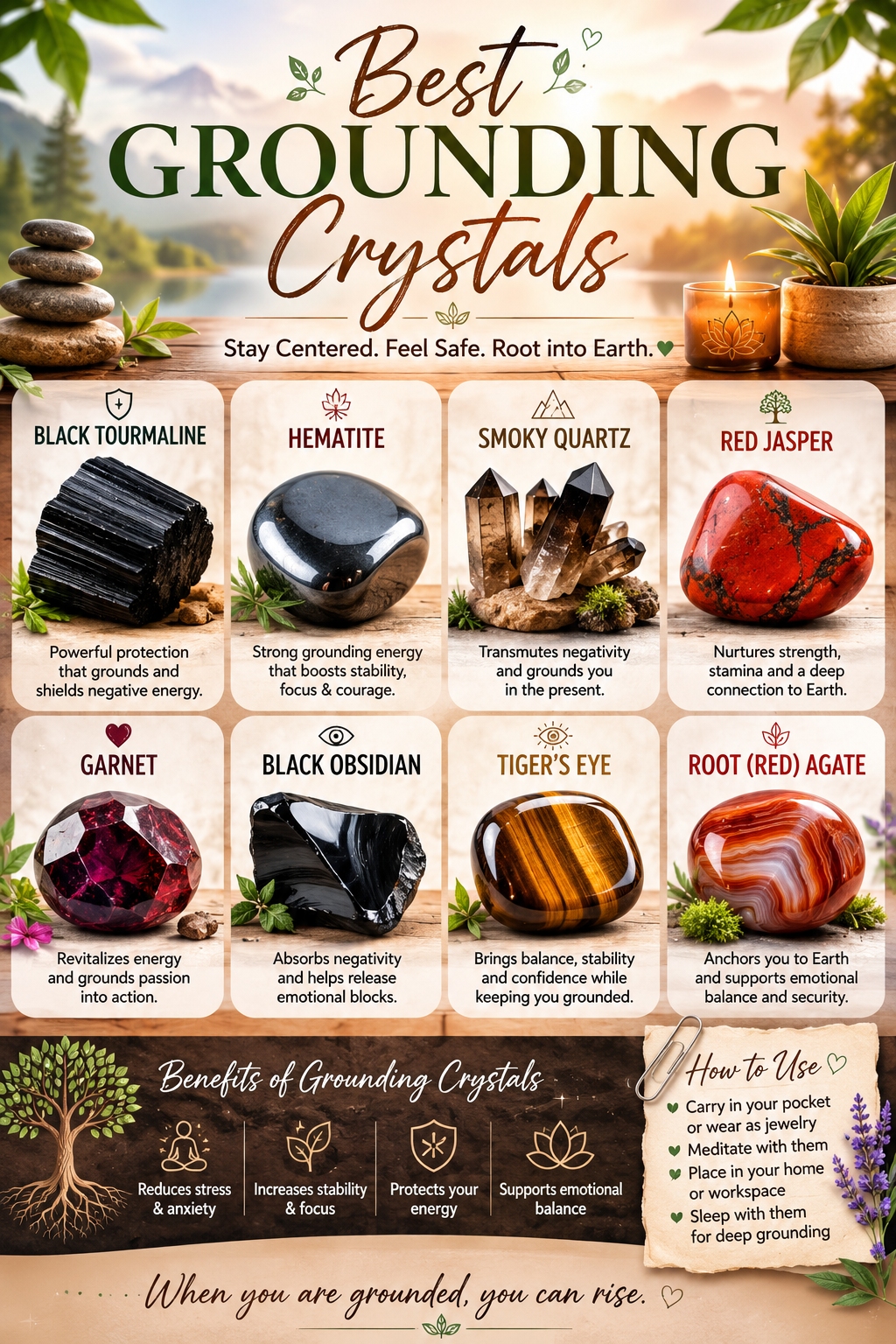
Clear, practical guidance on choosing and using grounding stones based on fact and tradition
The best grounding crystals are black tourmaline, hematite, smoky quartz, red jasper, obsidian, shungite, garnet, and tiger’s eye. Each has distinct properties suitable for different grounding needs, supported by mineral science and traditional use. This guide explains why they work and how to use them effectively.
Many seek grounding crystals to feel stable during anxious or scattered moments. Common lists name the same stones but rarely explain their effects. Some blend facts with unproven ideas about “energy flow.”
This article answers which grounding crystals actually work based on mineral properties and traditional practice, how to pick the right one for your specific feelings, and how to maintain their effectiveness. It also covers scientific facts and common misunderstandings.
You will learn about eight powerful stones with distinct grounding qualities, how they connect to the root chakra, and practical ways to use them in meditation, daily wear, or your environment.
Recommended Crystal Education Book
A detailed guide to 100 crystals including grounding stones Links go to Amazon and earn this site a small commission at no extra cost to you.
The Ultimate Guide to Crystals
This book offers comprehensive details on a wide range of crystals, including their properties and uses for grounding. It suits beginners and experienced users seeking reliable crystal knowledge.
Skip it if: Skip it if you want a brief overview rather than an in-depth guide.
Best Grounding Crystals: 8 Stones That Actually Work
The best grounding crystals are black tourmaline, hematite, smoky quartz, red jasper, obsidian, shungite, garnet, and tiger’s eye. Each stone’s mineral composition and physical properties contribute to its unique grounding effect, mainly through tactile sensation and ritual use rather than any literal “energy flow.”
Grounding crystals tend to be dense, dark, and iron-rich, fitting the root chakra’s connection to safety and stability, also called Muladhara in Sanskrit. This chakra governs our sense of being anchored to the earth and present in the body.
Root chakra connection of grounding crystals.
Black Tourmaline (Schorl)
An iron-rich variety with Mohs hardness 7–7.5. Its solid black colour and rough texture make it a strong tactile anchor, traditionally used for grounding and protection.
Hematite
Composed of iron oxide (Fe₂O₃), with a metallic silvery-black surface and Mohs hardness 5–6.5. Its weight and density provide a pronounced physical sensation of grounding.
Smoky Quartz
A brown to grey variety of quartz (SiO₂) coloured by natural irradiation. Mohs hardness 7. It gently calms anxious minds with a smooth surface ideal for sensitive users.
Red Jasper
Opaque and brick-red due to iron oxide, with Mohs hardness 6.5–7. It offers a steady, warm grounding feeling tied to endurance and stability.
Obsidian
Volcanic glass with a smooth, reflective surface and Mohs hardness about 5–6. Its sharp edges and glossy feel provide a clear tactile focus.
Shungite
A rare carbon mineraloid containing fullerenes, Mohs hardness 3.5–4. Known for its grounding and protection in traditional use, with a lightweight but solid feel.
Garnet
A group of silicate minerals, usually deep red, with Mohs hardness 6.5–7. Its weight and smooth facets offer a firm tactile presence.
Tiger’s Eye
A golden-brown quartz with chatoyancy (a shining, banded effect) and Mohs hardness 7. It combines visual focus with a smooth, warm surface to support confidence and grounding.
Grounding Mechanism
Grounding arises from the stone’s physical properties—weight, texture, colour—and the ritual of holding or wearing it. There is no scientific evidence that crystals transmit grounding “energy.” Instead, they serve as tactile anchors to steady attention and calm scattered thoughts.

This guidebook explains the properties of these stones in detail, assisting beginners to understand their grounding qualities.
See it on Amazon →How to Choose the Right Grounding Crystal for Your Needs
Choosing a grounding crystal depends on your specific ungrounded feelings, such as anxiety, fatigue, or effects from prolonged technology use. Different stones suit different symptoms and preferences in tactile feel, weight, and colour.
- Identify Your SymptomsMatch your feelings to grounding needs: anxiety calls for calming stones like smoky quartz; fatigue benefits from energising stones like red jasper.
- Consider Tactile PreferenceSome prefer heavy, metallic-feeling stones like hematite, while others find smooth quartz varieties easier to hold for long periods.
- Distinguish Hematite TypesNatural hematite is dense and weakly magnetic, while shiny magnetic hematine sold in bead shops is synthetic ceramic and differs in grounding sensation.
- Combine Stones CarefullyYou can combine stones like black tourmaline with red jasper safely for layered grounding effects, but avoid mixing too many at once to keep focus clear.
- Match Experience LevelBeginners often start with gentle stones such as smoky quartz, while experienced users may prefer stronger tactile anchors like hematite or obsidian.
Synthetic Hematine Alert
Magnetic hematite beads are usually synthetic hematine, which lacks the natural density of hematite but still offers a tactile sensation. Know this to choose authentic grounding stones.
Colour can influence your choice. Darker stones feel more connected to earth, while chatoyant tiger’s eye adds visual interest that supports confidence and focus. Your tactile and visual comfort will affect how consistently you use the stone.
Matching a stone to your needs improves grounding effectiveness. Consider holding several stones in person to notice differences in weight, texture, and emotional resonance before deciding.
Combining grounding crystals with mindfulness or breathing exercises enhances their effect. For tailored pairing of stones to feelings, try the Crystal & Stone Matcher to find suitable options.
Scientific Evidence and Mineral Facts Behind Grounding Crystals
Grounding crystals like black tourmaline, hematite, smoky quartz, red jasper, obsidian, shungite, garnet, and tiger’s eye share mineral properties that support their tactile and visual grounding effects. Many are iron-rich or dense stones, contributing to a noticeable weight and texture that help anchor attention in the present moment. Hematite, for example, is iron oxide (Fe₂O₃) with a metallic sheen and significant heft, while smoky quartz is a brown-grey variety of quartz coloured by natural irradiation. These physical properties offer a firm sensory connection to earth materials.
Mineral Facts
Hematite’s iron oxide composition and density provide a strong physical sensation linked to grounding, while smoky quartz’s piezoelectric quartz structure means it generates a small electric charge under pressure, which does not translate into “energy flow” but may enhance tactile awareness.
The grounding effect of crystals arises mainly from their role as tactile anchors, similar to techniques used in grounding therapy where physical sensation interrupts spiralling thoughts. Holding a stone provides a focus point, promoting mindfulness and calm. This explains why crystals for nervous system grounding are effective in practice, even though there is no scientific proof that they transmit any special “grounding energy” into the body.
No Energy Transmission
Claims that grounding crystals send energy flows into the body are unsupported by scientific evidence. Their effect depends on ritual, focus, and sensory feedback, not on unknown energy forces.
Quartz crystals are known for their piezoelectric properties, which means they generate an electric charge when mechanical stress is applied. This property makes quartz useful in electronics but does not imply that smoky quartz or tiger’s eye stones transmit grounding energy. Instead, piezoelectricity may subtly enhance tactile feedback when holding these stones during meditation or breathwork.
A common confusion concerns hematite sold as shiny magnetic beads in jewellery shops. This is often synthetic hematine, a ceramic material that mimics natural hematite’s appearance but has different magnetic and physical properties. Despite this, synthetic hematine still serves as a tactile grounding stone in practice but differs from natural hematite mineralogically.
Obsidian, a volcanic glass, lacks the iron oxide content of stones like hematite but is dense and smooth, offering a different tactile quality. It serves as an alternative grounding stone where a smoother texture or different visual focus is preferred.
Using Grounding Crystals in Meditation and Breathwork
- Hold the StoneSit comfortably and hold your chosen grounding crystal in one or both hands, or place it on your root chakra area, located at the base of the spine or perineum.
- Focus on SensationNotice the weight, texture, temperature, and any subtle vibrations of the stone. Let these sensations anchor your attention to the present moment.
- Combine with BreathworkBreathe slowly and deeply, coordinating your awareness with the tactile feeling of the stone. Inhale calmly, exhale fully, and maintain steady breathing for several minutes.
- Notice Grounding SensationsObserve feelings of stability, calmness, or centredness as your mind settles. These sensations may vary by individual and stone.
- Set Duration and FrequencyStart with 5 to 10 minutes daily to build a routine. Adjust the length and frequency according to your needs and comfort.
Black tourmaline’s rough texture and weight make it especially effective for tactile focus during meditation and breathwork.
See it on Amazon →Cleansing, Charging, and Maintaining Grounding Crystals
The best way to cleanse grounding crystals depends on their mineral properties and durability. Common methods include rinsing under running water, smudging with smoke, and exposing stones to sunlight or moonlight. Each method affects crystals differently.
Avoid Water Damage
Shungite and certain porous stones absorb water and may degrade or lose their polish if soaked. For these, smoke cleansing or moonlight exposure is safer.
Rinsing stones under cool, running water removes dust and physical residue but can harm softer or porous stones like shungite or some jaspers. Instead, gently wipe those with a damp cloth.
Smoke cleansing uses incense or sage to envelop crystals in smoke, which tradition holds clears negative influences. This method suits all grounding stones, including water-sensitive ones.
Sunlight and moonlight charging re-energise crystals by exposure to natural light. Bright sunlight can fade stones like tiger’s eye or smoky quartz, so limit direct sun to 1–2 hours. Moonlight, especially during a full moon, is gentler and effective overnight.
Frequency of cleansing varies by use. Daily wear or heavy handling suggests cleansing once a week. For occasional use, monthly cleansing suffices. After intense grounding meditation, cleanse to maintain clarity.
Programming intentions involves holding a cleansed stone and silently or aloud stating your purpose, such as “I use this stone to feel grounded.” This practice aligns your focus with the stone’s tactile anchor function.
Natural vs Synthetic Stones
Synthetic hematine beads, often magnetic and ceramic, require gentle cleaning without water immersion to avoid cracking. Natural hematite tolerates water but avoid prolonged soaking to preserve its metallic surface.
- Cleanse with waterRinse durable stones like black tourmaline briefly under cool running water.
- Smoke cleansingPass all stones through incense or sage smoke for 30 seconds to clear.
- Charge with lightExpose stones to moonlight overnight or sunlight briefly if stone is colourfast.
- Program intentionHold the stone and state your grounding purpose clearly.
Grounding Crystals Compared to Other Grounding Techniques
Grounding and protection crystals share similarities but serve distinct roles. Grounding crystals, such as hematite or red jasper, help a person feel stable and present. Protection crystals focus on shielding from external influences, often overlapping with grounding stones like black tourmaline.
Physical grounding methods do not rely on stones. Walking barefoot on natural surfaces connects the body directly to earth’s surface charge, which some find stabilising. Breathwork techniques, such as deep abdominal breathing, centre attention and calm the nervous system without tools.
Using grounding crystals alongside physical methods can enhance the overall effect. The stones provide a tactile anchor that supports mindfulness during breathwork or walking. They act as a reminder to return focus when attention drifts.
Advantages of Grounding Crystals
- Provide a physical object to hold or carry
- Offer symbolic connection to the root chakra
- Can be used indoors or where barefoot walking is impossible
Advantages of Non-Crystal Grounding
- Require cleansing and care
- Results depend on personal belief and ritual
- No direct physiological effect proven scientifically
Advantages of Physical Grounding Techniq
- Direct contact with earth’s surface electrical charge
- No need to buy or maintain objects
- Linked to measurable physiological changes in some studies
Limitations of Physical Techniques
- Not always practical indoors or in urban settings
- May require time and space for practice
- Less symbolic or ritualistic support
Neither grounding crystals nor physical methods replace medical or psychological treatment. They are complementary practices to support mindfulness and presence. Anyone experiencing serious anxiety or disorientation should consult a healthcare professional.
Common Claims About Grounding Crystals Compared to Reality
| Commonly claimed | Actually |
|---|---|
| Grounding crystals transmit grounding energy that flows into the body. | Grounding crystals provide a physical and mental focus that helps calm the mind; they do not transmit any measurable energy into the body. This belief comes from crystal healing traditions but lacks scientific support. |
| Magnetic hematite is natural and provides strong grounding. | Most shiny magnetic hematite sold is synthetic hematine, a ceramic material, not natural hematite. Both natural and synthetic forms can serve as tactile grounding tools, but the magnetic effect is not a grounding energy. |
| Grounding crystals alone can cure anxiety or mental health conditions. | Crystals may aid mindfulness and focus but do not treat or cure medical conditions. Professional mental health care is necessary for diagnosis and treatment. |
| All grounding crystals have the same effect regardless of individual needs. | Different grounding stones suit different needs based on their mineral properties and traditional uses. For example, smoky quartz suits sensitive beginners, while hematite offers a strong physical sensation. |
| Synthetic hematine is less effective than natural hematite for grounding. | Synthetic hematine is equally effective as natural hematite for grounding because the effect comes from tactile sensation and ritual, not from mineral origin or magnetism. |
Frequently Asked Questions

As an Amazon Associate, Chakra Serenity earns from qualifying purchases. Prices and availability change, so check the listing before you buy.