Nature’s Hidden Messages for Deep Self-Discovery
A practical guide to recognising and interpreting nature’s signs for self-awareness
Nature communicates through subtle signs in animals, plants, weather, and cycles. Recognising these requires mindfulness, understanding biological functions, cultural context, and personal intuition to guide self-discovery and growth.
Many seek guidance from nature’s subtle signs to deepen self-understanding. However, answers online often mix documented facts with vague symbolism or universal claims that don’t hold up.
This causes confusion: animal patterns serve biological roles, not fixed spiritual meanings. Meanings vary by culture and personal intuition, not universal codes.
This guide clarifies how to recognise, interpret, and ethically engage with nature’s messages. It offers practical methods, scientific context, and ways to integrate insights with inner work.
Books for Deepening Self-Discovery
Explore texts that enrich understanding of nature and self. Links go to Amazon and earn this site a small commission at no extra cost to you.
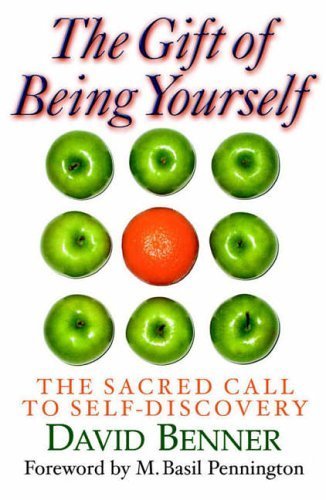
The Gift of Being Yourself
The listing identifies this as a book about self-discovery, so it suits readers who want a longer reflection alongside their observations of nature. Choose it when you want a text to sit with rather than a tool for identifying plants, animals or weather.
Skip it if: Skip it if you need a field guide or a practical nature-identification manual.
Check Price on Amazon →Nature’s Hidden Messages for Deep Self-Discovery
Nature’s hidden messages are observations of animals, plants, weather and cycles that prompt self-reflection; they are not a universal code. To interpret nature’s signs for self-awareness, first identify the natural function, then record your response, and finally test the personal meaning against context and repeated experience.
A fox crossing a path, a plant closing its leaves or a sudden change in weather may draw attention to something in your life. The event itself does not carry one fixed instruction. Animal behaviour usually serves survival, communication or reproduction, while plants respond to light, water, temperature and other conditions.
Documented animal signals include colour and pattern used for social signalling, camouflage or warning. A bird’s alarm call can alert others to danger. A fox’s scent marking can communicate presence or territory. These functions come before any symbolic reading. Calling the fox a sign of independence is a personal or cultural interpretation, not a biological fact.
Three Layers Of Meaning
- Natural function: identify what the organism may be doing and what conditions surround it.
- Cultural meaning: check whether a tradition, story or community gives the animal or event a particular association.
- Personal response: notice the memory, feeling or decision the sight brings to mind, then write it down without treating it as an order.
Culture changes the picture. A bird may represent freedom in one setting and an ancestor or omen in another. Seasonal meanings also belong mainly to tradition and modern reflection: spring is often linked with renewal, summer with growth, autumn with preparation, and winter with rest. Those associations can support reflection, but they do not prove that the season predicts your emotional state.
Use intuition carefully
Intuition is an inner judgement shaped by attention, memory and context. Give it room during quiet observation, then check it against ordinary evidence before using it for an important decision.
Nature supports personal growth by giving an abstract concern a concrete focus. Watching a tree recover after damage may help you examine resilience; noticing your urge to avoid a noisy flock may reveal a need for space. The useful question is what the observation shows about your attention, values or habits. It does not need a mystical explanation to be useful.
The idea of a higher self can be understood in the same grounded way: an inner aspect of awareness associated in modern spiritual writing with clarity and wise attention. A walk, steady breathing or grounding rituals in nature may make that reflection easier, but nature is not an external authority speaking on its behalf.
Recognising and Interpreting Animal Behaviour as Messages
Common animal signs and meanings become clearer when you separate the animal’s signal from your interpretation. To read animal behaviour for guidance, observe the action, its setting and your response before assigning a personal theme.
Animals signal through calls, posture, movement, scent, colour and group behaviour. Birds use calls for contact, alarm and courtship. Elephants communicate through sound, touch and body position within a social group. Foxes use scent marks, calls and posture in interactions involving territory and other foxes. One sighting cannot tell you which function is operating.
A Four-Part Observation Method
- Describe the behaviour: write only what a camera would record, such as “three birds called, then flew into a hedge”.
- Record the context: note time, weather, habitat, distance, other animals and any obvious disturbance.
- Notice your response: name the thought, body sensation or memory that appeared before choosing a meaning.
- Test the theme: ask whether the same concern appears in your notes, actions or circumstances over time.
Relate the behaviour to a specific personal trait rather than a fixed animal dictionary. A fox moving quietly along a boundary might prompt reflection on privacy, timing or caution. Elephants staying close to a distressed group member might lead you to examine how you offer support. Birds repeatedly changing direction could bring attention to indecision, distraction or changing information. These are prompts for reflection, not claims about what the animals intend for you.
Mindful observation also requires distance. Do not feed, chase, call to, trap or handle an animal to obtain a sign. Keep wildlife behaviour natural, and check whether a young, injured or distressed animal needs advice from a local wildlife organisation rather than spiritual interpretation.
Avoid over-reading
A single unusual encounter may reflect weather, food, breeding, threat or habitat disturbance. Look for repeated patterns and ordinary explanations first. If a symbolic reading conflicts with clear evidence, keep the evidence.
Animal behaviour and personal reflection work best in a notebook. Record the date, exact action, context, first association and later outcome. After several entries, compare the theme with your choices and assumptions. That record shows whether the practice is sharpening self-awareness or encouraging you to project a story onto wildlife.
Understanding Patterns and Cycles in Nature
Seasonal cycles and emotions are often linked through metaphor, not a fixed natural rule. Spring is commonly associated with renewal and opportunity; summer with growth and abundance; autumn with reflection and preparation; winter with rest and resilience. These associations come from observation and tradition. They can prompt useful self-reflection, but they do not predict how every person should feel.
A traditional seasonal metaphor for renewal, activity, reflection and rest; it describes a reflective framework rather than a biological rule.
Patterns in nature have meaning at two different levels. A spiral, branching form or hexagonal structure may result from measurable forces and mathematical constraints. Geometric patterns can follow principles such as the Fibonacci sequence, while animal markings serve functions including camouflage, warning and social signalling. The natural pattern has a biological or physical explanation before a person gives it symbolic meaning.
The moon phases and human moods are also widely connected in spiritual and cultural practice. A full moon may be used as a prompt to notice heightened feelings, and a new moon as a point for setting intentions. This is a popular belief, not a universal emotional timetable. Record your sleep, mood and circumstances before deciding that a lunar phase explains a repeated change.
Read Daily Transitions Without Forcing Meaning
Dawn, midday, dusk and night offer a smaller cycle for reflection. Dawn can mark preparation, midday a check on attention, dusk a review of what is complete, and night a pause from deliberate effort. These prompts work because they attach self-observation to recurring events. They do not require the sun or moon to send a personal message.
- Observe one recurring pattern, such as light changing at dusk or a plant opening in the morning.
- Describe what happened in plain terms before adding symbolism.
- Write one feeling, decision or habit that appeared at the same time.
- Revisit the note after several repetitions and keep only patterns that remain clear.
A useful boundary
Use a natural cycle as a question for reflection, not as proof that an outside force has chosen an answer for you.
Distinguishing Intuition from Universal Symbols in Nature
To distinguish intuition from universal symbols, begin with this fact: no fixed universal dictionary exists for nature signs. A bird, storm, fallen leaf or repeated number may prompt a personal association, while its observed behaviour still has a biological or physical explanation. The interpretation belongs to the person and the culture, not to nature alone.
Cultural overlays influence meanings. Stories, religious traditions, family beliefs and modern spiritual media can attach different qualities to the same animal, plant or weather pattern. Treat a familiar meaning as a source of context rather than a rule. This prevents a borrowed symbol from being mistaken for direct personal knowledge.
Test Intuition Before Trusting It
Interpreting nature messages without bias requires a short record. Write the observation first, then your immediate impression, then at least one ordinary explanation. Check the entry later against what actually happened. An intuition that survives time and contrary evidence deserves consideration; a meaning that changes to fit every outcome is confirmation bias.
| Check | What to record |
|---|---|
| Observation | The place, time, weather and visible behaviour |
| First impression | The feeling or image that arose before research |
| Alternative cause | Season, food, shelter, disturbance or chance |
| Later check | What changed, and what did not |
A simple record separates facts from interpretation.
Balance inner sense with external knowledge. Identify a plant before treating it as a sign, learn the normal behaviour of an animal, and check weather patterns before assigning a message to the sky. If the interpretation would affect health, safety, money or another person, use reliable evidence and qualified advice instead of intuition alone.
Keep the claim proportionate
A meaningful coincidence can guide a journal prompt or meditation theme. It cannot establish a universal rule, diagnose a condition or prove that nature intended a particular outcome.
Ethical Engagement and Integration with Inner Work
Ethical considerations for nature connection begin with leaving living systems undisturbed. Watch wildlife from a distance, keep dogs under control where required, avoid feeding animals, stay on marked paths and take every object or piece of litter home. Do not handle nests, eggs, young animals or unfamiliar plants. A sign that requires disturbance is not a useful sign.
Avoid forcing interpretations. Record what happened before assigning meaning: a fox crossed the path, rain began, or a plant had yellow leaves. Animal coloration and patterns have documented functions such as camouflage, warning and social signalling. A personal symbol may sit alongside that fact, but it should not replace it.
Using Nature for Chakra Alignment
Chakra alignment is a modern practice framework, not a fixed rule in classical nature study. Match an element or setting with the quality you want to observe: soil, stones or steady walking with the root chakra; flowing water with the sacral chakra; sunlight with the solar plexus; leaves and birdsong with the heart; open sky and slow breath with the throat or crown. Treat these pairings as prompts for attention, not evidence that a landscape changes a chakra.
- Choose one natural focusSit beside water, under a tree or on open ground for five minutes.
- Name the observed factsNotice colour, temperature, sound and movement without symbolic labels.
- Add one inner questionAsk what quality this setting brings forward in your attention.
- Meditate and recordFollow a steady breath, then write the image, feeling and action separately.
Product 1 suits readers who want a guided self-discovery prompt alongside this observation practice. Skip it if you prefer silent meditation and a plain notebook.
See it on Amazon →Crystals can serve as tactile reminders during meditation. Place one beside you or hold it while noticing the breath, and describe the result as a change in attention rather than a crystal effect. Barefoot walking on safe ground is another traditional grounding exercise; check the surface first, especially for glass, sharp stones, insects and contaminated soil. For a longer routine, use these grounding rituals in nature as a practical extension.
Keep the boundary clear
The higher self is best understood as an inner aspect of awareness and intuition, not an outside entity speaking through wildlife. If an interpretation affects health, safety, money or another person, check it against evidence and seek qualified advice before acting.
Modern Tools and Practices for Decoding Nature’s Messages
Using AI to interpret nature signs works best as identification, not divination. A phone app or image model may help suggest a bird, plant, cloud type or insect, but it cannot establish a personal meaning or prove that an event is a message. Check the suggestion against a field guide, local biodiversity source and the season before recording it.
Technology’s role in nature connection is therefore limited but useful: it can help you name what you saw, compare repeated observations and notice changes in one place over time. Keep the original photo, location and date. Do not upload sensitive locations for rare species, nests or privately owned land.
Daily Practices to Notice Nature’s Messages
- Set a fixed route
- Walk the same short route at a similar time and observe one new detail.
- Use a three-line log
- Record the fact, your immediate feeling and the meaning you considered.
- Verify before interpreting
- Identify the species or weather pattern before treating it as a symbol.
- Review weekly
- Look for repeated conditions rather than building a story from one coincidence.
A useful daily log might read: “Three crows called from the roof at 07:40; traffic was loud; I felt distracted; I took the sound as a prompt to slow down.” The first two details are observations. The last two belong to personal interpretation. This separation reduces the risk of confusing coincidence with a universal sign.
Digital Detox in Natural Settings
For a digital detox, switch the phone to aeroplane mode before entering the park and set a fixed return time. Carry it for safety, but leave identification and photography until after ten minutes of direct observation. That pause lets you notice wind, temperature and animal behaviour without turning every detail into content.
Urban nature provides enough material for this practice. Watch a street tree across the seasons, count pollinators on one planted bed, compare dawn and evening birds, or note where rainwater collects after a storm. Avoid trespassing and do not touch medicinal plants or unfamiliar fungi. Use the record to understand local conditions first; let any symbolic reading remain personal.
Common Claims About Nature’s Messages vs Reality
| Commonly claimed | Actually |
|---|---|
| Nature’s signs have fixed meanings that everyone can recognise. | There is no universal dictionary for nature signs. People interpret them through personal experience, intuition and cultural context, which explains why the same animal or weather pattern can carry different meanings. |
| An animal’s markings always reveal a spiritual message. | Colouration and patterns primarily support camouflage, warning or social signalling. A spiritual meaning may be a cultural or personal interpretation added afterwards. |
| The moon’s phases directly control human emotions. | Many traditions link lunar cycles with emotional or spiritual rhythms, but that association is a belief rather than a fixed rule that applies to every person. |
| Spring, summer, autumn and winter dictate four emotional states. | Seasonal symbolism offers a useful metaphor for renewal, activity, reflection and rest. Weather, daylight and personal circumstances also shape how someone feels, so the metaphor should not be treated as a law of nature. |
| The higher self is an outside entity that nature alone can reveal. | In modern spiritual language, the higher self means an inner aspect of awareness associated with clarity and intuition. Grounding and time outdoors may help someone notice that awareness, but they do not prove that an external being is sending signs. |
Frequently Asked Questions
Related Reading
- affirmations for self-discovery — Short statements for directing reflection and daily self-inquiry.
- sacred self-discovery — A companion page on finding and expressing inner values.
- chakra nature guide — Explains chakra nature in the Naruto fictional universe.
- Zen and nature harmony — Connects outdoor attention with a quieter contemplative practice.
Sources
- Reading Hidden Messages in Nature’s Signs and Signals: A Deep Dive into the Language of the Earth — Seasonal symbolism for renewal, growth, reflection and rest.
- Unveiling the Hidden Messages in Nature’s Patterns – Welcome to Armand Heights — Biological functions of animal patterns and mathematical patterns in nature.
- How to Read Signs From Nature | A Guide to Understanding Nature’s Messages — Traditional interpretations of sky cycles and signs from nature.
- How Nature Helps You Connect With Your Higher Self – emilyandtheplants.com — Modern spiritual language around grounding and the higher self.

This article covers observation, symbolism, intuition and ethical outdoor practice; it does not present nature signs as scientific prediction or medical guidance. As an Amazon Associate, Chakra Serenity earns from qualifying purchases. Prices and availability change, so check the listing before you buy.