Singing Bowls Meditation For Calm, Focused Practice
Straightforward steps, honest benefits and buying tips, without the usual myths around ancient or quantum sound healing.
Singing bowls meditation is a practice where you rest your attention on the clear, sustained tones of a metal or crystal bowl while your breath and body settle. You can play the bowl yourself or listen to someone else, using the sound as a simple anchor for mindfulness. Many people find this easier to follow than a silent practice, though it is not a medical treatment.
People search for singing bowls meditation once they have heard the sound and want that same calm at home. They are often close to buying a bowl, but unsure which type to choose, how to play it properly, or how long a session should last.
Most pages mix real instruction with marketing claims about instant healing, ancient origins and quantum effects. This guide keeps the useful parts: clear technique, sensible ways to choose a bowl, and what current evidence and tradition actually say.
You will see which practices come from Buddhist and Himalayan traditions, which are modern Western sound healing methods, and how to build a short daily routine that fits your life instead of overwhelming it.
A Simple Singing Bowl Set That Suits Beginners
One compact Himalayan bowl set that includes everything you need to start meditating straight away. Links go to Amazon and earn this site a small commission at no extra cost to you.
Tibetan Singing Bowl Set
This compact set includes a 4-inch handmade bowl, a silk cushion and a black leather-covered mallet, so a beginner does not need to source the basic pieces separately. The cushion helps keep the bowl stable while you learn a light striking or circling motion.
Skip it if: Skip it if you want a larger bowl with a lower, room-filling tone or a crystal bowl.
Singing Bowls Meditation Sound Healing Guide
Singing bowls meditation is a mindfulness practice that uses the sustained tone of a metal or crystal bowl as its main object of attention. You can practise it with one bowl that you play yourself, or with a recording if you do not own one; one well-made bowl is enough for effective meditation, while a full chakra set is optional.
In a singing bowl meditation, attention follows the tone as it begins, continues and fades, with the breath and body noticed in the background. Sound healing is a broader modern practice that may combine bowls with gongs, chimes, drums or voice in a guided session. The names Tibetan singing bowls, Himalayan bowls, sound bowls and healing bowls are largely marketing terms for closely related standing bells, usually made from metal and sometimes from crystal.
Choose a live bowl if you want to control each strike and feel the instrument in your hands. Choose a recording if you need a low-cost, portable option or prefer guided listening; both can provide a clear sound anchor for meditation.
Many people choose bowl meditation because a sustained tone and gentle rhythm can be easier to follow than the breath alone. Some use the practice for healing and report feeling calmer or more grounded afterwards. There is no strong evidence that singing bowls treat illness, so use them as a relaxation and mindfulness practice alongside appropriate medical or psychological care, not instead of it.
A live bowl also gives you a tactile cue: you can feel the mallet, the rim and the sound changing under your hand. A recording removes that control but makes a short session possible in a bedroom, office or during travel. If you are close to buying, compare the practical features in this singing bowl buyer guide before choosing a set.
How To Do Singing Bowl Meditation Step By Step
To do singing bowl meditation, silence your phone, choose a quietish room and use simple light or darkness that does not strain your eyes. Place the bowl on a cushion on a mat, on a stable table, or in your open palm; keep it away from your face and leave space for the sound to spread.
The five basic stages of a simple singing bowl meditation, from settling your posture to closing the session.
- Settle your postureSit with your feet supported and knees lower than your hips, or use a cushion. Keep the spine upright without stiffening. You can lie on your back with arms resting beside you, or stand with soft knees and weight balanced across both feet.
- Strike a clear toneHold the mallet near its lower end with a relaxed grip. Tap the outside rim or side with a gentle, glancing contact rather than a hard hit. Move the bowl or mallet farther from your ears if the sound feels harsh.
- Try rimmingHold the mallet at a slight angle against the outer rim and keep light, steady pressure. Circle slowly at first, then increase speed until the tone sustains. If it chokes, skips or buzzes, reduce pressure, slow down, or change the angle.
- Link breath and soundAfter one strike, notice one full breath as the tone rises and another as it fades. Strike again when the sound has almost disappeared. Let attention return to the tone when thoughts pull it away.
- Close with silenceFor resonance meditation, notice sensations in your hands, chest or the room without forcing a result. Let the final tone fade fully before opening your eyes or standing.
For a singing bowl meditation 2 minutes long, take three gentle strikes and listen in silence after each one. For a 10 minute singing bowl meditation, repeat short cycles of one or two tones followed by 30 to 60 seconds of quiet listening, then finish with a full minute without striking.
Water bowl variation
Partly fill a metal bowl with water to watch ripples and hear how the tone changes, but place it on a stable surface and expect spills. Dry the bowl afterwards; regular or prolonged contact with water can damage some finishes.
Which Singing Bowls Work Best For Meditation
For singing bowls for meditation, a mid-sized Himalayan metal bowl is the most practical first choice. These bowls, often called Tibetan singing bowls, have a warm tone, moderate volume and can be held or placed on a cushion. Crystal quartz bowls sound brighter and louder; they usually sit on the floor or a stand, so they suit a fixed home setup or group sound bath better. See the differences in this guide to Tibetan singing bowls and the related guide to crystal singing bowls.
Metal bowls suit
- Beginners learning to strike or circle a rim
- Personal practice in a small room
- A durable bowl that is easy to move
- A warmer tone with a softer volume
Crystal bowls suit
- The sound varies between individual bowls
- Some inexpensive mallets produce a harsh buzz
- A good bowl can cost more than a basic decorative one
A larger bowl usually gives a lower pitch and a fuller, louder tone. A smaller bowl tends to sound higher and can feel sharper in a quiet room. Medium sizes offer the easiest compromise: enough resonance to follow with the breath, without taking over the space. Crystal bowls are more static because their shape and material make hand-holding awkward.
Do not choose a bowl because a seller promises a special 7-metal alloy, planetary tuning or an exact chakra note. Those labels belong to modern selling and contemporary sound-healing practice. For Tibetan singing bowl meditation, Himalayan bowl meditation or a healing bowls meditation, a stable tone that you enjoy matters more.
A reliable starting setup is one mid-sized metal bowl, a simple cushion and a suede mallet. Product 1 is a compact 4-inch handmade metal set with a hand-sewn silk cushion and a black leather-covered mallet, so it gives a beginner the bowl and supports needed to practise without assembling a set piece by piece.
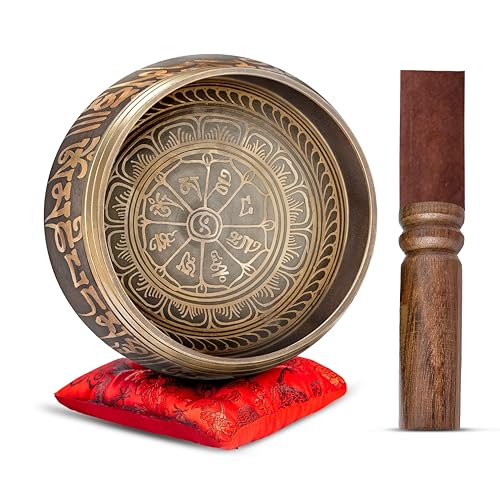
Choose this if you want a portable bowl, cushion and mallet together for quiet personal meditation. Skip it if you specifically want the larger, louder sound of a floor-standing crystal bowl.
See it on Amazon →If you buy in person, lightly strike the bowl once. Listen for a clear tone that fades slowly, then reject it if a harsh buzz or sharp upper note bothers your ears. Online recordings help, although the recording space can colour the sound; a small pitch difference matters less than liking the tone. Any good-quality singing bowl can support relaxation and meditation. There is no medically certified healing-bowl type.
Start with a metal bowl that feels easy to play and pleasant to hear. Crystal bowls work well for stationary practice and sound baths, while size changes the pitch, volume and physical feel.
Benefits And Limits Of Singing Bowl Meditation
The reported singing bowls meditation benefits are usually immediate and modest: people may feel calmer, breathe more slowly, notice a lighter mood or find their thoughts clearer after a session. That is the practical meaning behind searches for singing bowl healing, singing bowl meditation for healing and Tibetan singing bowls meditation healing. Some small studies have looked at bowl-based sound relaxation and reported short-term changes in self-reported stress, but the evidence base is still limited and the methods vary.
Separate relaxation from treatment
Healing vibrations singing bowls and quantum meditation are usually metaphorical or marketing language. There is no good scientific evidence that a bowl retunes cells, repairs a disease or treats a specific medical condition. Use sound meditation alongside appropriate medical or psychological care, never as a replacement for it.
The sound does not suit everyone. Some people find sustained tones overstimulating, uncomfortable or emotionally intense, especially through headphones or in a small room. Begin with five minutes at a gentle volume and stop if you feel distressed, dizzy or unusually agitated.
Track the pattern
For a clearer view of your own response to signing bowl sound healing, record your mood, sleep quality and stress level before and after each session. Look for a pattern across several practices rather than expecting one dramatic change.
Singing Bowls, Chakras And Om Meditation
A chakra meditation with a bowl uses sound as an attention cue while you move awareness through the body. In modern Western practice, the seven main chakras are often matched with ascending notes, usually C through B, and with bowl sizes that range from larger, lower-sounding bowls to smaller, higher-sounding ones. This system is recent; classical Sanskrit sources describe different chakra systems and do not prescribe a standard bowl, note or colour for each centre.
For a chakra bowl sound healing meditation, treat the label as a focus aid rather than a rule. A bowl sold for the root chakra can support any meditation. To use a root chakra Tibetan bowl, place it near your lower body, strike it once every few breaths, and notice the contact between your seat, feet and the floor. This gives you a simple fuller guide to root chakra practice without requiring a specially tuned bowl.
One bowl is enough
For a whole-chakra practice, let one bowl sound at a steady interval. Move attention from the base of the spine towards the crown, pausing at each area, instead of buying seven separate bowls. Exact Hertz values and colour images are optional; regular practice and clear attention matter more.
Om meditation works in a similar way. Strike the bowl, use its tone as a pitch reference, chant a long Om that blends with or follows the sound, then sit in the silence after it fades. A detailed Om meditation practice gives the vocal sequence and breathing cues.
Chakra bowl methods are modern meditation formats built around traditional chakra language. Use the tone to guide attention, not as proof that one bowl has a fixed effect on one body area.
History And Traditions Of Singing Bowls
Tibetan singing bowls meditation sits within a wider Himalayan family of standing bells and metal bowls used across the region for centuries. They likely served as everyday vessels as well as ritual objects. In Buddhist settings, bells and bowls traditionally mark periods of meditation, prayer and ceremony; they were not generally presented as a stand-alone therapy.
The claim that singing bowls began precisely in 500 BCE as a formal sound healing system is not supported by clear historical evidence. Many bowls sold today as Tibetan singing bowls are made in Nepal and India by skilled artisans, and Tibetan has become a broad Western marketing label rather than a reliable statement of manufacture.
Tradition and modern practice
Modern sound healing blends bowls with yoga, breathwork and guided visualisation. These combinations arose mainly in the 20th century, so Tibetan bowl meditation music tips and Tibetan singing bowls guided meditation should be understood as contemporary formats built from older ritual sounds.
Phrases such as Himalayan medicinal root chants and rituals for relaxation may combine real chanting traditions with spa or retreat marketing. A home meditator can copy the practical part by using one bowl to mark the start, a few minutes of quiet attention, or the end of a 45-minute session, without making the chant or bowl a medical claim.
Daily Practice And Group Sound Bowl Sessions
For a daily routine with sound healing bowls, start with 5–10 minutes. There is no fixed optimal duration for singing bowl meditation; regular practice matters more than a long session once a week.
Three Practical Session Lengths
- Two-minute resetStrike or rim the bowl once, breathe normally, and follow the fading tone between tasks. This answers the common singing bowl meditation 2 minutes search with a realistic reset.
- Ten-minute sitUse one tone to begin, rest attention on the sound and breath, then close with one final tone. A 10 minute singing bowl meditation suits morning or evening practice.
- Thirty to 45 minutesAlternate bowl tones with silence, or use recorded bowl music after the opening tone. A 45 minute meditation with Tibetan singing bowls needs a quiet setting and a supported seat.
Add a bowl to a meditation, yoga or prayer habit you already keep. One tone can mark the opening and another can mark the close. A Tibetan singing bowls guided meditation can follow the same structure, with a teacher or recording providing timing rather than making claims about guaranteed results.
Introducing A Bowl To A Small Group
- Explain the sessionSay how long it will last, how the bowl will be played, and that silence is part of the practice.
- Check comfortInvite people to sit or lie down. Ask about sound sensitivity, tinnitus or anything that may make loud sound uncomfortable.
- Play simplyUse moderate volume, keep the bowl away from anyone’s head, and leave clear pauses between tones.
- Offer choiceTell participants they may sit up, move position or leave quietly at any point.
After the session
Invite sharing with neutral phrases such as “What did you notice?” or “Was there anything you would like to describe?” Avoid telling people what they should have felt or calling the session a cure.
Common Claims About Singing Bowls And What Holds Up
| Commonly claimed | Actually |
|---|---|
| Singing bowls are exclusively ancient Tibetan instruments. | The modern singing-bowl label covers metal bowls used across the Himalayan region. Their history is less specific than many product descriptions suggest, and the link with meditation has grown through modern Buddhist, yoga and wellness practice. |
| Each bowl produces a frequency that heals a particular chakra. | Chakra and frequency pairings are modern systems, not a single rule from classical Sanskrit texts. A bowl can give you an audible point of attention, but there is no good evidence that one pitch repairs a particular chakra. |
| Singing bowls can treat illness, anxiety or tinnitus. | People may report relaxation or a change in mood after a session, but a bowl is not a medical treatment. It should not replace assessment or care from a qualified professional. |
| You need seven bowls to practise chakra meditation properly. | One bowl is enough for an attention cue. Using several bowls can create musical variety, but the seven-bowl format comes from contemporary chakra practice rather than a universal traditional requirement. |
| A live bowl always works better than a recording. | A live bowl gives you physical sound in the room and lets you control the timing. A recording can still support attention, especially when handling a bowl is inconvenient, but its effect depends on the recording, volume and your response to it. |
Frequently Asked Questions
Related Reading
- singing bell chakra meditation — Uses a bell as the sound cue for a chakra practice.
- Tibetan singing bowl chakra meditation — Explains a bowl-led body awareness sequence.
- Tibetan singing bowl therapy — Separates sound-based relaxation claims from medical treatment.
- crystal singing bowls for chakra work — Compares crystal bowls with contemporary chakra methods.
This article covers meditation and reported relaxation effects, not diagnosis or treatment; consult a qualified professional about health symptoms. As an Amazon Associate, Chakra Serenity earns from qualifying purchases. Prices and availability change, so check the listing before you buy.