How to Tell If Chakra Stones Are Real: Expert Tips and Tricks
Step-by-step guide to spot fakes, verify sellers, and confirm authenticity
Real chakra stones have natural imperfections, cool temperature, and weight that differ from fakes. Use simple home tests and seller checks to confirm authenticity before buying.
Many buyers seek authentic chakra stones for meditation and healing. The market also offers many dyed, treated or synthetic stones that imitate the real ones.
Common advice online is often vague or incomplete, missing practical testing steps and seller verification methods.
This guide explains how to identify real chakra stones reliably, including detailed home tests and how to spot common fakes.
Recommended reading for crystal buyers
A detailed guide to 100 crystals, their properties and care Links go to Amazon and earn this site a small commission at no extra cost to you.
The Ultimate Guide to Crystals
This book covers 100 crystals and stones, giving a buyer a single reference for comparing names, properties and care. It suits someone who wants background before judging a bracelet listing or asking about treatment.
Skip it if: Skip it if you only need a quick checklist for one stone.
How to Tell If Chakra Stones Are Real
To tell if chakra stones are real, check their colour, temperature, weight, inclusions, surface pattern and hardness, then ask the seller about treatment and origin. A real chakra stone usually has small natural variations and feels cool and weighty, while plastic, resin, dyed material and synthetic stones often look too uniform.
- Inspect the colourLook for natural colour variation rather than one bright, perfectly even shade. Colour may shift across the stone or follow its veins and bands.
- Check temperature and weightHold the chakra stone for a minute. Stone usually feels cool at first and warms slowly; plastic and resin warm quickly. Compare similar-sized pieces in your hand because genuine stone is generally heavier than plastic or resin.
- Look for inclusionsUse a torch and a magnifying glass to examine veining, cloudy areas, tiny fractures and other natural inclusions. Perfect clarity or repeated marks across every bead deserve caution.
- Examine the surface patternMagnification can reveal whether lines, pits and colour bands vary naturally. Repeated arcs or identical marks on several stones suggest moulding, printing or a manufactured substitute.
- Use hardness carefullyThe Mohs hardness scale ranks minerals by their resistance to scratching. A scratch test can provide a clue, but hardness differs between stones and an incorrect test can damage a genuine specimen. Do not use it as your only proof.
- Treat price as a warning signA price far below comparable stones may indicate synthetic, dyed or treated material. Price alone cannot confirm authenticity: affordable natural stones exist, and an expensive fake can still be fake.
- Ask the seller precise questionsAsk the stone name, country or region of origin, treatments, synthetic content and the basis of any certificate. Choose a seller who answers clearly, shows close photographs and states treatments rather than calling every stone natural.

This guide covers 100 crystals and stones, so it can help you compare a stone’s name and expected appearance before asking a seller for treatment details. It is a reference book, not an authenticity certificate.
See it on Amazon →Chakra labels are not proof
A seven-colour set may be arranged for modern chakra practice, but the label does not prove that each mineral is natural. Judge the material itself, then consider how the set is arranged for your practice.
Avoid risky tests
Do not bite stones, heat them, soak them in chemicals or scratch a valuable piece. Temperature, weight, magnification and seller evidence are safer first checks; detailed home-test instructions belong in the next section.
Natural variation, slow warming, substantial weight and irregular inclusions support authenticity. Combine those clues with transparent treatment information and a seller who can explain the stone’s origin.
The seven main chakras, their Sanskrit names and positions on the body.
Common Treatments and Fake Chakra Stones
To tell if a chakra stone is dyed or heat treated, inspect the colour at edges, holes and scratches, then compare it with the stone’s usual natural appearance. In real vs fake crystals, the clearest warning signs are surface colour, repeated patterns, missing inclusions and an unnaturally smooth finish.
Dyed stones often have an unusually bright, uniform colour. Look inside bead holes, along chipped edges and in small fractures: pigment may collect there or rub onto a cloth. A surface colour that looks painted rather than part of the material points to dye. This does not automatically make the stone unusable, but it should be sold as treated.
Heat-treated citrine is usually bright orange because it is commonly made by heating amethyst. Natural citrine is generally paler. A seller should identify the treatment instead of presenting vivid orange material as naturally formed citrine.
- Synthetic stones often have perfect colour, clean clarity and no natural inclusions. Repeated shapes or identical beads strengthen that concern.
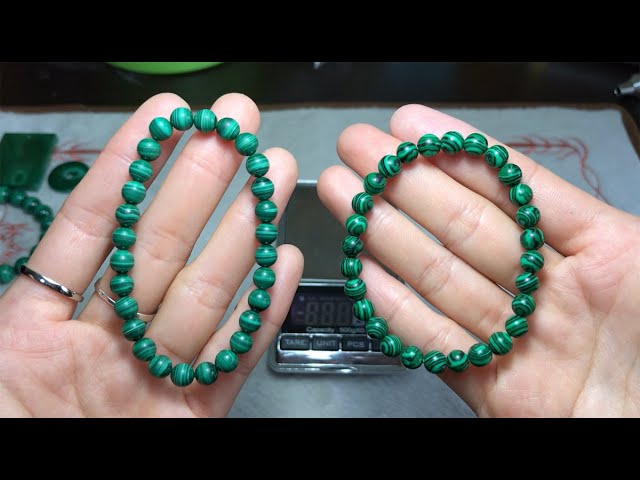
- Fake malachite commonly shows repetitive, symmetrical bands. Real malachite has more individual, irregular banding and variation.
- Turquoise imitations are often howlite or magnesite dyed blue. They may feel lighter and show colour that is too even across the piece.
- Fake moldavite commonly has a smooth surface and uniform colour. Real moldavite varies in colour and has a textured surface rather than a polished, glass-like finish.
Read the treatment label
Heat treatment, dyeing and synthetic manufacture are different disclosures. Do not assume that a bright colour proves a fake, or that a natural mineral has never been enhanced; ask what was done to the material and check the answer against the seller’s photographs.
Step-by-Step Home Tests for Chakra Stone Authenticity
Use the weight test, temperature test and magnification first. A scratch test can add evidence, but no home test proves that a stone is natural because dyed, heat-treated and synthetic stones can also be hard and heavy.
- Compare the weightPlace the stone beside a plastic or resin piece of the same size. A genuine stone usually feels denser and heavier; compare like with like rather than judging by hand alone.
- Check temperature and warmingHold the stone in your palm for 30 seconds, then set it down and touch it again. Stone usually starts cool and warms slowly, while plastic or resin reaches hand temperature quickly.
- Inspect under magnificationUse a magnifying glass or jeweller’s loupe in daylight. Look for natural inclusions, veins, uneven colour and tiny changes in banding. Repeated bubbles, mould-like seams or perfectly even colour suggest glass, resin or dye.
- Use a scratch test carefullyCheck the stone’s usual hardness on the Mohs hardness scale before testing. On an hidden edge, try to scratch a glass surface with the stone, never the reverse. A mark on the glass shows hardness above glass, but it does not prove the stone is natural.
- Treat tooth tapping as folkloreSome guides tap a stone lightly against a tooth and compare the sound with plastic. Do not use this test: it can damage enamel, and a click or dull knock cannot identify a mineral reliably. Use a fingernail tap only as a rough comparison.
Protect the specimen
Do not scratch a valuable stone, a polished softer stone or an unknown specimen. A test can leave a permanent mark, and a dyed or treated stone may still pass it. Stop if the result is unclear and ask a qualified gemmologist.
How to Verify Chakra Bracelet Authenticity and Craftsmanship
The signs of craftsmanship in a chakra bracelet are clear chakra alignment, secure construction and visible variation in the beads. Treat the familiar seven-colour sequence as a modern chakra convention, then inspect how the bracelet is made.
- Check that the beads follow the stated chakra order rather than a random colour sequence. Ask the seller to name each stone, since colour alone cannot identify a mineral.
- Look for natural colour variation, small inclusions and slight differences in bead size. Overly bright, identical beads often indicate dyed material, glass, resin or plastic.
- Turn the bracelet over and inspect the thread, knots and clasp. The cord should sit securely, with no loose ends or visible glue holding beads in place.
- Stretch the bracelet gently once. Poor threading, uneven gaps or beads that scrape against one another suggest a cheap set and make breakage more likely.
Uniformity is a warning sign
A bracelet made from perfectly matching beads is not automatically fake, and variation alone does not prove authenticity. Combine its appearance with the weight and magnification tests, then ask whether the stones are dyed or heat-treated.
Verifying Seller Credibility and Ethical Sourcing
To ask sellers about ethical sourcing and authenticity, request the stone’s claimed origin, any dyeing or heat treatment, and the name of the material being sold. Ask for an authenticity certificate where one is available, then check that it states what the stone is and whether treatment has been disclosed. A certificate is useful evidence, not proof that a stone is untreated.
- Look for a named seller with a clear returns policy, detailed stone descriptions and consistent customer reviews. Reviews should mention the actual material and finish, not only fast delivery or attractive packaging.
- Ask directly: “Is this natural, dyed, heat-treated, reconstructed or synthetic?” A careful seller should answer plainly rather than use vague terms such as “crystal-inspired”.
- Compare the listing with photographs from mineral references. Bright, perfectly even colour and an unusually low price can indicate a dyed or synthetic stone, although price alone cannot confirm either conclusion.
- Check sourcing language for specifics. Claims such as “ethically sourced” mean more when the seller explains the supplier, mining location or chain of custody instead of offering a general promise.
- Avoid anonymous marketplace listings with no treatment disclosure, copied photographs, no returns process or pressure to buy quickly. These gaps make a genuine material claim difficult to check.
Reliable sources to buy authentic chakra stones include established mineral dealers and sellers who identify each stone, disclose treatments and show consistent evidence of good practice. For a broader buying checklist, use this guide to telling if a chakra stone is real before ordering a set or bracelet.
Recognising Real Stones by Example: Amethyst, Citrine, Malachite, Turquoise, Moldavite
To distinguish real amethyst from dyed glass, inspect the colour for natural variation and inclusions, then compare the seller’s material and treatment disclosure with the stone in your hand. Uniform, very deep purple amethyst is commonly synthetic or dyed; colour alone cannot prove that a piece is natural.
| Stone | Signs associated with a natural specimen | Warning signs |
|---|---|---|
| Amethyst | Purple with some variation and natural inclusions. | Uniform deep purple; a seller describing dyed or synthetic material as natural. |
| Citrine | Usually pale yellow in its natural form. | Bright orange colour, which commonly indicates heat-treated amethyst. |
| Malachite | Unique, irregular bands and swirls. | Repetitive, mirrored or highly symmetrical patterning. |
| Turquoise | Natural colour variation and the weight expected of stone. | Dyed howlite or magnesite that looks light and unusually uniform. |
| Moldavite | Varied colour and a textured surface. | Smooth surface and an unusually even colour. |
These visual signs help you compare examples, but treatment disclosure remains part of an authenticity check.
Use a close look at edges, drill holes and any scratches when buying beads: dye can collect in these areas or appear more intense there. A chakra label describes how a modern seller groups the stones; it does not confirm that each bead is natural. If the listing hides treatment, material or origin, choose a different seller rather than guessing from colour alone.
Commonly Claimed vs Actually: Chakra Stones Myths
| Commonly claimed | Actually |
|---|---|
| Real stones should have a flawless, perfectly even surface. | Natural stones commonly contain inclusions, veins or uneven colour. An identical surface across every bead can suggest glass, resin or another imitation because manufactured materials are easier to reproduce uniformly. |
| A cool, heavy stone is proof that it is real. | Temperature and weight are useful first checks, not proof. Plastic and resin usually warm faster and weigh less than stone, but a glass imitation can feel cool and heavy too. |
| Very deep, uniform purple amethyst is natural and the highest quality. | Uniform, unusually intense purple can indicate dyeing or synthetic material. Natural amethyst usually shows some colour variation and inclusions, so inspect the whole stone rather than judging colour alone. |
| Most commercial citrine is naturally yellow. | Much commercial citrine is heat-treated amethyst. Heated material is often bright orange, while natural citrine is usually paler; a seller should disclose the treatment. |
| A low or high price confirms authenticity. | Price can flag a stone that is synthetic, dyed or mislabelled, but it cannot identify the material by itself. Affordable natural stones exist, and an expensive fake can still be a fake. |
Frequently Asked Questions
Related Reading
- the real-versus-fake crystal guide — Compares common imitations and visual authenticity clues
- what chakras are and their history — Explains chakra traditions and modern seven-chakra charts
- how to cleanse chakra stones — Covers practical stone-cleansing methods and care cautions
- how to meditate with chakra stones — Shows how to use stones during a simple meditation
Sources
- How to Spot a Fake or Real Chakra Bracelet: 7 Expert Tips | Karma & Renewal — Bracelet checks, home tests, treatment disclosure and seller guidance
- Real vs Fake Crystals: How to Tell If Your Crystal Is Real | CrystalStones.com — Dyed stones, citrine, malachite, turquoise and moldavite comparisons
- How to Tell If Crystals Are Real or Fake | 2026 Identification Guide – CRYSTALS.COM — Treatment clues, authenticity checks and seller certificates
- How To Identify Authentic Chakra Stones And Crystals — Inclusions, temperature, weight and chakra bracelet checks

This article covers visual checks, simple home comparisons, treatments and seller evidence; it does not establish spiritual or medical effects. As an Amazon Associate, Chakra Serenity earns from qualifying purchases. Prices and availability change, so check the listing before you buy.