Chakra Sound Bath: Ultimate Healing Experience Guide
Complete guide with method, benefits, and how to practise at home
A chakra sound bath uses specific sound frequencies to balance and align the body’s seven chakras, promoting relaxation and well-being through vibrational resonance. This guided experience employs instruments like singing bowls and cymbals to create immersive sound vibrations that correspond to chakra notes.
People seek chakra sound baths to relieve stress, enhance meditation, or explore holistic healing. They often find incomplete or confusing advice online.
Many explanations mix ancient chakra concepts with modern sound therapy without clarifying origins or scientific basis.
This guide explains what a chakra sound bath is, how it works, what to expect, and how to practise it safely and effectively, with clear distinctions between tradition and modern practice.
Recommended Singing Bowl Set for Sound Baths
A complete handmade set ideal for chakra sound bath beginners and practitioners Links go to Amazon and earn this site a small commission at no extra cost to you.
Premium Tibetan Singing Bowl Set
This set includes a 4″ bowl, cushion and mallet, crafted by Nepalese artisans for quality sound and durability. It supports meditation and sound bath practices effectively.
Skip it if: Skip it if you want multiple bowls for complex sound layering or larger group sessions.
Chakra Sound Bath: Ultimate Healing Experience Guide
A chakra sound bath is a therapeutic practice using sound vibrations to balance the body’s seven chakras, the energy centres described in Indian tradition. It employs instruments like singing bowls, cymbals, and tuning forks to produce resonant frequencies that correspond to each chakra.
Singing bowls are highly effective for sound therapy, chakra balancing, and deep relaxation. Their sustained tones create a vibrational environment that can synchronise with the body’s subtle energy points.
Each of the seven chakras is traditionally linked to a specific frequency or musical note. For example, the root chakra (Muladhara) is often associated with the note C, while the crown chakra (Sahasrara) aligns with B or a higher octave. These frequencies are generated by different sized bowls or instruments, producing sounds that aim to stimulate or soothe the corresponding chakra.
Sound vibrations affect the body through a process called entrainment, where external sound waves influence internal rhythms such as brainwaves and heartbeats. The resonant tones of the instruments can promote relaxation by encouraging slower brainwave patterns and reducing stress responses.
This practice differs from regular meditation primarily in its use of external sound stimuli rather than silent or guided focus. While meditation often involves mental concentration or breath control, a chakra sound bath immerses the participant in sound waves designed to interact physically and mentally with the chakra system.
The seven chakras arranged with their Sanskrit names and positions
Practitioners often sequence the sound bath from the root chakra upwards, matching instruments and frequencies to each chakra’s location on the body. This progression helps listeners follow the energetic flow, enhancing the sense of alignment and balance.
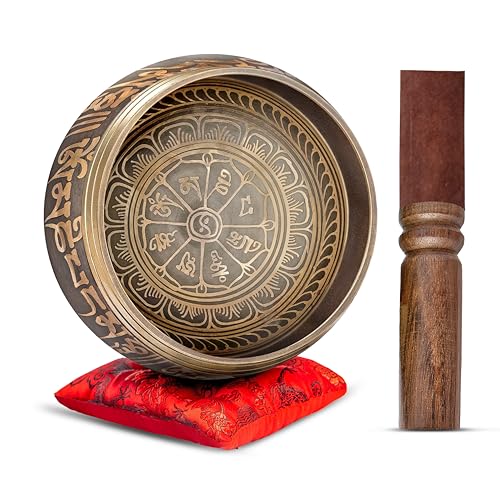
This Premium Tibetan Singing Bowl Set delivers authentic resonant tones that suit chakra sound baths and meditation, supporting deep relaxation and focus.
See it on Amazon →Scientific Basis of Chakra Sound Baths
Sound baths influence the brain by encouraging entrainment to theta brainwave frequencies, typically 4 to 8 Hz, associated with deep relaxation and meditative states. This shift can reduce mental chatter and promote calmness.
Studies indicate that sound therapy may lower cortisol levels, the hormone linked to stress, and can reduce blood pressure. These physiological changes support the relaxing effects reported by participants in chakra sound baths.
The concept of vibrational resonance explains how sound waves interact with the body’s tissues and fluids. While the idea that chakras themselves vibrate at specific frequencies is part of traditional and modern belief systems, measurable resonance effects occur in cells and organs exposed to sound.
However, scientific research on chakra sound baths specifically is limited. Most evidence comes from studies on sound therapy and meditation separately, rather than on chakra-focused sessions. Claims that sound baths directly open or shift energy in chakras remain unverified by clinical trials.
Common claims about chakra sound baths enhancing subtle energy or healing emotional wounds reflect personal experiences rather than proven outcomes. Practitioners report benefits such as improved mood and reduced anxiety, which align with documented effects of sound and meditation.
Research from sources like scienceinsights.org on root chakra experiences shows that participants often describe sensations of grounding and stability, which may relate to the calming physiological responses triggered during the sound bath.
Understanding the scientific basis helps set realistic expectations and encourages using chakra sound baths as a complementary practice for relaxation and mindfulness, rather than a medical treatment.
For those curious about feeling shifts between chakras, the theta state induced by sound baths creates a receptive mental environment where subtle bodily sensations become more noticeable, aiding awareness of energetic changes.
Further research is needed to clarify how specific frequencies affect individual chakras and the long-term impacts of regular sound bath practice.
Readers interested in deeper vibrational therapy can explore related topics in chakra healing sound bath: complete guide to vibrational therapy for a broader context beyond the physiological effects.
What to Expect During a Chakra Sound Bath Session
A chakra sound bath session usually begins with simple preparation. Participants are advised to wear loose, comfortable clothing that allows relaxation and easy breathing. Many practitioners suggest arriving a few minutes early to settle in and briefly discuss any health considerations.
Sessions typically last from 45 to 60 minutes. The experience often starts with a short guided meditation or breathing exercise to centre attention. Then, sound instruments such as singing bowls, chimes, and tuning forks are played sequentially or in layers, each aligned with one of the seven chakras from the root (Muladhara) upwards.
Participants commonly report sensations linked to the root chakra opening, such as a feeling of warmth, grounding, or a gentle pulsing around the base of the spine. These reports appear frequently in forums dedicated to root chakra yoga and related YouTube comments, where beginners describe initial comfort followed by a deepening sense of stability.
Practitioners guide the session by modulating sound intensity and pace, ensuring a smooth transition between chakra-related frequencies. They may also provide verbal cues or visualisations to help participants focus on each chakra’s location and qualities.
Physical and emotional effects vary. Some notice muscle relaxation, slowed breathing, or a calm mind. Emotions such as release of tension or a lightness are common. Others might feel mild discomfort or restlessness, which practitioners advise is normal as the body adjusts.
Safety and comfort are priorities. Participants should inform the facilitator of any hearing sensitivities or medical conditions. Ear protection is rarely needed but can be used if sounds feel overwhelming. Adjusting posture with cushions or blankets helps maintain comfort throughout.
Enhancing Your Chakra Sound Bath Experience
Crystals are paired with chakras to complement sound baths by their colour and traditional associations. For example, red jasper or garnet suits the root chakra for grounding, while amethyst supports the crown chakra’s connection to higher awareness. These pairings are a modern practice rather than a classical Indian teaching.
Essential oils also support chakra activation by scent. Vetiver and cedarwood are common for the root chakra due to their earthy aromas. Lavender and frankincense may be used for the crown chakra to promote calm and clarity. Users typically apply oils to pulse points or diffuse them in the room.
Safety with crystals involves cleaning them regularly to avoid absorbing negative influences, and avoiding toxic stones. Essential oils should be diluted before skin application to prevent irritation and used in well-ventilated spaces to avoid overpowering the senses.
This combination of crystals, oils and sound reflects a modern practice drawing on Western new age ideas alongside traditional chakra concepts, rather than a historically recorded ritual.
Practitioners caution against overstimulation: too many crystals or strong scents can distract or fatigue the senses. Using one or two crystals and a subtle essential oil scent is sufficient to enhance focus without overwhelming the sound bath experience.
DIY Chakra Sound Bath at Home
Create a quiet, comfortable space free from interruptions to start your own chakra sound bath. Use a firm cushion or chair to sit with your knees lower than your hips, supporting alert relaxation.
You can use recordings of chakra frequencies or instruments like singing bowls and tuning forks tuned to each chakra’s note. Play sounds in order from the root (Muladhara) chakra at the base of the spine to the crown (Sahasrara) chakra at the top of the head.
- Begin with the root chakra’s frequency, focusing on sensations in the lower body.
- Move to the sacral chakra, noticing changes in your pelvic area.
- Continue upward through the solar plexus, heart, throat, third eye, and crown chakras in sequence.
- Allow a few minutes per chakra sound to listen and feel subtle shifts.
- End by resting in silence to integrate the experience.
Place crystals associated with each chakra nearby to complement the sound vibrations. For example, red jasper for the root chakra or amethyst for the crown. The crystals’ colours and traditional uses support focused attention but do not replace the sound.
Notice how the feeling or “energy” shifts between chakras as you progress. Sensations may be warmth, tingling, or subtle pressure. This awareness helps you recognise where your attention is and how the sound influences your body.
Pay Attention
The sensation of energy moving between chakras is subjective and varies by individual. Focus on bodily feelings rather than expecting dramatic effects.
Beginners should start with short sessions of 15 to 20 minutes to build comfort with the practice. Keep volume moderate to avoid distraction. Use headphones if your space is noisy.
Avoid multitasking during the sound bath. Sit or lie down quietly and close your eyes if comfortable. Regular practice improves sensitivity to the subtle sound effects and internal shifts.
A chakra singing bowl set tuned to the seven chakra frequencies suits beginners who want authentic instrument sounds at home.
See it on Amazon →Commonly Claimed vs Actually About Chakra Sound Baths
| Commonly claimed | Actually |
|---|---|
| Chakra sound baths use ancient Indian scriptures as direct manuals | Classical texts mention chakras but do not describe sound baths; the practice is a contemporary blending of tradition and modern sound healing. |
| Each chakra corresponds to a specific musical note proven by science | Musical notes are assigned by modern practitioners for practical use; classical sources do not fix these exact correspondences. |
| Sound baths cure physical or mental illnesses by chakra realignment | There is no scientific evidence that sound baths treat health conditions; they promote relaxation and meditative states. |
| Crystals used in sound baths have inherent healing properties tied to chakras | Crystal associations are modern beliefs based on colour and symbolism, not documented in classical chakra texts. |
| All chakra sound baths last exactly one hour for optimal effects | Session length varies by practitioner and setting, typically between 30 to 90 minutes depending on context. |
Frequently Asked Questions
Related Reading
- Sound Healing for Chakras — Guide to vibrational balance and sound therapy
- How To Heal Your Chakras — Simple steps to chakra healing
- What is Chakra Healing? — Basics of chakra healing explained
- Which Gemstones Transform Your Chakra Energy? — Crystals paired with chakras

Covers chakra sound bath practices and their cultural context; does not address medical treatment, for which consult qualified professionals. As an Amazon Associate, Chakra Serenity earns from qualifying purchases. Prices and availability change, so check the listing before you buy.