Singing Bell Chakra Meditation: Ultimate Sound Healing Guide
A practical guide to using singing bowls for chakra sound healing and meditation
Singing bell chakra meditation uses the sound vibrations of singing bowls to balance and harmonise the body’s chakras. These tones resonate with specific energy centres, helping to clear blockages and support meditation. The practice combines ancient sound healing with practical steps for deep meditation.
Many seek chakra meditation for balance and healing but find scattered or incomplete advice. Singing bell meditation offers a focused method using sound to engage chakras directly.
Common explanations often lack detail about how singing bowls correspond to chakras or how to practise effectively for best results.
This guide clarifies what singing bell chakra meditation is, how it works, and provides step-by-step instructions to deepen your practice and understanding.
Recommended Singing Bowl Set for Meditation
A quality Tibetan singing bowl set supports focused chakra sound healing practice. Links go to Amazon and earn this site a small commission at no extra cost to you.
Premium Tibetan Singing Bowl Set – Handmade in Nepal
This set offers a well-crafted bowl with a mallet and cushion, ideal for focused sound meditation and chakra work. The craftsmanship ensures lasting use and clear tones.
Skip it if: Skip it if you want multiple bowls for different chakra notes in one set.
Singing Bell Chakra Meditation: How It Works and How to Practise
Singing bell chakra meditation uses the tones of singing bowls tuned to specific chakras to balance and harmonise your energy centres. You play each bowl in sequence, matching its sound to a chakra, while focusing your attention and breath to clear blockages and deepen meditation.
The bowls produce sustained vibrations when struck or circled with a mallet. These vibrations resonate with the frequency associated with each chakra, stimulating subtle shifts in the body and mind. Physically, the sound waves promote relaxation and reduce tension. Energetically, they help clear stagnant patterns linked to chakra imbalances.
The seven chakras commonly engaged in singing bell meditation, shown with Sanskrit names.
Before you begin, prepare a quiet space free from distractions. Arrange your singing bowls around you, ideally on cushions or soft mats to allow clear sound. Position the bowls in ascending order from the root chakra at the base of the spine to the crown chakra at the top of the head.
- Settle into a comfortable seated positionSit with your spine straight and feet grounded. Close your eyes and take several deep breaths to centre yourself.
- Play the root chakra bowlGently strike or circle the bowl tuned to the Muladhara (root chakra). Focus your attention on the base of your spine as you breathe slowly and evenly for about 1–2 minutes.
- Move up through each chakraRepeat the sound and breath practice for the Svadhishthana (sacral), Manipura (solar plexus), Anahata (heart), Vishuddha (throat), Ajna (third eye), and Sahasrara (crown) chakras in turn. Spend equal time on each, maintaining gentle, rhythmic breath.
- Close the sequenceAfter playing the crown chakra bowl, sit quietly for several minutes. Allow the vibrations to settle and reflect on any sensations or emotions that arise.
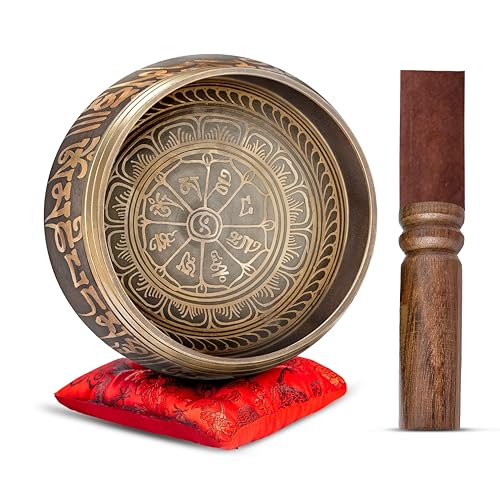
This premium Tibetan singing bowl set provides clear tones and a mallet suited to playing each chakra bowl with ease.
See it on Amazon →Breathing should remain slow and steady throughout. Inhale deeply through the nose and exhale fully through the mouth or nose, matching the rhythm of the bowl’s sound. This supports mindfulness and helps anchor your focus in the present moment.
After meditation, rest quietly for at least five minutes. Avoid rushing into activity. Use this time to notice how your body and mind respond to the sound healing. Journaling your experience can deepen your awareness.
This method of chakra meditation combines sound, breath, and focused attention to engage and balance chakras. Practising regularly develops sensitivity to subtle shifts, improving your ability to recognise and work with chakra states.
For more on selecting bowls matched to chakra tones, see Best Chakra Singing Bowls for Sound Healing and Meditation.
Choosing Singing Bowls for Each Chakra
Each of the seven chakras corresponds to a specific musical note and colour. These associations guide the selection of singing bowls for meditation. The Muladhara (root chakra) links to the note C and the colour red. Svadhisthana (sacral) pairs with D and orange. Manipura (solar plexus) matches E and yellow. Anahata (heart) aligns with F and green. Vishuddha (throat) goes with G and blue. Ajna (third eye) corresponds to A and indigo. Sahasrara (crown) resonates with B and violet.
Most chakra singing bowls fall into two categories: traditional Tibetan brass bowls and crystal quartz bowls. Tibetan bowls produce rich, complex tones due to their hand-hammered brass construction. Crystal bowls offer pure, sustained tones that suit specific chakra frequencies. For lower chakras like root and sacral, larger brass bowls provide deeper sounds that resonate well. Higher chakras such as third eye and crown benefit from smaller crystal bowls for clarity and precision.
Size and material influence the bowl’s sound frequency and resonance. Brass bowls’ layered metals create overtones that enrich the sound, supporting grounding chakras. Quartz bowls’ crystalline structure produces clear, focused vibrations that can stimulate higher centres. Quality markers include hand-hammered surfaces for tonal complexity and a clean, sustained ring without unwanted buzzing. These features indicate craftsmanship and tonal purity, important for effective chakra meditation.
The note-to-chakra correspondences commonly used today come from modern Western sound healing traditions rather than ancient Indian texts. Classical Sanskrit sources describe chakras differently, and there is no historical record of tuning singing bowls to specific chakras. This system developed in the late 20th century to combine sound therapy with chakra meditation.
Choosing bowls tuned to the chakra notes and matching their chakra colours helps focus your meditation and sound healing. This method supports the popular chakra chart and meditation techniques widely discussed in forums such as reddit’s best chakra meditation music threads. Selecting bowls with clear tones and appropriate sizes forms the foundation of effective chakra sound bowls meditation.
Enhancing Your Singing Bell Meditation with Crystals and Other Modalities
Placing crystals associated with each chakra near their corresponding points can amplify the effects of singing bell meditation. These stones are chosen for their colour and traditional chakra links. For example, red jasper suits the root chakra, carnelian the sacral, citrine the solar plexus, green aventurine the heart, sodalite the throat, amethyst the third eye, and clear quartz the crown.
Integrating singing bowls with other practices deepens chakra balancing. Yoga postures targeting specific chakras enhance physical and energetic alignment. Aromatherapy using essential oils like sandalwood and lavender supports relaxation and focus. Mantra chanting vibrates the vocal cords in ways that resonate with chakra centres, complementing the singing bowl’s tones. Reiki energy work adds a hands-on or distance healing layer, aiming to clear blockages.
These complementary modalities support chakra clearing by engaging multiple senses and approaches. Sound from bowls activates vibration, crystals provide tactile and visual focus, yoga moves the body, aromatherapy influences mood, and mantra chanting combines sound with breath. The combined effect often increases meditation depth and the sensation of balance.
These practices represent modern adaptations without scientific evidence for chakra healing. Many practitioners report benefits such as increased clarity, calmness, and emotional release when combining these methods. Adding them expands chakra meditation beyond sound alone, enriching the experience.
Scientific Perspective on Sound Healing and Chakra Meditation
Sound healing can influence body and mind, though its link to chakras lacks scientific proof. Some studies find sound therapy may reduce cortisol, a hormone linked to stress, which can aid relaxation and lower anxiety.
Studies of meditation accompanied by sound often record increased alpha brain waves. Alpha waves relate to calm focus and a restful mind state. This supports reports that singing bowl meditation promotes tranquility.
Binaural beats, created by playing different frequencies in each ear, claim to synchronise brain hemispheres and influence mental states. While some participants report altered moods, these effects vary widely and lack consistent scientific confirmation.
No direct scientific evidence confirms the existence of chakras as described in traditional Indian texts, nor that sound vibrations specifically affect these energy centres. Benefits people experience likely arise from mindfulness, relaxation, and focused attention during meditation.
Scientific clarity
Sound healing reduces stress and supports relaxation but does not prove chakras exist or respond to sound.
Common Mistakes and How to Avoid Them in Singing Bell Chakra Meditation
Rushing through the chakras or striking singing bowls too forcefully can disrupt meditation. Aim for gentle, clear tones and allow each chakra space to resonate.
Maintain a relaxed posture with your spine straight but not stiff. Breathe slowly and evenly; breath control deepens concentration and calms the nervous system.
Avoid unrealistic expectations
Do not expect immediate results or use meditation as a substitute for medical advice or treatment.
Balance after meditation by grounding yourself. Simple steps include walking barefoot, drinking water, or gentle stretching to reconnect with your physical body.
Start with 5 to 10 minutes daily. Gradually increase your session length as your comfort and focus improve. This approach reduces the chance of headaches or fatigue often reported by beginners.
How Long and How Often to Practise Singing Bell Chakra Meditation
For most people, a daily session of about 15 minutes offers the best balance between depth and practicality. This length allows enough time to work through the seven chakras without rushing, supporting a meditative state that lasts beyond the session.
Regular practice rewires neural pathways, creating lasting effects on mood and focus. The brain responds to repeated stimuli by forming stronger connections, so daily meditation builds a stable foundation for emotional and mental balance.
If you are focusing on the root chakra to address a specific blockage, start by spending extra time on it for several days or weeks. Once you notice improvements, gradually include the other chakras to maintain overall harmony.
Integrating singing bell meditation with other chakra methods, such as breathwork or visualisation, enhances your practice over time. These combined approaches can deepen your connection to each chakra and increase the effectiveness of sound healing.
Meditation is a skill developed through patience and consistent effort. Set a routine that fits your lifestyle and stick to it. Skipping days or practising irregularly slows progress, so daily sessions—even brief ones—are preferable.
Beginner Tip
For root chakra healing, aim for daily practice over at least two weeks, then reassess how you feel before adjusting your focus.
Following a clear schedule helps you build momentum. You can keep track of your sessions by noting which chakras you work on and any sensations or changes you experience. This practice supports self-healing and makes your meditation guide personalised and effective.
For a practical start, try this sequence: begin with the root chakra, spend about two to three minutes on it, then move up through the sacral, solar plexus, heart, throat, third eye, and crown chakras, spending about two minutes on each. Adjust your timing as you become more familiar with the process.
Choosing singing bowls tuned to each chakra’s note and colour will enhance your sessions and help maintain focus. Explore best chakra singing bowls for sound healing and meditation to find bowls suited to your needs.
Common Misconceptions About Singing Bell Chakra Meditation
| Commonly claimed | Actually |
|---|---|
| Singing bell chakra meditation can cure physical or mental illnesses | There is no scientific evidence that sound healing or chakra work cures medical conditions; these practices support relaxation and meditation only. |
| Each chakra has a fixed musical note from ancient Indian texts | The association of specific notes with chakras is a modern practice; traditional texts describe chakras differently without fixed musical correspondences. |
| Striking singing bowls loudly improves chakra clearing | Hitting singing bowls too forcefully can disrupt meditation and create harsh sounds, which interfere with relaxation and focus. |
| You must practise singing bell chakra meditation for hours daily to see benefits | Daily sessions of about 15 minutes are effective; longer sessions risk fatigue and reduced focus. |
| The colours and crystals linked to chakras are historically fixed | The rainbow colours and crystal associations are contemporary adaptations, not found in classical chakra literature. |
Frequently Asked Questions
Related Reading
- Chakra Sound Meditation: Harmonise Your Energy Centres — Explores sound techniques for chakra balance
- Sound Healing for Chakras: A Complete Guide to Vibrational Balance — Detailed sound healing approaches for chakras
- How To Heal Your Chakras | A Simple Guide — Basic chakra healing methods beyond sound
- Tibetan Singing Bowl Meditation for Chakra Healing — Focused guide on Tibetan bowls and chakras

The article explains singing bell chakra meditation as a sound practice and does not address medical conditions; consult a qualified health professional for health issues. As an Amazon Associate, Chakra Serenity earns from qualifying purchases. Prices and availability change, so check the listing before you buy.