Qigong for Chakra Awareness: Unlock Energy Flow with Practice
A practical guide linking Qigong breath and movement to chakra balance
Qigong enhances chakra awareness by regulating the flow of Qi through the body’s energy centres using breath control, gentle movement, and focused meditation. Integrating Qigong’s traditional Chinese methods with chakra work supports balanced energy flow and emotional wellbeing.
Qigong is a traditional Chinese practice that combines breath control, gentle movement and meditation to regulate Qi, the body’s vital energy. This practice complements the Indian chakra system by encouraging mindfulness and promoting energy circulation through the body’s centres.
Common explanations often conflate Qigong and chakras as originating from the same tradition, which is inaccurate. Their integration is a modern practice that blends Chinese and Indian concepts of energy centres.
This article clarifies the historical and conceptual differences, details how Qigong affects chakra flow, and provides a step-by-step guide to practising Qigong for chakra awareness, filling gaps left by other sources.
Recommended Reading on Chakra Energy
A comprehensive guide to energy alignment and five-element balance Links go to Amazon and earn this site a small commission at no extra cost to you.
Chakra Petal Healing
This guide is framed around energy alignment and five-element balance, giving readers a conceptual companion to a practice that combines chakra language with Chinese traditions. It suits someone who wants to study the framework before building a personal routine.
Skip it if: Skip it if you want a step-by-step Qigong movement lesson rather than a guide focused on energy alignment.
Qigong Chakra: How Qigong Influences Chakra Energy Flow
Qigong supports chakra awareness by combining regulated breathing, gentle movement and visualisation with attention to the body’s energy centres. In a modern qi gong chakra practice, Qi is described as circulating through Chinese meridians while attention rests on chakra locations drawn from Indian traditions.
Qigong is a traditional Chinese practice of movement, breath control and meditation used to regulate Qi. Chakras are traditionally described in Indian spiritual systems as centres connected with physical, emotional and spiritual experience. The two systems developed separately, so their combination is modern and eclectic rather than a shared ancient method.
How Qi And Chakra Attention Meet
Qigong practitioners use slow movement and mindful breathing to make bodily sensations easier to notice. In traditional Chinese terms, practice guides Qi through meridians. In chakra language, the same exercise may be described as bringing attention to a centre and encouraging its flow. These are different explanatory systems, even when a modern teacher uses both.
The familiar seven-centre map begins with Muladhara, the root chakra, at the base of the spine and continues through the sacral, solar plexus, heart, throat, third eye and crown centres. Some modern Qigong teachings describe nine centres by adding the Earth Star Chakra below the feet and the Soul Star Chakra above the head. There is no single Qigong chakra map used by every school.
The seven Indian chakra centres often used in modern Qigong practice. Some Qigong teachings add Earth Star and Soul Star centres; this map is not a universal Chinese classification.
Breath, Movement And Reported Blockages
For chakra awareness in visualisation, breathe slowly while placing attention at one centre. A practitioner might imagine the breath entering at the root chakra, moving upwards through the body, and releasing tension on the out-breath. Gentle spinal movement, standing postures and coordinated arm movements are then used to keep attention connected to physical sensation rather than imagination alone.
Traditional chakra explanations associate a blockage with an emotional disturbance or a bodily complaint. The root chakra is linked with stability and grounding; reports of imbalance may include fear, restlessness or difficulty feeling settled. Other traditional descriptions mention headaches around the upper centres or digestive discomfort around the lower abdomen and solar plexus. These signs are not a medical test, and persistent symptoms need assessment by a qualified professional.
Keep The Terms Separate
Qi belongs to Chinese healing and meditation traditions; chakras belong to Indian spiritual systems. A blended practice can be meaningful, but it should be described as a modern combination.
The qigong root chakra is therefore a point of focused attention in this blended method, not evidence that Chinese meridian theory originally contained the Indian chakra system.
How Qigong Exercises Target Each Chakra
Qigong cleansing 7 chakras usually means a modern sequence of breath, visualisation, sound and movement directed at the seven-centre Indian map. It does not describe one standard exercise from all Qigong schools; the method works by placing attention on a chakra while the body moves slowly and the breath remains steady.
A Simple Chakra-Focused Sequence
- Settle at the rootStand with knees soft; breathe into the lower abdomen and feel both feet on the floor.
- Move through the centresRaise the hands slowly from the pelvis to the crown, pausing at each chakra.
- Add sound and intentionUse a quiet sustained tone or mantra while holding attention at the chosen centre.
- Close the circuitRest the hands over the lower abdomen and notice warmth, pressure or tension.
For the qigong root chakra, bend and straighten the knees gently while keeping the spine tall. Pelvic rocking can bring attention to the sacral area; turning the torso engages awareness around the solar plexus; opening the arms gives the heart centre a clear movement cue. Neck release and humming suit the throat area, while stillness with a soft gaze suits the third eye and crown.
The Six Healing Sounds practice uses different sounds with exhalation and body focus. Modern chakra teachers may adapt it by pairing a sound with each centre, but the seven-chakra pairing is an interpretation rather than a universal classical sequence. Keep the sound quiet and stop if the throat feels strained.
Microcosmic Orbit meditation is a Taoist practice in which attention is guided around a circuit that is commonly described through the front and back of the torso. A blended chakra session may visualise attention rising along the back, passing through the crown, and returning down the front to the lower abdomen. Treat this as visualisation, not as a demonstrated anatomical pathway.
Chanting gives the breath a measured length, while intention tells the mind where to rest. If visualisation becomes vague, replace colour or imagined light with a concrete sensation such as foot pressure, abdominal movement or the sound in the chest. Chakra breath awareness with mindful breathing can help refine this part of the practice; chakra awareness through movement gives more movement-based options.
A Traditional Map Is Not A Diagnosis
Qigong teachers may call a centre blocked or open, but those labels do not prove that a physical or psychological condition has been cured. Use discomfort, dizziness or pain as a reason to pause, not as evidence that the exercise is working.
Historical and Philosophical Differences Between Qigong and Chakra Systems
Qigong and the chakra system come from different cultural and philosophical settings. Qigong is a traditional Chinese practice shaped by Taoist ideas and Chinese medical traditions. It uses movement, breath control and meditation to regulate Qi, often described as circulating through pathways called meridians.
The chakra system developed within Indian yogic and tantric texts. These sources describe chakras as subtle centres linked with the body, mind and spiritual practice. Their number and arrangement vary between texts, so the familiar seven-centre model is one influential version rather than a universal rule. The names commonly used today are Muladhara, the root chakra; Svadhisthana, the sacral chakra; Manipura, the solar plexus chakra; Anahata, the heart chakra; Vishuddha, the throat chakra; Ajna, the third eye chakra; and Sahasrara, the crown chakra. the Indian chakra system gives the wider context.
| Framework | Main map | Central practice |
|---|---|---|
| Qigong | Meridians and three dantians | Breath, movement and Qi circulation |
| Indian chakra traditions | Chakras along a subtle central axis | Meditation, mantra and visualisation |
These maps overlap in modern practice, but they are not historical equivalents.
In Qigong, the dantians are important reference points. The lower dantian lies in the lower abdomen, the middle dantian in the chest and the upper dantian in the head. Some Taoist practices also describe a Taiji Pole, an imagined central axis connecting the body’s main centres. These ideas do not match the Indian chakra names one for one.
Modern teachers often place the seven Indian chakras alongside the dantians, meridians or Taiji Pole. Some Qigong-based chakra systems describe nine centres, adding transpersonal points such as the Earth Star Chakra and Soul Star Chakra. That blended map is a contemporary teaching model. It should not be presented as proof that Taoist Qigong and Indian tantra began as one system.
Starting Qigong for Chakra Awareness: A Beginner’s Routine
To start Qigong practice for chakra awareness, stand quietly, loosen the joints, regulate the breath and use attention to trace a simple route through the body. The sequence below combines established Qigong methods with a modern seven-chakra visualisation, so treat the chakra references as a working map rather than a traditional Chinese classification.
- Warm the jointsStand with feet hip-width apart. Circle wrists, elbows, shoulders, hips, knees and ankles slowly, then stretch without forcing.
- Settle the breathLet the arms rise on an easy inhale and lower on the exhale. Keep the jaw loose and notice the lower abdomen moving.
- Trace the Microcosmic OrbitClose the eyes and imagine Qi rising from the base of the spine to the crown, then descending down the front of the body to the lower abdomen. Repeat gently without holding the breath.
- Use the Six Healing SoundsOn six relaxed exhales, vocalise the Six Healing Sounds softly. Use the pronunciation taught by your teacher and keep the throat free of strain.
- Move through three centresFor the root, bend the knees into a comfortable horse stance. For the sacral centre, make slow pelvic circles. For the heart, open the arms wide, then bring the hands towards the chest.
- Close with colour visualisationStand still and picture red at the root, orange at the sacral centre, green at the heart, then the remaining chakra colours rising towards the crown.
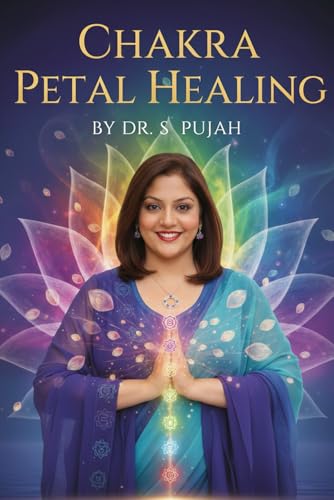
Product 1 is suited to readers who want a written reference for energy alignment and five-element balance while reviewing this modern combined framework.
See it on Amazon →Keep it gentle
Stop if you feel dizzy, breathless or strained. Qigong practice should not replace medical care or be used to diagnose a blockage.
Buddhist vs Taoist Qigong Approaches to Chakras
The main differences between Buddhist Qigong and Taoist Qigong approaches concern attention and method. Buddhist Qigong places greater emphasis on mindfulness, seated meditation and observing sensations without grasping at them. Taoist Qigong usually gives more attention to regulated breathing, posture and the movement of Qi through the body.
Neither approach has one universal chakra map. Chakras belong to Indian religious and tantric systems, while Qigong traditionally describes Qi, meridians and internal centres in Chinese terms. Some modern Qigong teachers combine these systems and use the familiar seven-chakra model; others describe nine centres, including the Earth Star and Soul Star chakras. This blending is contemporary rather than a single inherited doctrine.
Meditation, Breath And Sound
A Buddhist-influenced session may place a chakra centre in awareness during mindful breathing, then use a chant or mantra to steady attention. The sound is a concentration method within that practice, not proof that a particular note physically opens a chakra. A Taoist-influenced session may coordinate slow abdominal breathing with standing, stretching or circular movements to encourage a felt sense of ease through the body.
For emotional balance, Buddhist practice tends to work through observation and acceptance. Taoist practice tends to work through breath, relaxation and physical flow. Both can support spiritual reflection when the chakra language is treated as a personal framework rather than a confirmed anatomical system.
Scientific Evidence and Realistic Expectations of Qigong’s Chakra Effects
Scientific research does not establish that Qigong produces chakra-specific benefits. It also does not show that Qigong can physically or spiritually unblock chakras. Chakra effects remain claims within spiritual and modern energy-work traditions, not measured medical outcomes.
Qigong is a documented Chinese practice that combines breath control, gentle movement and meditation. Within its traditional model, these methods regulate Qi through meridians. In practical terms, a session may help you slow your breathing, notice muscular tension and settle your attention. People commonly report relaxation and improved emotional balance, but those experiences do not prove that Qi or a chakra has been objectively altered.
Use The Right Measure
Judge a session by observable changes such as steadier breathing, less tension or improved concentration. Treat sensations such as heat, tingling or release as experiences to notice, not as evidence of a medical change.
Keep Medical Care In Place
Qigong and chakra work do not cure physical or psychological conditions. Seek qualified health advice for persistent pain, headaches, digestive problems, low mood or any other medical concern.
Keep practice moderate and consistent. Short sessions repeated regularly give you a clearer sense of how breathing and movement affect your attention than occasional intense sessions, and they reduce the temptation to interpret every sensation as an energetic blockage.
Common Claims About Qigong and Chakras Compared to Facts
| Commonly claimed | Actually |
|---|---|
| Qigong and chakras come from the same ancient tradition. | They come from different settings. Qigong developed in Chinese Taoist, medical and contemplative traditions, while chakra teachings developed in Indian religious and philosophical systems; combining them is a modern eclectic practice. |
| Every Qigong system recognises seven chakras. | There is no single Qigong chakra count. Some modern Qigong teachings describe nine centres, adding transpersonal points such as the Earth Star Chakra and Soul Star Chakra to the familiar seven. |
| Qigong movements physically unblock chakras. | Practitioners use this language to describe a felt change in attention, breathing or bodily ease. No scientific evidence shows that movement opens a chakra as a measurable physical structure. |
| Blocked chakras cause headaches, digestive problems and emotional distress. | These symptoms appear in some chakra traditions as signs of blockage. They are not diagnostic tests, and a symptom needs ordinary medical assessment rather than a chakra explanation alone. |
| Qigong chakra work can cure illness or psychological conditions. | Research does not show that Qigong or chakra work cures medical or psychological conditions. People may use the practice as supportive self-care, alongside appropriate professional treatment. |
Frequently Asked Questions
Related Reading
- chakra flow meditation — A seated visualisation practice for directing attention through the centres.
- chakra harmony patterns — Explains pattern-based ways to think about chakra relationships.
- Zen chakra meditation — Pairs chakra awareness with a quieter meditation structure.
- Tai Chi for chakra balance — Shows how slow martial movement can support chakra-focused practice.
Sources
- How to Balance Your Chakras with Buddhist Qigong Techniques — Buddhist Qigong methods, chakra visualisation and common balancing exercises.
- Qi Gong (Chinese Energy Practice) – Definition & Detailed Explanation – Chakras & Energy Glossary – muskokayogafestival.com — Qigong definitions, breath, movement and popular chakra-focused practices.
- Qigong Energy Healing Blog | Qigong Energy Healing — Traditional descriptions of blocked chakras and associated symptoms.
- Qigong Chakras – White Tiger Qigong — The modern nine-centre Qigong chakra model.
- Qigong – Wikipedia — Qigong’s Chinese historical and philosophical background.

This article covers a spiritual practice and does not diagnose or treat health conditions; consult a qualified professional for medical or psychological concerns. As an Amazon Associate, Chakra Serenity earns from qualifying purchases. Prices and availability change, so check the listing before you buy.