The Art of Chakra Balancing: A Comprehensive Guide
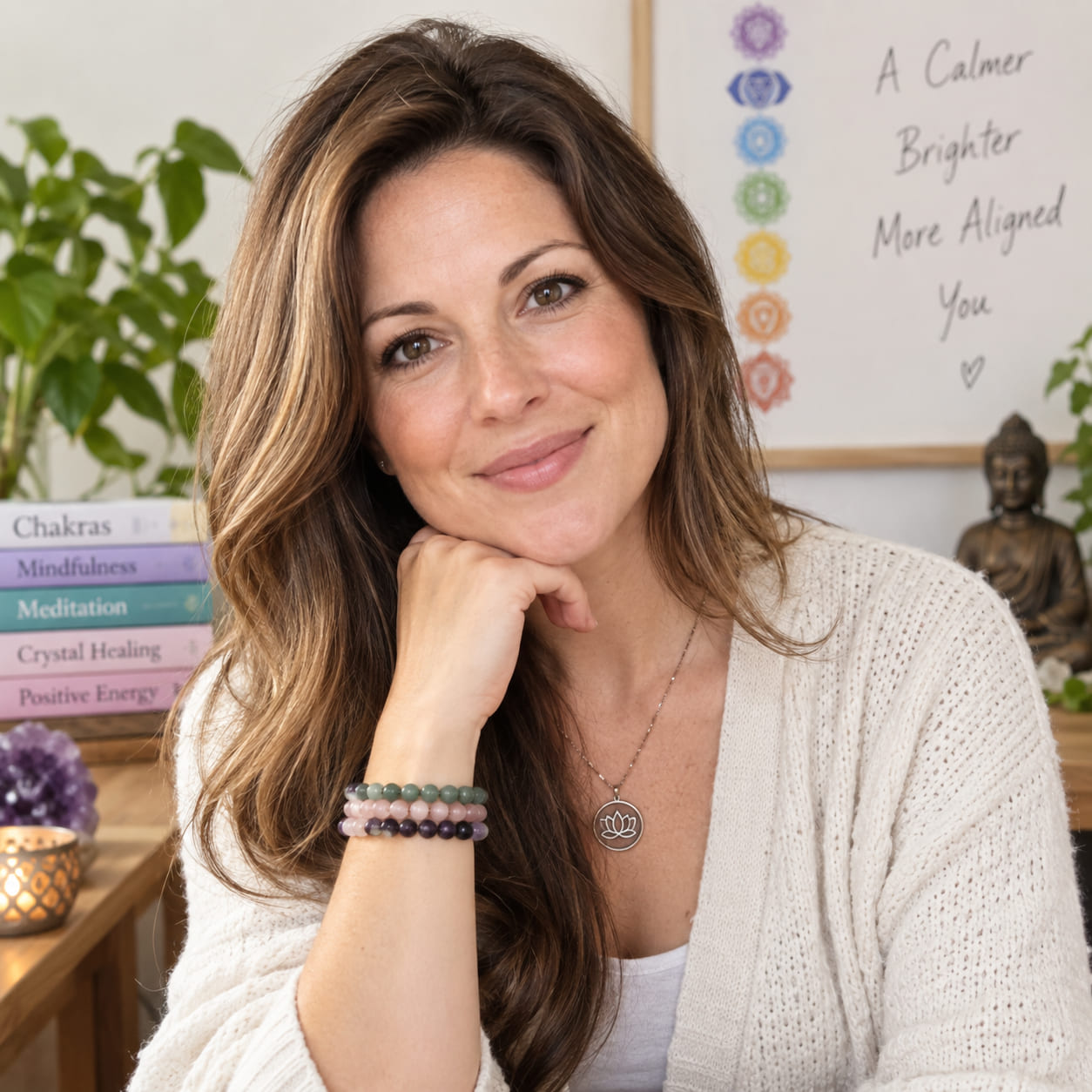

All 7 chakras, the fastest technique for each, and what the research actually says.
Chakra balancing is the practice of clearing and realigning the seven energy centers said to run from the base of your spine to the crown of your head, using meditation, yoga, sound, or crystals to restore an even flow of energy. For most people starting out, a 15-minute guided meditation that moves attention from the root chakra up to the crown is the fastest reliable entry point — then you match a specific technique to whichever chakra’s symptoms you actually notice.
People usually land on this page in one of two moods: curious about the system as a whole, or convinced something specific feels “off” and looking for the fastest fix. This guide covers both — the full 7-chakra map with accurate colors and Sanskrit names, a technique for each one, and an honest answer to the question most chakra guides skip entirely: does any of this hold up, and does it matter if it doesn’t?
Tools That Make the Practice Easier
None of these are required — meditation and breathwork cost nothing. But a physical anchor helps most people actually keep the habit. Links go to Amazon and earn this site a small commission at no extra cost to you.

7 Chakra Healing Crystals Set — Raw Stones + Wooden Box & Guide
One raw stone per chakra, colour-matched to the traditional system (amethyst for crown, rose quartz for heart, citrine for solar plexus, and so on), with a guide card so you’re not guessing which stone goes where. The wooden box doubles as a display tray during a session.

Chakra Tuning Fork Set with Activator
Seven weighted forks tuned to the frequencies commonly associated with each chakra, plus the rubber activator you actually need to strike them properly — a lot of cheaper sets skip it. Sound is the one technique below that needs almost no learning curve to start.

Chakra Candle Set — 7 Scents, Each With a Crystal Inside
Each candle is scented to match its chakra’s traditional association (patchouli for root, sandalwood for crown) and has a small crystal embedded in the wax — light one before a meditation and you get the scent and the stone in a single object instead of juggling both separately.
What Is Chakra Balancing, Exactly?
Chakra balancing comes out of Hindu and Buddhist tantric traditions that describe the body as having subtle energy channels (nadis) and seven main energy centers (chakras) running along the spine. In that framework, “balanced” means energy (prana) is flowing evenly through all seven; “blocked” or “imbalanced” means it’s stuck at one or more points, which the tradition connects to specific physical, emotional, or mental symptoms depending on which centre is affected. Balancing practices — meditation, yoga poses, sound, breathwork, crystals — are all aimed at clearing that specific point.
Root to crown, in the order energy is traditionally said to move. The colours and Sanskrit names are consistent across nearly every school of yoga; the specific “what it governs” wording varies slightly by tradition.
What the research actually shows
Chakras haven’t been identified as physical anatomical structures by modern science — there’s no imaging study that shows a “solar plexus chakra.” A 2025 systematic review that screened nearly 1,300 studies found only 19 that met rigorous quality standards for meditation and chakra-balance research, and the strongest, most consistent findings were about the meditation and breathwork components specifically — measurable improvements in heart-rate variability and nervous-system calm — rather than proof that energy centres exist. One researcher, Joseph Loizzo, has proposed the chakras loosely map onto nerve plexuses along the spine, which is an interesting theory, not an established fact.
How to Balance All 7 Chakras
There’s no single correct method — different techniques work through different senses, so pick based on what you’ll actually keep doing. Most people get the most out of combining two or three rather than trying all seven.
Meditation and Visualization
Sit comfortably and work from the root upward. At each chakra, picture its colour as a spinning disc of light at that point on your body, breathe into it for 4–6 breaths, then move up. A full pass takes about 15 minutes. This is the technique with the closest thing to measurable backing, since the guided-visualization and breath components overlap with standard mindfulness meditation research.
Yoga and Asanas
Specific poses are traditionally paired with specific chakras: mountain pose for root (grounding through the feet), hip openers like pigeon pose for sacral, boat pose or plank for solar plexus, backbends like camel or cobra for heart, fish pose or shoulder stand for throat, child’s pose for third eye, and any seated meditation posture for crown.
Sound and Chanting
Each chakra is traditionally paired with a seed sound (bija mantra) — LAM for root, VAM for sacral, RAM for solar plexus, YAM for heart, HAM for throat, OM for third eye, and silence for crown. Chanting each for a few breaths, or using tuning forks tuned to the associated frequency, is the fastest option if sitting still in meditation doesn’t hold your attention.
Affirmations and Mantras
Short present-tense statements repeated while focusing on the relevant chakra — “I am safe” for root, “I am worthy” for solar plexus, “I speak my truth” for throat. The mechanism here overlaps with standard cognitive reframing rather than anything chakra-specific, which is exactly why it’s one of the more evidence-adjacent techniques on this list.
Crystals and Gemstone Placement
Different stones are traditionally matched to each chakra by colour — red jasper or garnet for root, carnelian for sacral, citrine for solar plexus, rose quartz or green aventurine for heart, blue lace agate for throat, amethyst for third eye and crown. Lying down and placing the matching stone directly on or near each point for 10–15 minutes is the most common format.
Breathwork
Alternate nostril breathing (nadi shodhana) is specifically described in yogic texts as balancing the two main energy channels either side of the spine. Box breathing (4 seconds in, hold 4, out 4, hold 4) is a simpler substitute with more general calming research behind it.
| Chakra | Seed Sound | Yoga Pose | Crystal |
|---|---|---|---|
| Root — Muladhara | LAM | Mountain pose | Red jasper, garnet |
| Sacral — Svadhisthana | VAM | Pigeon pose | Carnelian |
| Solar Plexus — Manipura | RAM | Boat pose | Citrine |
| Heart — Anahata | YAM | Camel pose | Rose quartz, green aventurine |
| Throat — Vishuddha | HAM | Fish pose | Blue lace agate |
| Third Eye — Ajna | OM | Child’s pose | Amethyst |
| Crown — Sahasrara | Silence | Seated meditation | Clear quartz, amethyst |
Which Chakra Do You Actually Need to Balance?
Most people don’t need to work all seven at once — one or two are usually behind whatever prompted the search. Match the symptom you’re actually noticing, not the one that sounds most appealing:
Root
Feeling anxious, financially insecure, or physically unsteady points to the root chakra — the one most tied to basic safety and stability.
Sacral
Creative block, low libido, or emotional numbness are the classic sacral signs.
Solar Plexus
Low self-confidence, digestive issues, or difficulty asserting yourself — the most commonly self-reported blocked chakra.
Heart
Trouble trusting others, holding grudges, or feeling emotionally guarded.
Throat
Difficulty speaking up, a literally tight or sore throat with no medical cause, or fear of being judged for what you say.
Third Eye
Trouble concentrating, feeling disconnected from your own instincts, or persistent brain fog.
Crown
A sense of disconnection or cynicism, or the opposite — feeling ungrounded and “too in your head.”
For a longer symptom-by-symptom breakdown and a full self-assessment, see our dedicated guide to finding your imbalanced chakra.
What to Expect From a Chakra Balancing Session
DIY chakra balancing is just the techniques above, done alone, usually lying down or seated for 15–30 minutes. A session with a practitioner adds a few things: most modalities (Reiki, for instance) use very light hands-on touch at each chakra point, or hands held a few inches above the body rather than touching at all — it depends on the practitioner and the modality, and a good one will explain their approach and ask before touching you anywhere. Expect questions about what’s been going on physically and emotionally, then 30–60 minutes of the practitioner working down (or up) the chakra line, sometimes with crystals placed on your body or a singing bowl played nearby. It should never hurt, and a practitioner overriding stated discomfort or promising to cure a diagnosed medical condition is a reason to leave.
Not a substitute for medical or mental health care
Chakra balancing is a wellness practice, not a treatment. If a symptom you’re trying to address is physical (persistent pain, digestive problems) or a diagnosed mental health condition, see a doctor or therapist — use chakra work alongside that care, not instead of it.
Commonly Claimed vs. Actually True
| Commonly Claimed | Actually |
|---|---|
| You have to feel your chakras spinning for it to be working | No perceptible sensation is required. Most people who practice regularly report a change in mood or focus, not a physical feeling of energy moving. |
| One session permanently balances you | It doesn’t — daily stress reintroduces the same imbalances, which is why this is a repeated practice, not a one-time fix. |
| Balancing all 7 chakras at once is risky or overwhelming | A full root-to-crown pass is a 15–20 minute calming practice for most people, not an intense or destabilizing one. It’s no different in intensity from any other guided meditation. |
| You need expensive crystals or tools to do this properly | Meditation, breathwork, and chanting cost nothing. Tools like crystals or tuning forks are optional aids, not requirements. |
| Chakra balancing is the same as a religious blessing | They’re different things. A blessing is typically a religious rite performed by clergy; chakra balancing is a wellness practice with roots in tantric yoga traditions, usable regardless of religious belief. |
Frequently Asked Questions
Related Reading
- 7 chakra balancing techniques for energy healing — a deeper dive into methods beyond what’s covered here.
- Chakra balancing aromatherapy — which essential oils pair with which chakra.
- Chakra balancing rituals — for building a repeatable practice rather than a one-off session.
- Chakra balancing affirmations — the full list of mantras referenced in the table above.
- Balancing chakra emotions — for the emotional-symptom side of an imbalance specifically.
- Find your imbalanced chakra — the full diagnostic guide referenced above.
Sources
- Systematic review of meditation and chakra-balance research (2025) — screened nearly 1,300 studies, 19 met quality criteria for inclusion.
- ResearchGate — “Is there scientific evidence for chakras?”, on the lack of anatomical evidence for chakras as physical structures.
- Joseph Loizzo’s proposed correlation between the chakra system and the central nervous system’s nerve plexuses — a theory, not an established finding.