How Music Activates & Balances Your 7 Chakras
Complete guide to frequencies, instruments and practical methods for chakra balance
Music activates and balances your 7 chakras by using specific frequencies and sound techniques that resonate with each chakra, promoting harmony and clearing blockages. This guide explains how to apply these methods effectively.
Many seek to balance their chakras using music but find conflicting or incomplete advice online.
Some sources mix ancient tradition with modern invention without clarifying the difference.
This article explains the documented principles of sound and chakra resonance, practical steps, and the limits of what music can do.
Recommended Reading on Energy Alignment
For deeper understanding of chakra balance and five-element harmony Links go to Amazon and earn this site a small commission at no extra cost to you.
Chakra Petal Healing: Energy Alignment Guide
This guide explains chakra energy and five-element balance in detail, supporting a well-rounded practice.
Skip it if: Skip it if you prefer brief, practical instructions only.
How Music Activates & Balances Your 7 Chakras
Music activates and balances the seven chakras by matching their natural vibrational frequencies, encouraging each chakra to resonate harmoniously. This process, known as sympathetic vibration or entrainment, means that when you listen to sound frequencies close to a chakra’s natural rate, the chakra responds by aligning to that vibration.
Each chakra corresponds to a distinct frequency range. For example, the root chakra (Muladhara) typically resonates around 256 Hz, while the crown chakra (Sahasrara) aligns with higher frequencies near 963 Hz. These frequencies are common in chakra balancing music, designed to clear and balance chakras effectively.
In addition to sound frequencies, each chakra is associated with a seed mantra (bīja mantra) — a single Sanskrit syllable believed to stimulate that chakra’s energy. Chanting these mantras alongside listening to corresponding frequencies supports the activation and balance of each chakra.
The 7 chakras from root to crown with their Sanskrit names.
The basic practice to balance chakras using music involves selecting sound tracks or instruments tuned to each chakra’s frequency, focusing your attention on the chakra location, and optionally chanting its seed mantra. Sitting comfortably and breathing deeply during this practice helps enhance the entrainment effect.
It is important to understand that while music can support chakra balancing and promote a sense of harmony, it does not cure or treat medical or psychological conditions. Use chakra balancing music as a complementary practice rather than a substitute for professional healthcare.
- Choose music or sounds tuned to the chakras you want to balance.
- Sit or lie down comfortably with minimal distractions.
- Focus your attention on the chakra location in your body.
- Listen mindfully, allowing the sound to resonate within you.
- Optionally, chant the seed mantra for the chakra to deepen the effect.
- Breathe slowly and evenly throughout the practice.
- Repeat regularly to maintain balance and clarity.
Chakra Frequencies and Corresponding Instruments
Each chakra has a main frequency used in sound healing, commonly assigned in modern practice: the root chakra at 256 Hz, sacral at 288 Hz, solar plexus at 320 Hz, heart at 341 Hz, throat at 384 Hz, third eye at 448 Hz, and crown at 480 Hz. These frequencies help practitioners select music or instrument tones that resonate with specific chakras.
Traditional instruments suit particular chakras due to their tonal qualities and cultural associations. For example, drums and rattles with deep, grounding sounds are often linked to the root chakra. Flutes with soft, flowing tones resonate with the sacral chakra. Singing bowls, tuned to specific notes, are popular for heart and third eye chakras because their sustained vibrations support meditation and focus.
The choice of instruments also reflects the chakra’s elemental symbolism. Percussion instruments evoke earth and stability, wind instruments evoke flow and emotion, and vocal toning or bowls evoke clarity and spirituality. This alignment enhances the listener’s connection to each chakra’s qualities.
These frequency assignments and instrument correspondences are contemporary practices developed within modern sound healing communities. Classical Indian texts do not specify fixed frequency values for chakras, and the well-known seven-chakra colour and sound chart is a recent synthesis rather than an ancient teaching.
Alongside frequencies and instruments, mantras and chakra colours add further layers of resonance. Chanting the seed mantra while listening to the matching frequency and visualising the chakra’s colour supports a multi-sensory approach to chakra balancing.
Musicians and therapists use these elements to tailor sessions for different needs, such as high energy chakra balancing music or calming soundscapes for massage techniques focused on chakra and energy balancing.
For further reading on the specific frequencies and a detailed guide to balancing all chakras, see 7 Chakra Frequencies: What They Are & How To Balance Them.
Practical Steps to Use Music for Chakra Balancing
Balancing all the chakras with music requires a focused routine that combines sound, breath, and visualisation. Start by preparing a distraction-free space where you can sit comfortably, with your knees lower than your hips supported by a firm cushion or folded blanket. This posture helps maintain alertness and relaxed breathing.
Begin your session with deep, slow breaths to centre your mind. Inhale through the nose, hold for a moment, then exhale fully. This calms the nervous system and prepares you for focused listening.
Play each chakra’s frequency or traditional instrument sound in sequence, starting from the root chakra and moving upwards to the crown. Allocate five to seven minutes per chakra. While listening, chant the chakra’s bija mantra—for example, “Lam” for the root chakra—at a comfortable volume. Visualise the chakra’s traditional colour glowing at its location in your body.
Move deliberately from the root, sacral, solar plexus, heart, throat, third eye to crown chakra. This order reflects the ascending flow of energy and consciousness in classical teachings and modern practice alike.
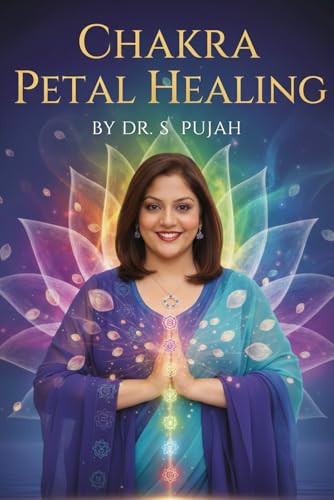
This guide includes detailed instructions and visualisation techniques for each chakra, supporting your practice step by step.
See it on Amazon →After completing the sequence, sit in silence for a few minutes to allow the effects to integrate. Ground yourself by feeling your connection to the earth through your sitting bones and feet, grounding your awareness in the present moment.
Hydration before and after the session helps your body process the subtle changes. Sessions should last around 45 to 60 minutes in total; longer sessions may cause fatigue or distraction.
Advanced Sound Techniques for Chakra Activation
Binaural beats arise when two slightly different frequencies are presented separately to each ear. The brain perceives a third frequency equal to the difference, which can influence brainwave patterns. This brainwave entrainment can encourage states associated with meditation and focus, supporting chakra activation.
Raga therapy is an ancient Indian tradition that uses specific melodic frameworks called ragas. Each raga is believed to evoke distinct moods and physiological effects, historically used to address imbalances. This method links the emotional quality of sound with bodily and mental states.
Vocal toning involves producing sustained vocal sounds or tones. Using your voice to generate vibrations directed at each chakra can stimulate resonance and sensation in those areas. This self-produced sound creates direct biofeedback and awareness.
Scientific studies on sound therapy find that these techniques may reduce stress and improve mood, but effects on chakras specifically remain in the realm of subjective experience and belief rather than empirical proof.
Cautious Use
Start with short sessions when experimenting with binaural beats or vocal toning. Overuse or intense sound exposure can cause discomfort or disorientation. Gradual adaptation is safest.
Scientific Basis and Limits of Music for Chakra Balance
Chakra balancing through music involves using sound frequencies to influence the body’s nervous system and promote relaxation. From a physics standpoint, this relies on resonance and entrainment. Resonance occurs when an object vibrates at a frequency matching an external source, amplifying the effect. Entrainment is the process where brainwave or physiological rhythms synchronise to external rhythms, such as music.
Research into sound therapy shows it can reduce stress, lower heart rate, and improve heart rate variability (HRV), a marker of autonomic nervous system health. These effects support using music to calm the nervous system, which may feel like a balancing of internal states. However, these studies do not confirm chakras as measurable entities; chakras remain traditional concepts from Indian spiritual systems without scientific evidence as physical or energetic centres.
Claims that YouTube Reiki sessions or specific chakra music tracks can directly balance chakras should be treated with caution. While these sessions can promote relaxation and a sense of well-being, no scientific proof exists that they cure or treat medical or psychological conditions. Using chakra music as a substitute for professional medical advice or treatment is unsafe and not supported by evidence.
Medical Advice
Do not replace medical diagnosis or treatment with chakra music or sound therapy. Consult qualified health professionals for medical concerns.
Common Questions About Music and Chakra Balancing
Practising with chakra music two to three times a week for 15 to 30 minutes is sufficient to notice relaxation benefits. Daily practice can be helpful but is not necessary for everyone. Longer sessions do not guarantee better results; consistency matters more.
Tuned chakra music uses specific frequencies intended to correspond with each chakra’s traditional vibrational range. General music may relax but does not target chakras scientifically. Using chakra-tuned music supports focused practice rather than casual listening.
Some people report dizziness or lightheadedness during sound sessions. This can occur if the volume is too high, or if you are sensitive to binaural beats or repetitive tones. If this happens, stop the session, sit or lie down, and breathe slowly until the sensation passes.
Essential oils are often paired with chakra music as a complementary approach. They may enhance relaxation through scent but do not affect chakras directly. Oils should not replace sound or meditation practices.
Beginners should start with short sessions using clear, gentle chakra-tuned music. Sit comfortably with minimal distractions and focus on breathing. Gradually increase session length as you become familiar with the practice. Avoid expecting immediate changes; chakra balancing is a subtle process supported by regular practice.
Commonly Claimed vs Actually About Music and Chakras
| Commonly claimed | Actually |
|---|---|
| Music frequencies for chakras are ancient and fixed | The specific frequencies like 256 Hz for the root chakra are a modern practice, not described in classical Sanskrit texts. |
| Any relaxing music can balance chakras effectively | Only music tuned to particular frequencies or using targeted sound techniques aligns with chakra balancing in contemporary practice. |
| Listening to chakra music cures physical or psychological illnesses | There is no scientific evidence that chakra music treats medical conditions; it promotes relaxation but is not a substitute for professional care. |
| Seed mantras must always accompany chakra music | Seed mantras are traditional but optional; music alone can activate chakras, though mantras add focus for some practitioners. |
| Binaural beats directly open chakras | Binaural beats influence relaxation and brainwave states but do not literally open chakras; this is a modern interpretation without classical backing. |
Frequently Asked Questions
Related Reading
- 7 Chakras Activation: Awaken Your Spiritual Power — Overview of chakra awakening techniques
- How to Balance All 7 Chakras: Step-by-Step Guide — Practical steps for chakra balancing
- Best Chakra Balancing And Healing Music: An Evidence-Based Guide — Reviews and guidance on chakra music
- The Art of Chakra Balancing: A Comprehensive Guide — In-depth chakra balancing methods and theory

Focused on music’s role in chakra balancing; consult a qualified professional for health issues. As an Amazon Associate, Chakra Serenity earns from qualifying purchases. Prices and availability change, so check the listing before you buy.