Best Chakra Tuning Forks for Healing, Meditation, and Energy Balance
Clear guidance on choosing and using tuning forks for chakra balancing and sound therapy.
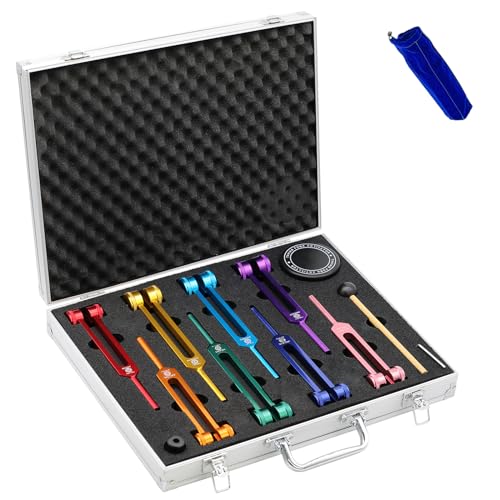
The best chakra tuning forks for healing, meditation, and energy balance are those precisely tuned to chakra frequencies and designed for ease of use. Weighted, colour-coded sets support focused sound therapy and energy alignment.
Many seek chakra tuning forks to enhance meditation and healing but find confusing choices and unclear claims online.
Most pages list products without explaining how to choose or use forks effectively for chakra balancing and sound healing.
This guide clarifies the best tuning forks by frequency, weight, and accessories, helping you pick tools suited to your practice.
Recommended Chakra Tuning Fork Sets
Select from reliable, high-quality sets designed for chakra healing and meditation. Links go to Amazon and earn this site a small commission at no extra cost to you.
Chakra Petal Healing Guide by Majosta
This guide offers detailed instructions on energy alignment and five-element balance, supporting effective tuning fork use alongside meditation.
Skip it if: Skip it if you want only tuning forks without accompanying instructions.
Best Chakra Tuning Forks for Healing, Meditation, and Energy Balance
Chakra tuning forks are metal instruments precisely tuned to frequencies that correspond to the seven main chakras. They produce pure tones used in healing and meditation to support chakra balancing and promote relaxation.
The best chakra tuning forks for healing, meditation, and energy balance combine accurate frequency tuning with features like weight, colour coding, and included accessories. These features help users focus their practice and achieve clearer sound vibrations on each chakra.
Tuning forks for chakra work usually have frequencies matched to the traditional energy centres: from Muladhara (root) at around 256 Hz to Sahasrara (crown) near 480 Hz, or solfeggio tones associated with healing. The forks may be weighted at the ends to extend vibration time, making them easier to use in sound therapy.
Colour coding is common, with forks painted in chakra colours like red for root and violet for crown. This visual aid helps practitioners quickly identify each fork. Some sets include activators, mallets, or carrying cases, enhancing convenience and precision.
Different sets suit different needs. Lightweight, non-weighted forks are better for beginners practising meditation, while weighted forks suit healing sessions requiring longer sustain and deeper resonance. Some sets contain seven forks for the classical chakras, others add an eighth for the earth star or high heart chakra.
- Weighted forks hold vibrations longer, aiding therapeutic use but they cost more and require care.
- Non-weighted forks are lighter and less expensive but give shorter tones.
- Colour-coded forks speed up chakra identification during practice.
- Complete sets with accessories support a structured routine and portability.
Using chakra tuning forks supports meditation by introducing consistent sound waves that help focus the mind and relax the body. In healing, the vibrations are applied near or on the body to encourage subtle balance.

This guidebook covers frequency alignment and practical exercises, helping users integrate tuning forks into energy work effectively.
See it on Amazon →Choosing the right tuning forks depends on your goals: for meditation and self-practice, lightweight, colour-coded forks offer clarity and ease. For professional or healing use, weighted forks with quality accessories provide better sound sustain and control.
This practical approach to selecting chakra tuning forks ensures your tools support your meditation and healing practices precisely and effectively.
How to Choose Chakra Tuning Forks for Your Practice
Choosing chakra tuning forks starts with understanding frequency significance. Each chakra resonates to a specific frequency, often aligned with either traditional chakra tones or solfeggio frequencies known for healing qualities.
For example, the root chakra typically matches around 256 Hz or 396 Hz in solfeggio tones. Higher chakras like the crown resonate near 480 Hz or 963 Hz. Selecting forks tuned to these frequencies ensures your sound work targets the intended energy centres accurately.
Weighted tuning forks have metal weights on the ends, extending vibration duration and making them ideal for therapeutic sessions that need sustained tone. Non-weighted forks offer sharper, shorter sounds suited for meditation and beginners learning to use tuning forks.
Set size matters. Seven-fork sets cover the classical chakras, while some eight-fork sets add a chakra such as the earth star or high heart. Larger sets may suit advanced users or therapists needing extra tonal options.
Consider accessories like activators or mallets, which make striking the forks easier and protect the metal. Durable materials like aluminium or steel ensure forks last through frequent use. Budget guides choice but avoid very cheap forks that sacrifice tuning accuracy.
Beginners benefit from lightweight, colour-coded sets with clear frequency markings and simple accessories. Experienced users may prefer weighted forks with a full set and activators for precise sound control.
Material quality affects sound purity and durability. Steel forks give sharp, clear tones, while aluminium may sound softer. Choose forks that feel sturdy in your hand and suit your practice style.
A thoughtful selection based on frequency, weight, set size, and accessories helps you find chakra tuning forks that match your experience and goals.
For more on using forks effectively, see How To Use Chakra Tuning Forks For Healing and Chakra Tuning Forks.
Using Chakra Tuning Forks to Balance Energy and Enhance Meditation
To use chakra tuning forks for healing, start by selecting forks tuned to the specific chakras you want to work on. Hold the fork by its stem and strike the tines gently against a rubber activator or your knee to produce a clear tone.
Begin your session by sitting comfortably with a straight spine. Start with the root chakra fork and work upward through the chakras in sequence. This order supports clearing and aligning the energy centres progressively from the base of the spine to the crown of the head.
- Strike the tuning fork and hold it near the chakra point, about an inch away, without touching the body directly.
- Listen closely to the sound and feel the vibrations; allow your attention to settle on any sensations or shifts.
- Maintain steady breathing and visualise the chakra spinning smoothly and brightly.
- After about 30 seconds to a minute, move to the next chakra tuning fork and repeat the process.
Use chakra tuning forks before meditation to clear blockages and prepare the mind, or afterwards to deepen relaxation and balance. Experiment to find what feels most effective for you.
Handle the forks carefully to preserve their tuning. Avoid touching the tines while they vibrate, as this dampens the sound. Focus on the subtle vibration and tone rather than volume.
Common Mistakes
Striking the fork too hard can produce a harsh sound and damage the fork. Avoid direct contact between the fork tines and skin to prevent discomfort or bruising.
Listening Tip
Pay attention to how the sound changes as it fades. This fading tone helps guide your meditation and signals when to move to the next chakra.
Understanding Chakra Frequencies and Tuning Fork Sets
Chakra tuning forks are tuned to frequencies that correspond to individual chakras. The standard frequencies commonly used are: Root 256 Hz, Sacral 288 Hz, Solar Plexus 320 Hz, Heart 341.3 Hz, Throat 384 Hz, Third Eye 426.7 Hz, and Crown 480 Hz.
These frequencies align roughly with musical notes and are chosen to resonate with the subtle energy centres according to modern sound healing practice.
Solfeggio frequencies form another set of tones linked to healing traditions. Some tuning fork sets use solfeggio tones such as 396 Hz for root and 417 Hz for sacral chakras, claiming specific vibrational benefits.
Common chakra frequencies used in tuning fork healing, showing the relationship from root to crown.
Traditional Indian texts do not specify exact hertz values for chakras; the seven-chakra frequency assignments are a modern development combining Western music theory and sound therapy.
Frequency affects how the tuning fork’s vibration interacts with the body and mind. Each frequency produces a different quality of resonance which practitioners report as useful for focusing meditation or clearing blockages.
Popular chakra tuning fork sets vary in frequency ranges, some favouring equal temperament notes near middle C and above, others using lower or higher hertz to match practitioner preference. Choosing a set depends on the sound quality you respond to and the chakras you want to address.
Comparing Popular Chakra Tuning Fork Sets
Chakra tuning forks are metal instruments tuned to frequencies linked with the seven main chakras. Practitioners use them to support meditation, relaxation, and focused sound therapy.
Use chakra tuning forks by striking them gently and holding near the related chakra point or around the body. Sessions can last from five to 20 minutes, depending on experience.
Daily use is common in meditation practices; however, avoid prolonged sessions initially to prevent overstimulation.
Some users report mild headaches after tuning fork sessions. This often results from overuse or striking too hard. Use a soft mallet and limit session length to avoid discomfort.
Recommended frequencies correspond to traditional chakra assignments: root at 256 Hz, sacral 288 Hz, solar plexus 320 Hz, heart 341 Hz, throat 384 Hz, third eye 426 Hz, and crown 480 Hz. Variations exist in modern sets.
For beginners, sessions of five to ten minutes focusing on one or two chakras work well. Experienced users may extend sessions to 20 minutes, covering more chakras or using combinations.
Balancing chakras with meditation involves focusing attention on each chakra while using tuning forks to stimulate corresponding frequencies. This paired approach enhances awareness and relaxation How to Balance Chakras With Meditation.
Frequently Asked Questions About Chakra Tuning Forks
Chakra tuning forks are metal instruments tuned to precise frequencies that correspond to the seven main chakras. They are used to support meditation, sound healing, and chakra balancing by producing vibrations believed to influence the body’s subtle energy centres.
The best frequencies for chakra healing align with the seven chakras: for example, 396 Hz for the root chakra, 417 Hz for the sacral chakra, 528 Hz for the solar plexus, 639 Hz for the heart, 741 Hz for the throat, 852 Hz for the third eye, and 963 Hz for the crown. Modern tuning fork sets typically follow these solfeggio frequencies, though traditional texts vary.
Balancing chakras with meditation often involves focusing attention on each chakra while using a tuning fork tuned to its frequency. The sound vibrations can enhance concentration and relaxation, assisting the practitioner in sensing shifts in their mental and emotional state during the practice How to Balance Chakras With Meditation.
Sessions typically last from a few minutes to around fifteen minutes per chakra. Beginners should start with shorter sessions, around five minutes, to avoid overstimulation. Experienced users can extend session length based on their comfort and response. Regular practice, such as daily or several times a week, supports steady progress without overwhelming the senses.
Some users report mild side effects like headaches or dizziness when first using chakra tuning forks. These effects usually result from overuse, incorrect technique, or sensitivity to sound. To avoid these, begin with lower volume, keep sessions brief, and ensure the forks are struck gently. Taking breaks between sessions helps the body adjust.
Correct timing involves listening to the fork’s vibration fade naturally rather than cutting it off abruptly. Holding the fork near but not touching the body, especially around the chakra area, allows the sound waves to resonate through the subtle energy field. This practice enhances the tuning fork’s effectiveness without causing discomfort.
Common Claims Versus Actual Facts About Chakra Tuning Forks
| Commonly claimed | Actually |
|---|---|
| Chakra tuning forks can cure physical or mental illnesses. | There is no scientific evidence that tuning forks cure illnesses; they are used to support relaxation and meditation as complementary tools. |
| Each chakra corresponds to a single fixed frequency universally agreed upon. | Different traditions and practitioners use varying frequencies; the common seven-chakra set with specific Hertz values is a modern, Western development. |
| Sound from tuning forks can unblock chakras permanently. | Sound therapy may help focus attention and relaxation but does not permanently alter chakras, which are conceptual energy centres rather than physical entities. |
| Using chakra tuning forks will cause headaches or discomfort if done incorrectly. | Proper use usually avoids discomfort; headaches may result from individual sensitivity or overuse rather than the tuning forks themselves. |
| Weighted tuning forks are necessary for effective chakra healing. | Weighted forks offer sustained vibration for easier use but unweighted ones can also be effective depending on the practitioner’s preference and skill. |
Frequently Asked Questions
Related Reading
- Chakra Tuning Forks: Ultimate Sound Healing Guide — In-depth overview of tuning forks for sound healing
- How to Balance All 7 Chakras: Step-by-Step Guide — Stepwise chakra balancing techniques
- How To Heal Your Chakras | A Simple Guide — Basic chakra healing methods
- Master Om Meditation: A Complete Guide to Sacred Sound Practice — Meditation with sacred sounds

This article focuses on sound therapy and meditation tools, not medical or psychological treatment; consult professionals for health concerns. As an Amazon Associate, Chakra Serenity earns from qualifying purchases. Prices and availability change, so check the listing before you buy.